
How to Get a Virtual Phone Number (Easy Guide)
You’re looking to get a virtual phone number. It’s a surprisingly straightforward process, and you’ll be up and running in no time. Forget lengthy contracts, complex installations, or needing special hardware. In fact, you can typically get a virtual number activated in under five minutes, all through your existing internet connection. Let’s dive into how you can do just that.
Before you embark on the journey of acquiring one, it’s helpful to grasp what precisely a virtual phone number entails. You see, when you get a virtual phone number, you’re not being assigned a physical SIM card or a dedicated phone line connected to a specific device. Instead, you’re essentially getting a phone number that exists in the cloud. This number is then linked to your existing devices – your smartphone, your laptop, your tablet – via an internet connection. When someone calls your virtual number, the call is routed over the internet to your chosen devices. This fundamental difference unlocks a world of flexibility and functionality that traditional phone numbers simply can’t match.
The Underlying Technology: VoIP’s Magic
At its core, a virtual phone number relies on Voice over Internet Protocol (VoIP) technology. Think of it as calling over the internet, much like you might send an email or stream a video. Instead of using the traditional copper phone lines, VoIP converts your voice into digital data, sends it through the internet, and then converts it back into audio on the other end. This is what allows for the seamless delivery of calls to any device connected to the internet, anywhere in the world. It’s this technology that enables the speed, affordability, and advanced features associated with virtual numbers.
Why You Might Need a Virtual Phone Number
The “why” is as varied as the people who use them. For some, it’s about maintaining a professional image without the need for an expensive business line. They can use a virtual number for their freelance work or small business, keeping their personal number private. For others, it’s about leveraging the convenience of managing multiple numbers without carrying multiple devices. Perhaps you travel frequently and need a local number in another country without the hassle of a local SIM. Or maybe you’re an entrepreneur looking to test the waters with a new venture and want to keep your personal and professional communications strictly separate from day one. The reasons are numerous, but the solution is singular and readily accessible.
The Seamless Steps to Acquiring Your Virtual Number
The process of getting a virtual phone number is designed to be as user-friendly as possible. You won’t find yourself wading through stacks of paperwork or waiting for an engineer to visit your home. The entire experience is typically managed online, often through a mobile app or a web portal. This accessibility is one of the primary draws of virtual phone numbers.
Step 1: Choosing Your Provider – The First Crucial Decision
This is perhaps the most significant step in your virtual phone number journey. There are a multitude of providers out there, each offering slightly different features, pricing structures, and user experiences. It’s worth taking a moment to research and compare a few to find the one that best aligns with your needs.
Popular Provider Options and Their Strengths
You’ll encounter names like SoundCurve and others. Each of these has its own unique selling points.
- Google Voice: Often the go-to for individuals looking for a free or low-cost personal option. It integrates well with your Google account and offers basic forwarding and voicemail capabilities. It’s a fantastic starting point if you’re just experimenting or need a simple secondary number for personal use.
- Nextiva and RingCentral: These are more robust business-focused solutions. They offer a comprehensive suite of communication tools, including advanced call management, team collaboration features, and integrations with other business software. If you’re a growing business or a larger enterprise, these are likely to be on your radar.
- CloudTalk: This provider shines when international calling is a priority. With support for over 160 countries, it’s ideal for businesses with a global reach or individuals who need to connect with people across borders regularly. Their plans are often competitive for international numbers.
- Allo, Quo, and Talkroute: These providers often fall somewhere in between, offering a good balance of features for small to medium-sized businesses, freelancers, and individuals who need more than Google Voice but perhaps not the full enterprise suite of Nextiva or RingCentral. They often emphasize ease of use and competitive pricing.
When you’re choosing, consider what’s most important to you. Is it cost? The number of features? The ease of use? International calling capabilities? Your answers will guide you towards the most suitable provider.
Step 2: Signing Up for Your Account – The Digital Gateway
Once you’ve settled on a provider, the next step is to create an account. This is typically done directly on the provider’s website or through their dedicated mobile application. Most providers offer a straightforward signup process that involves providing your email address, creating a password, and agreeing to their terms of service.
Leveraging Free Trials and Limited Tiers
A significant advantage of many virtual phone number providers is the availability of free trials. This is your golden opportunity to test drive a service before committing financially. Some providers also offer limited free tiers, which can be perfect if your needs are basic. Look for these options; they allow you to explore the platform, familiarize yourself with the interface, and confirm that it meets your expectations without any initial investment. This is where patience and smart selection pay off, allowing you to avoid buyer’s remorse.
Step 3: Selecting Your Virtual Number – The Personal Touch
Now for the exciting part – choosing your actual phone number! This is where you get to personalize your virtual presence. Providers offer a variety of options to suit different preferences and needs.
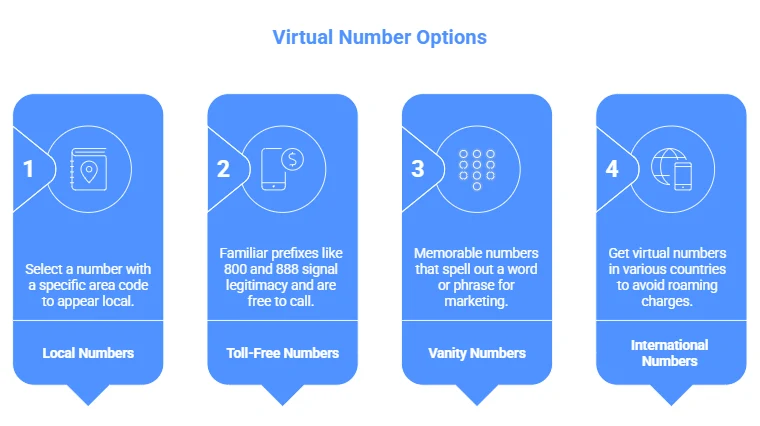
Exploring Your Number Options
- Local Numbers: This is often the most common choice. You can select a number with a specific area code from a city or region you’re interested in. This can be invaluable for businesses wanting to appear local to their customer base, or for individuals who want to maintain a presence in a particular geographic area. For example, if you’re based in New York but are looking to expand your reach into California, you can get a New York area code number.
- Toll-Free Numbers: These are the familiar 800, 888, 877, and other prefixes that businesses often use. They signal legitimacy and make it easy for customers to call you without incurring charges. You’ll find standard prefixes like 800, 888, 877, 866, 855, 844, and the newer 833.
- Vanity Numbers: If you’re looking for something memorable and unique, a vanity number is the way to go. These are numbers that spell out a word or phrase related to your business or personal brand (e.g., 1-800-FLOWERS or a local number that spells out “CALL-ME”). Most providers offer a tool to help you find available vanity numbers. This can be incredibly effective for marketing and brand recognition.
- International Numbers: For those with international connections, this is a game-changer. You can get virtual phone numbers in a vast array of countries. This eliminates the need for expensive international SIM cards or roaming charges when you’re communicating with people in those regions. CloudTalk, for instance, boasts support for over 160 countries, making global communication exceptionally accessible.
When you’re browsing, you’ll typically see a search interface where you can input your desired area code, prefix, or even letters to find your vanity number. Take your time to find one that resonates with you or your brand.
Step 4: Verifying Your Identity – Ensuring Security
In some cases, particularly for business accounts or to comply with regulatory requirements, providers may require a brief identity verification process. This is often referred to as “Know Your Customer” (KYC) verification.
The KYC Process Explained
Don’t let the term “verification” sound daunting. For most virtual phone number providers, this is a relatively simple and quick procedure. It typically involves uploading a copy of a valid government-issued ID, such as a driver’s license or passport, and sometimes a utility bill for address confirmation. The goal for the provider is to ensure the security of their network and comply with anti-fraud measures. This verification process is usually completed within 24 hours, and once approved, you’re cleared to proceed. It’s a standard practice in many online services to ensure a secure and legitimate user base.
Step 5: Activating and Configuring Your Number – Making It Yours
With your number selected and verification (if needed) complete, you’re on the cusp of activation. This final stage is about making your virtual number work for you.
Setting Up Your Communication Preferences
This is where you personalize how your virtual number operates. You’ll typically use the provider’s intuitive web portal or mobile app to configure various settings.
- Call Forwarding: This is the cornerstone of functionality. You’ll decide where incoming calls to your virtual number should be directed. This could be your primary mobile number, a work desk phone, a VoIP client on your computer, or even multiple devices simultaneously. You have the flexibility to change these forwarding rules at any time.
- Voicemail: You’ll set up your voicemail greeting and decide how you want to receive voicemail messages. Many providers offer transcription services, which convert your voicemails into text messages or emails, allowing you to read them instead of listening. This is a huge time-saver.
- Interactive Voice Response (IVR): For businesses, an IVR system is a powerful tool. You can set up automated menus that greet your callers and direct them to the appropriate department or extension (e.g., “Press 1 for sales, Press 2 for support”). This enhances the professionalism of your communication and streamlines customer service.
- Other Features: Depending on your chosen plan and provider, you might also configure settings for things like call recording (which can be essential for training and compliance), auto-attendants, and even AI-powered receptionists to handle initial inquiries.
The beauty of this stage is its flexibility. You can tweak and adjust these settings as your needs evolve. It’s a dynamic system that adapts to your communication flow.
A Deeper Dive into Number Options
We touched upon the types of numbers you can get, but let’s elaborate a bit further to really understand the breadth of possibilities. The ability to choose precisely the kind of number you need is a significant advantage of virtual phone systems.
Local Numbers: Rooting Yourself Globally
As mentioned, local numbers are a staple. They offer a sense of familiarity and accessibility. If you’re targeting customers in a specific city or region, having a local number instantly builds trust and makes you appear more approachable than a generic 1-800 number. This is a fundamental tool for small businesses aiming for a local market presence, but it’s equally valuable for individuals who want a dedicated number for a specific purpose without being tied to a physical location. The availability is extensive, covering most countries and numerous metropolitan areas within those countries.
Toll-Free Numbers: The Professional Hallmark
Toll-free numbers have long been associated with established businesses. Their universal accessibility means customers can reach you without incurring any costs, which is a strong incentive for them to make contact. The recognized prefixes (800, 888, etc.) convey a sense of professionalism and a commitment to customer service. For any business that wants to project a credible and accessible image, a toll-free number is a worthwhile investment. Many providers offer competitive pricing for these numbers, making them more accessible than ever.
Vanity Numbers: Making Your Number Memorable
The power of a memorable phone number cannot be overstated in marketing and brand recall. A vanity number transforms what would be a string of digits into a catchy phrase or brand name. This makes it easier for customers to remember you, call you back, and even share your number. Think about how many times you’ve seen a catchy vanity number on a billboard or heard one on the radio – they stick with you. While not all possible combinations might be available, most providers offer tools to help you brainstorm and find something that works.
International Numbers: Bridging Global Gaps
For businesses operating across borders or individuals with international connections, securing international virtual numbers is a transformative capability. Instead of paying exorbitant international roaming fees or dealing with the hassle of acquiring local SIM cards, you can obtain a local number in almost any country. This allows you to receive calls as if you were physically present in that country, making communication seamless and cost-effective. CloudTalk’s extensive network is a prime example of how deeply this capability can reach, supporting well over 160 countries. This is invaluable for global sales, customer support, and maintaining international relationships.
Understanding the Pricing Landscape
The cost of a virtual phone number can range from absolutely free to a few dollars a month, or significantly more for advanced business plans with extensive features. Understanding the pricing structures will help you find the best value for your specific needs.
The Allure of Free and Trial Options
As highlighted before, Google Voice stands out as a fantastic free option for personal use. If your requirements are simple – making and receiving calls, basic forwarding, and voicemail – it’s a highly attractive choice. Beyond Google Voice, many other providers offer limited free tiers or extended free trials. These are invaluable for testing the waters and ensuring a provider meets your baseline needs before you commit to a paid plan. For individuals or very small startups just beginning, these free options are an excellent entry point.
Navigating Paid Plans: What to Expect
When you move beyond free options, you’ll find a tiered pricing structure.
- Basic Plans: These typically start at a few dollars per month and offer a core set of features, often including a set number of minutes, basic call forwarding, and voicemail. These are ideal for individuals or freelancers who need a dedicated number for a short period or for specific projects.
- Business Plans: For businesses, plans become more comprehensive and start at a higher price point, often ranging from around $6 to $25+ per month. These plans usually include more advanced features such as multiple extensions, team collaboration tools, analytics, extended call minutes, international calling packages, and priority support. The higher-end enterprise solutions can cost significantly more, offering custom integrations and dedicated account management. The pricing will also depend on the number of users, the volume of calls, and the specific features you require. When selecting a paid plan, carefully assess the included features and compare them against your projected usage to ensure you’re getting the best bang for your buck.
Call Quality and Advanced Features: More Than Just a Number
What truly sets virtual phone numbers apart is the array of advanced features they offer, moving far beyond simple voice calls. Depending on your chosen plan, you can unlock a powerful suite of tools:
- Call Recording: This is invaluable for quality assurance, training purposes, dispute resolution, and ensuring compliance with industry regulations.
- Voicemail Transcription: As mentioned earlier, having your voicemails converted to text allows you to quickly scan your messages, prioritize calls, and access information without having to listen to each one.
- AI Receptionists: For businesses, an AI receptionist can handle initial greetings, answer frequently asked questions, and even route calls based on natural language understanding, freeing up human staff for more complex tasks.
- Multi-line Support: This allows you to manage multiple incoming and outgoing calls simultaneously, which is crucial for busy businesses or individuals who handle a high volume of communication.
- Analytics and Reporting: Many business-grade platforms offer detailed analytics on call volume, duration, caller locations, and more, providing valuable insights into your communication patterns and customer engagement.
- Team Collaboration: Features like team chat, shared contacts, and internal extensions foster seamless communication and collaboration within a business.
Conclusion
In conclusion, getting a virtual phone number is an accessible, efficient, and remarkably flexible process. You can go from zero to a fully functional phone number in minutes, tailored to your exact needs, without any complex hardware or long-term commitments. Whether you’re an individual looking for a private line, a freelancer needing a professional edge, or a business aiming for global reach, the world of virtual phone numbers is ready to empower your communication.
FAQs
What is a virtual phone number?
A virtual phone number is a telephone number that is not directly associated with a specific phone line. It can be used to make and receive calls, as well as send and receive text messages, without being tied to a specific physical phone.
How can I get a virtual phone number?
You can get a virtual phone number by signing up with a virtual phone service provider. Many providers offer virtual phone numbers as part of their service packages, and you can choose a number from a list of available options.
What are the benefits of using a virtual phone number?
Using a virtual phone number can provide several benefits, including the ability to separate personal and business calls, maintain privacy, and establish a local presence in different geographic locations.
Can I use a virtual phone number for international calls?
Yes, virtual phone numbers can be used for international calls. Many virtual phone service providers offer international calling options, allowing you to make and receive calls from and to different countries using your virtual number.
Are there any limitations to using a virtual phone number?
While virtual phone numbers offer many benefits, there are some limitations to consider. For example, some virtual numbers may not support emergency calls, and there may be restrictions on certain types of calls, such as toll-free or premium rate numbers.














Post Comment