
Cloud PBX Providers: The Complete Guide
The way businesses communicate has changed dramatically over the past decade. Traditional landlines and bulky on-premise phone systems are rapidly being replaced by smarter, more scalable solutions. At the center of this shift are Cloud PBX providers companies that deliver fully hosted business phone systems through the internet, eliminating the need for expensive hardware and complex infrastructure.
Whether you run a small startup or manage a large enterprise, understanding what Cloud PBX providers offer and how to evaluate them can have a major impact on your operational efficiency, team productivity, and overall communication costs. This guide walks you through everything you need to know.
- What Is a Cloud PBX System?
- How Cloud PBX Providers Work
- Key Features Offered by Cloud PBX Providers
- Benefits of Switching to a Cloud PBX Provider
- What to Look for When Choosing Cloud PBX Providers
- Cloud PBX vs. Traditional PBX: A Clear Comparison
- Industries That Benefit Most from Cloud PBX
- Preparing Your Business for a Cloud PBX Migration
- Conclusion
- FAQs
What Is a Cloud PBX System?
A Cloud PBX (Private Branch Exchange) is a telephone switching system that operates entirely in the cloud rather than on physical hardware installed at your business premises. A Cloud PBX routes calls internally and externally using Voice over Internet Protocol (VoIP) technology, allowing businesses to manage phone lines, extensions, voicemail, call routing, and conferencing all from a single web-based platform.
Unlike traditional PBX systems that require dedicated rooms, maintenance staff, and significant capital investment, a Cloud PBX is hosted and managed entirely by a third-party provider. This means your business benefits from enterprise-level phone capabilities without the overhead of owning and running the infrastructure.
How Cloud PBX Providers Work
Cloud PBX providers manage all the backend telephony infrastructure servers, software, security patches, and uptime from their own data centers. As a business subscriber, you access the system through IP desk phones, mobile apps, or softphones installed on computers.
When a call is made, it travels over your internet connection to the provider’s cloud servers, which handle call routing, recording, forwarding, and other features in real time. Because the system runs in the cloud, it can be accessed and managed from anywhere in the world, making it ideal for remote teams and distributed organizations.
Research from institutions like MIT Sloan School of Management highlights that cloud-based communication tools significantly improve organizational agility a critical factor in today’s fast-moving business environment. Cloud PBX is one of the core technologies enabling this transformation.
Key Features Offered by Cloud PBX Providers
When evaluating Cloud PBX providers, it is important to understand what features are typically included. Most reputable providers offer a robust suite of tools designed to handle every aspect of business communication.
Auto-Attendant and IVR
An automated attendant greets callers and routes them to the appropriate department or individual without the need for a human receptionist. Interactive Voice Response (IVR) systems take this a step further by allowing callers to navigate menus using voice commands or keypad inputs.
Call Routing and Forwarding
Cloud PBX systems allow you to define sophisticated call routing rules based on time of day, caller location, agent availability, or department. Calls can be forwarded to mobile phones or other devices so that employees are never unreachable, regardless of where they are working.
Voicemail to Email
This feature transcribes or attaches voicemail recordings and sends them directly to a user’s email inbox, making it easy to review messages quickly and maintain communication records without logging into a separate portal.
Video Conferencing and Unified Communications
Many Cloud PBX providers now bundle video conferencing, team messaging, and file sharing into a single unified communications platform. This eliminates the need for multiple subscriptions and helps consolidate communication tools under one roof.
Call Analytics and Reporting
Detailed reporting dashboards let managers track call volumes, average handling times, missed calls, agent performance, and more. This data is invaluable for improving customer service standards and making informed staffing decisions.
Number Portability and Virtual Numbers
Most providers support local, toll-free, and international virtual phone numbers. You can also port your existing business numbers to the new system, ensuring continuity for clients and customers who already have your contact details.
Benefits of Switching to a Cloud PBX Provider
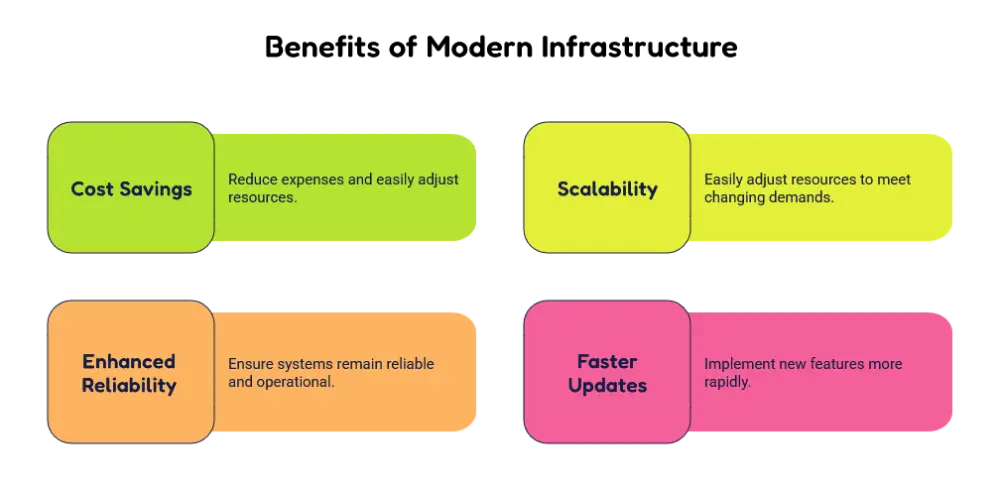
The advantages of moving to a hosted phone system are numerous and well-documented. Here are the most significant reasons businesses are making the switch:
Significant Cost Savings
Eliminating on-premise hardware dramatically reduces both capital expenditure and ongoing maintenance costs. There are no PBX boxes to purchase, no engineers to hire for upkeep, and no expensive upgrade cycles to budget for. Businesses typically pay a predictable monthly subscription fee per user, making costs easier to forecast.
Scalability on Demand
Growing companies no longer need to invest in additional physical infrastructure when they hire new staff. With a Cloud PBX, adding a new user is as simple as activating a new account through the provider’s dashboard a process that takes minutes, not days.
Remote Work Enablement
Cloud PBX systems are purpose-built for distributed teams. Employees can make and receive business calls from their personal smartphones, laptops, or home office phones using the same business number and extension, maintaining a professional appearance regardless of location.
Enhanced Reliability and Uptime
Reputable Cloud PBX providers host their systems in redundant, geographically distributed data centers. This architecture means that even if one server fails, calls are automatically rerouted through backup infrastructure, ensuring near-continuous availability.
Faster Feature Updates
Because the system lives in the cloud, new features, security patches, and improvements are rolled out automatically without any action required from your IT team. You always have access to the latest capabilities without paying for a system overhaul.
What to Look for When Choosing Cloud PBX Providers
With a growing number of providers in the market, choosing the right one requires careful evaluation across several dimensions.
Reliability and Service Level Agreements
Look for providers that offer at least a 99.9% uptime guarantee, backed by a formal Service Level Agreement (SLA). Understand how the provider handles outages and what compensation, if any, is offered when downtime occurs.
Integration Capabilities
Your phone system should integrate smoothly with the tools your team already uses CRM platforms, helpdesk software, productivity suites, and more. Strong API support and pre-built integrations with popular business applications are a strong indicator of a mature, business-ready platform.
Security and Compliance
Business communications often involve sensitive information. Ensure your chosen provider uses end-to-end encryption, supports multi-factor authentication, and complies with relevant regulatory standards such as HIPAA (for healthcare), GDPR (for businesses serving European customers), or PCI-DSS (for payment-related calls).
Academic research from Stanford University’s Internet Observatory underscores the importance of robust communication security protocols for organizations of all sizes, particularly as cloud adoption continues to accelerate.
Customer Support Quality
Even the most reliable systems experience occasional issues. Before committing to a provider, assess the quality and accessibility of their support team. Look for 24/7 support availability, multiple contact channels (phone, chat, email), and a reputation for fast response times.
Ease of Administration
The best Cloud PBX platforms offer intuitive web-based admin portals that allow non-technical staff to manage users, update call routing rules, pull reports, and configure features without needing IT expertise. A complicated backend creates unnecessary dependency on specialized resources.
Trial Periods and Contract Flexibility
Many providers offer free trials or month-to-month contracts. These are valuable for businesses that want to test a system before committing to an annual agreement. Be cautious of providers that require lengthy contracts without a proven track record of customer satisfaction.
Cloud PBX vs. Traditional PBX: A Clear Comparison
Traditional PBX systems require substantial upfront investment in physical hardware, professional installation, and ongoing technical maintenance. They are typically hosted on-site and can take weeks to deploy. Expanding capacity often means purchasing additional hardware and engaging specialist engineers.
Cloud PBX systems, by contrast, are deployed in days, require no capital investment in hardware, and scale instantly with your business needs. The ongoing costs are predictable, and the burden of maintenance, upgrades, and security patches falls entirely on the provider.
For most modern businesses particularly those with remote workers, multiple office locations, or rapid growth ambitions Cloud PBX represents a substantially superior choice in terms of flexibility, cost-efficiency, and long-term capability.
Industries That Benefit Most from Cloud PBX
While virtually every sector can benefit from a hosted phone system, certain industries tend to see the most transformative results.
Healthcare organizations use Cloud PBX to manage high call volumes, enable secure patient communication, and ensure HIPAA compliance. Legal firms rely on call recording features and advanced routing to maintain professionalism and accuracy. Real estate agencies leverage virtual numbers and mobile access so agents can work effectively from anywhere. Customer service centers use advanced IVR, call queuing, and analytics tools to optimize agent performance and improve satisfaction scores.
E-commerce businesses and retail operations also benefit significantly, using Cloud PBX systems to handle seasonal call spikes by scaling up user licenses without investing in additional infrastructure.
Preparing Your Business for a Cloud PBX Migration
Migrating to a Cloud PBX system is a straightforward process, but a little preparation goes a long way in ensuring a smooth transition.
Start by conducting a thorough audit of your current communication setup. Document your existing phone numbers, extensions, voicemail configurations, and call routing rules. This information will be needed to replicate your current setup on the new platform.
Next, assess your internet connection. Cloud PBX systems rely entirely on your broadband connection for call quality. A dedicated business-grade internet plan with sufficient upload bandwidth is essential, especially for teams making many simultaneous calls.
Train your team before go-live. Even the most user-friendly systems require some orientation. Most Cloud PBX providers offer onboarding resources, video tutorials, and dedicated onboarding specialists to guide your staff through the transition.
Finally, consider running parallel systems during an initial transition period keeping your old phone system active while your team adapts to the new platform. This eliminates any risk of missed calls or disrupted communications during the switchover.
Conclusion
Cloud PBX providers have fundamentally changed the way businesses think about their phone systems. By moving telephony to the cloud, organizations of all sizes gain access to enterprise-grade communication features without the burden of managing physical infrastructure.
The right Cloud PBX provider will align with your business size, industry requirements, growth trajectory, and budget. By carefully evaluating uptime guarantees, integration capabilities, security standards, and support quality, you can make a confident choice that supports your communication needs for years to come.
As remote work becomes a permanent fixture of modern business and digital-first operations become the norm, investing in a reliable, feature-rich Cloud PBX system is no longer optional it is a strategic imperative.
FAQs
What is the difference between Cloud PBX and a traditional PBX system?
A traditional PBX requires physical hardware, upfront investment, and on-site maintenance. A Cloud PBX is hosted remotely, needs no hardware, scales instantly, and is accessible from anywhere making it far more flexible and cost-effective.
Do I need a fast internet connection to use a Cloud PBX?
Yes, a reliable broadband connection is essential. Each simultaneous call needs roughly 100 Kbps of bandwidth. A standard business-grade internet plan is typically sufficient, and a network assessment before migration is recommended.
Can I keep my existing business phone numbers when switching to a Cloud PBX provider?
Yes, through a process called number portability. Most providers handle the porting process on your behalf, which typically takes a few days to a couple of weeks with minimal disruption.
Is a Cloud PBX system secure for business communications?
Reputable providers use end-to-end encryption (TLS and SRTP), multi-factor authentication, and comply with standards like HIPAA, GDPR, and PCI-DSS. Always review a provider’s security certifications before signing up.
How long does it take to set up a Cloud PBX system?
Most businesses are up and running within one to three business days. Basic configurations can be completed in hours via a web dashboard. Complex setups with custom IVR or CRM integrations may take slightly longer but are still far faster than traditional on-premise systems.














Post Comment