VoIP for Restaurants: The Smarter Way to Handle Every Call
Running a restaurant means juggling reservations, takeout orders, supplier calls, and guest questions all at once. This is exactly why VoIP for Restaurants has become such a popular upgrade for busy kitchens and front-of-house teams. Instead of relying on outdated landlines that drop calls during peak hours, VoIP uses your internet connection to handle phone calls, giving restaurant owners more flexibility, clarity, and control over communication.
In this post, we will look at what VoIP is, why restaurants benefit from it, and how it can improve daily operations without adding complexity to your workflow.
What Is VoIP and How Does It Work for Restaurants
VoIP stands for Voice over Internet Protocol. It converts voice calls into digital data and sends them through the internet instead of traditional phone lines. For a restaurant, this means calls can be answered from a host stand, a manager’s phone, or even a tablet in the kitchen, as long as there is an internet connection.
This flexibility is especially useful for restaurants with multiple locations or those that want a single phone number handling reservations, catering requests, and delivery coordination.
Why Traditional Phone Lines Fall Short
Landlines are tied to a single physical location and a single device. During busy dinner rushes, this often leads to missed calls, long hold times, and frustrated customers who simply hang up and call a competitor instead. VoIP removes these limitations by allowing calls to be routed, forwarded, or answered from multiple devices at once.
Key Benefits of VoIP for Restaurants
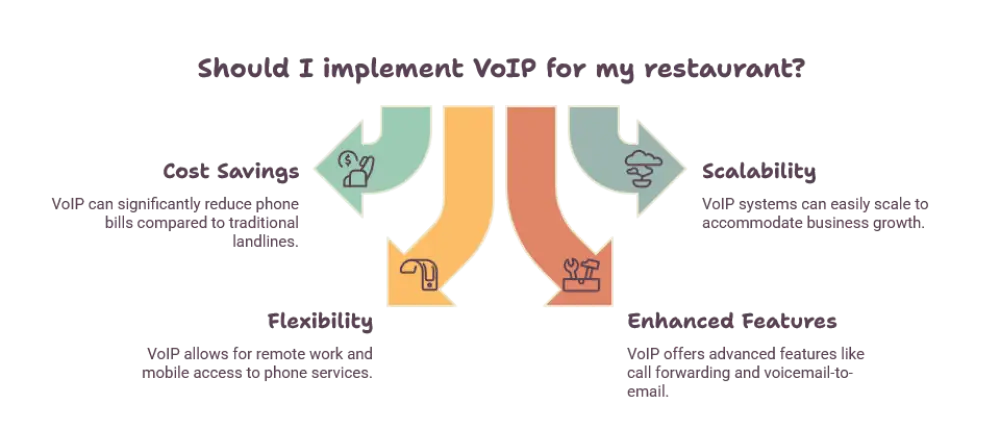
VoIP is not just about making calls. It brings a set of features that directly support how restaurants operate day to day.
Better Call Management During Peak Hours
Restaurants experience unpredictable call spikes during lunch and dinner rushes. VoIP systems allow calls to be automatically routed to available staff, placed in a queue, or sent to voicemail with a custom message letting guests know their call matters and will be returned shortly.
Multiple Locations, One System
For restaurant groups or franchise owners, VoIP allows every location to be connected under one unified phone system. This makes it easy to transfer calls between branches, track call volume across the business, and maintain consistent customer service standards everywhere.
Mobility for Staff and Managers
Because VoIP works through apps and internet-connected devices, staff are not chained to a wall-mounted phone. Managers can take reservation calls while walking the floor, and off-site owners can stay connected to their restaurant without needing to be physically present.
Professional Call Handling
Features like auto attendants, call forwarding, and voicemail to email transcription give even small restaurants a polished, professional phone presence. Guests calling to ask about hours, private events, or menu items get a smooth experience instead of a busy signal.
Features Restaurants Should Look For
Not all VoIP systems are built the same, so it helps to understand which features matter most for the food service industry.
Call Routing and Auto Attendant
An auto attendant greets callers and directs them to the right department, whether that is reservations, catering, or general inquiries. This reduces the workload on front-of-house staff and ensures no call goes unanswered.
Call Recording and Analytics
Call recording helps with training new hosts and servers, while analytics show peak calling times, missed call rates, and average wait times. This data helps restaurant owners make informed staffing decisions.
Integration With Reservation Systems
Many VoIP platforms integrate with popular reservation and point of sale tools. This means incoming calls can trigger reservation prompts or pull up customer order history automatically, saving time and reducing errors.
Voicemail to Text
Busy restaurants do not always have time to check voicemail during service. Voicemail to text transcription lets staff quickly scan messages and respond to urgent requests without listening to every recording.
How VoIP Improves the Guest Experience
Guest experience starts long before someone walks through the door. A clear, quick, and professional phone interaction sets the tone for the entire visit.
Faster Response Times
With call queuing and multiple device ringing, guests spend less time waiting and more time getting their questions answered. This is particularly important for takeout and delivery orders, where speed directly affects customer satisfaction.
Consistent Communication Across Channels
Some VoIP providers offer text messaging alongside voice calls. This allows restaurants to send order confirmations, reservation reminders, or promotional updates through the same system used for phone calls, creating a more unified communication experience.
Setting Up VoIP in a Restaurant Environment
Getting started with VoIP does not require a complete overhaul of existing infrastructure. Most systems work with existing internet connections and can be scaled up as the restaurant grows.
Assessing Internet Bandwidth
Since VoIP relies on internet connectivity, restaurants should ensure their network can handle call volume alongside other connected devices like point of sale systems and kitchen display screens. A stable connection prevents dropped calls and audio quality issues.
Training Staff on the New System
Once VoIP is installed, staff should be trained on basic functions like transferring calls, using the auto attendant, and checking voicemail. Most systems are intuitive enough that training takes only a short session.
Choosing the Right Devices
Restaurants can use traditional VoIP desk phones, mobile apps, or softphones on tablets and computers. The right choice depends on how staff move through the restaurant and where calls are most frequently answered.
Common Use Cases in the Restaurant Industry
VoIP supports a wide range of daily restaurant operations beyond simple phone calls.
Handling Reservations Efficiently
Hosts can answer reservation calls from anywhere in the restaurant, reducing the chance of missed bookings during busy periods.
Managing Catering and Private Events
Catering coordinators can use dedicated extensions to handle event inquiries separately from regular dining reservations, keeping communication organized.
Coordinating With Delivery Partners
Restaurants working with multiple delivery services can route calls related to order issues or driver questions to the appropriate staff member quickly.
Conclusion
VoIP for Restaurants offers a practical, flexible way to modernize communication without disrupting daily operations. From handling peak hour call volume to supporting multiple locations and improving guest experience, VoIP gives restaurant owners the tools they need to run a smoother, more connected operation. As guest expectations continue to rise, having a reliable and professional phone system is no longer optional. It is a core part of delivering great service from the very first ring.
Frequently Asked Questions
Is VoIP reliable enough for a busy restaurant?
Yes. With a stable internet connection, VoIP offers clear call quality and reliable uptime, often matching or exceeding traditional phone lines.
Can VoIP work with restaurants that have multiple locations?
Yes. VoIP allows multiple locations to be connected under a single system, making it easy to transfer calls and maintain consistent service across all branches.
Do restaurant staff need special training to use VoIP?
Most VoIP systems are user friendly and require only a short training session for staff to learn call transferring, voicemail, and basic features.
Does VoIP integrate with restaurant reservation systems?
Many VoIP providers offer integrations with reservation and point of sale platforms, allowing calls to sync with customer and booking information.
What happens if the internet goes down?
Most VoIP providers offer backup options such as call forwarding to a mobile number, ensuring restaurants can still receive calls even during an outage.














Post Comment