
SD-WAN for VoIP: Building a Network That Keeps Calls Crystal Clear
SD-WAN for VoIP is quickly becoming a priority for businesses that rely on voice calls to serve customers and keep teams connected. As more companies shift to cloud based phone systems, the underlying network has to keep up. Traditional networks often struggle with jitter, latency, and dropped calls, which is exactly where SD-WAN steps in to make voice traffic smoother and more reliable.
- What Is SD-WAN and Why It Matters for Voice Traffic
- Key Benefits of SD-WAN for VoIP Deployments
- How SD-WAN Prioritizes VoIP Traffic
- Common Challenges SD-WAN Solves for VoIP Users
- Best Practices for Implementing SD-WAN for VoIP
- The Future of SD-WAN and Voice Communication
- Final Thoughts
- Frequently Asked Questions
What Is SD-WAN and Why It Matters for Voice Traffic
SD-WAN, short for software defined wide area network, is a technology that manages and optimizes how data moves across multiple network connections. Instead of relying on a single rigid path, SD-WAN intelligently routes traffic based on real time conditions.
For voice calls, this matters a lot. VoIP is extremely sensitive to delays and packet loss. Even a small disruption can cause choppy audio or dropped calls. SD-WAN helps prevent this by constantly monitoring network performance and choosing the best available path for voice packets.
How SD-WAN Improves Call Quality
Traditional WAN setups often send all traffic through the same route, regardless of priority. SD-WAN changes this by identifying VoIP traffic and giving it preferential treatment. This reduces the chances of congestion affecting calls, especially during peak business hours.
Key Benefits of SD-WAN for VoIP Deployments
Businesses adopting SD-WAN for VoIP often notice immediate improvements in call stability and overall communication quality. The benefits go beyond just clearer calls.
Improved Reliability Across Locations
For companies with multiple offices, SD-WAN creates a more consistent voice experience across every site. Even if one internet connection experiences issues, SD-WAN can automatically reroute traffic through another available link, minimizing disruption during calls.
Reduced Latency and Jitter
Latency and jitter are two of the biggest enemies of clear VoIP calls. SD-WAN actively monitors these metrics and adjusts traffic paths to keep both as low as possible. This leads to smoother conversations with fewer awkward pauses or audio glitches.
Simplified Network Management
Managing voice quality across a growing business can become complicated quickly. SD-WAN centralizes network control, making it easier for IT teams to monitor performance, apply policies, and troubleshoot issues without juggling multiple systems.
Better Support for Remote and Hybrid Teams
As remote work becomes standard, employees often connect from various locations with inconsistent internet quality. SD-WAN helps maintain stable voice performance even when users are working from home or traveling, supporting a more dependable communication experience.
How SD-WAN Prioritizes VoIP Traffic
One of the core strengths of SD-WAN is traffic prioritization. VoIP packets are time sensitive, meaning they need to arrive quickly and in order. SD-WAN uses intelligent algorithms to recognize voice traffic and assign it higher priority compared to less urgent data like file downloads or software updates.
Application Aware Routing
SD-WAN can identify specific applications, including VoIP platforms, and apply custom routing rules. This ensures voice traffic takes the most efficient and least congested path available at any given moment.
Dynamic Path Selection
Rather than sticking to one fixed route, SD-WAN continuously evaluates multiple paths. If one connection shows signs of instability, voice traffic is automatically shifted to a more stable option, often without users even noticing.
Common Challenges SD-WAN Solves for VoIP Users
Before SD-WAN, many businesses struggled with network limitations that directly affected voice quality. Understanding these challenges helps highlight why SD-WAN has become such a valuable solution.
Inconsistent Internet Connections
Standard broadband connections can experience fluctuations throughout the day. SD-WAN smooths out these inconsistencies by blending multiple connections and choosing the most reliable one in real time.
Network Congestion During Peak Hours
When many employees are online at once, bandwidth can become strained. SD-WAN helps by prioritizing voice traffic, ensuring calls remain clear even when the network is busy.
Difficulty Scaling Across Multiple Offices
Expanding to new locations often means replicating network setups, which can be time consuming. SD-WAN simplifies this by offering centralized policies that apply across all sites consistently.
Best Practices for Implementing SD-WAN for VoIP
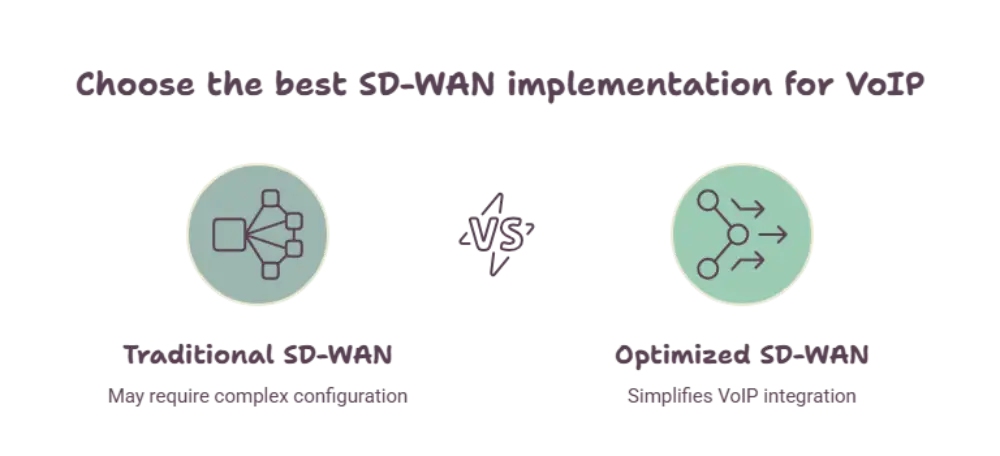
To get the most out of SD-WAN, businesses should approach implementation thoughtfully. A few best practices can help ensure a smooth transition.
Assess Current Network Performance
Before implementing SD-WAN, it helps to understand existing network weaknesses. Identifying where latency or packet loss commonly occurs allows for more targeted improvements.
Prioritize Voice Traffic from the Start
Since voice quality is often the primary goal, configuring SD-WAN to prioritize VoIP traffic early in the setup process can prevent future issues and improve user experience immediately.
Monitor Performance Continuously
SD-WAN is not a one time setup. Ongoing monitoring helps identify new issues as they arise and allows IT teams to make adjustments that keep voice quality consistently high.
Train IT Teams on SD-WAN Management
Ensuring internal teams understand how to manage and troubleshoot SD-WAN systems can lead to faster issue resolution and smoother day to day operations.
The Future of SD-WAN and Voice Communication
As businesses continue to rely heavily on real time communication tools, the role of SD-WAN is expected to grow even further. With more companies adopting cloud based phone systems and remote work becoming a long term norm, having a network built to support seamless voice communication is no longer optional.
SD-WAN continues to evolve with smarter automation and deeper integration with communication platforms, making it easier than ever to maintain high quality voice experiences across any location.
Final Thoughts
SD-WAN for VoIP offers a powerful way to improve call quality, reduce network related disruptions, and support modern communication needs. By intelligently managing traffic and prioritizing voice data, businesses can create a more reliable and consistent calling experience for both employees and customers. As communication continues to shift toward cloud based systems, investing in a smarter network strategy like SD-WAN can make a meaningful difference in day to day operations.
Frequently Asked Questions
What is SD-WAN used for in VoIP systems?
SD-WAN helps manage and prioritize network traffic, ensuring voice data travels through the most stable and efficient path available, which reduces call quality issues like jitter and dropped calls.
Does SD-WAN improve call quality for remote teams?
Yes. SD-WAN helps maintain consistent voice performance even when employees connect from different locations with varying internet quality, making it especially useful for remote and hybrid teams.
Can SD-WAN prevent dropped VoIP calls?
While no technology can guarantee zero disruptions, SD-WAN significantly reduces the risk of dropped calls by automatically rerouting traffic when a connection becomes unstable.
Is SD-WAN difficult to set up for VoIP?
Implementation complexity depends on the existing network setup, but many businesses find SD-WAN easier to manage than traditional systems due to its centralized control and automation features.
Does SD-WAN work with any VoIP provider?
SD-WAN is generally compatible with most VoIP platforms, as it focuses on optimizing the underlying network rather than the voice application itself.














Post Comment