
VoIP for Call Centers: The Complete Guide to Smarter Customer Communication
VoIP for call centers has become the backbone of modern customer support operations. Instead of relying on traditional phone lines, businesses now route calls through the internet, giving agents more flexibility, better call quality, and access to tools that simply were not possible with older systems. Whether you run a small support desk or a large multi location operation, switching to VoIP can transform how your team handles customer conversations.
In this guide, we will walk through what VoIP means for call centers, why it matters, the features that make the biggest difference, and how to get the most out of it.
What Is VoIP for Call Centers
VoIP stands for Voice over Internet Protocol. In simple terms, it allows voice calls to travel over the internet rather than through copper phone lines. For call centers, this means agents can make and receive calls using a laptop, headset, and stable internet connection instead of being tied to a physical desk phone.
This shift opens the door to features like call routing, real time analytics, and integration with customer relationship management software, all of which help teams work faster and smarter.
Why Traditional Phone Systems Fall Short
Older phone systems were built for a different era. They are rigid, hard to scale, and often disconnected from the software agents use every day. Adding a new line usually means new hardware and a technician visit. VoIP removes most of these limitations by keeping everything digital and centrally managed.
Key Benefits of VoIP for Call Centers
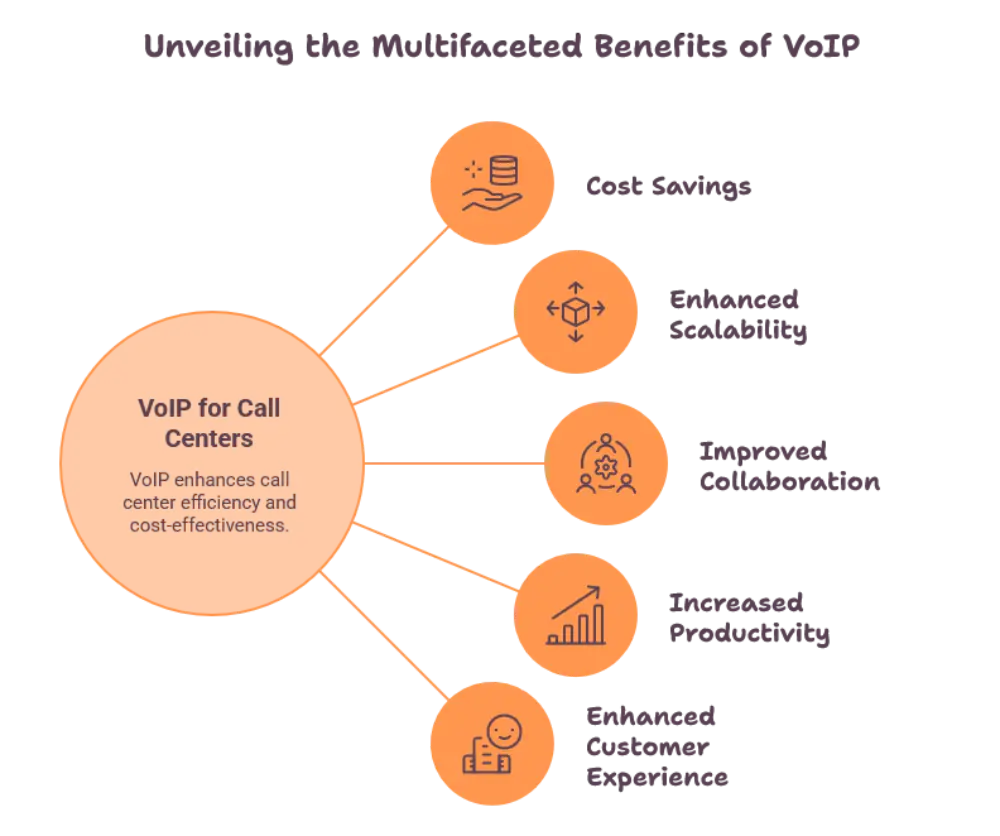
Call centers that adopt VoIP typically see improvements across several areas of daily operations.
Flexibility and Remote Work Support
Agents are no longer confined to a physical office. With VoIP, a support agent can log into the same phone system from home, a branch office, or while traveling. This makes it far easier to build hybrid or fully remote support teams without losing call quality or functionality.
Better Call Quality and Reliability
Modern VoIP platforms are built to prioritize voice traffic, which means clearer calls and fewer dropped connections when the network is properly configured. Many providers also offer automatic failover, so calls continue even if one connection has issues.
Advanced Call Routing
VoIP systems allow calls to be routed based on rules that fit your business. Calls can be sent to the next available agent, directed to a specific department, or queued based on customer priority. This reduces wait times and helps customers reach the right person faster.
Integration With Business Tools
One of the biggest advantages of VoIP is how easily it connects with other software. Agents can see customer history pop up automatically when a call comes in, log notes directly into a CRM, and track interactions without switching between multiple screens.
Scalability for Growing Teams
Adding new agents with VoIP is straightforward. There is no need to install new phone lines or wiring. New team members can be added to the system in minutes, which is especially useful for seasonal hiring or rapid growth.
Essential Features to Look for in a Call Center VoIP System
Not all VoIP systems are built the same. When evaluating options, certain features tend to make the biggest impact on day to day operations.
Interactive Voice Response
Interactive voice response, often called IVR, allows customers to navigate a menu before reaching an agent. This helps route inquiries to the correct department and reduces the number of transfers agents need to make.
Call Queuing and Callback Options
Long hold times frustrate customers. A good VoIP system offers queuing with estimated wait times and the option for customers to request a callback instead of waiting on the line.
Real Time and Historical Reporting
Supervisors need visibility into what is happening across the floor. VoIP platforms typically include dashboards showing call volume, average handle time, and agent availability, along with historical reports for longer term trends.
Call Recording and Quality Monitoring
Recording calls supports training, compliance, and dispute resolution. Many systems also allow supervisors to listen in on live calls or whisper coaching tips to agents without the customer hearing.
Omnichannel Support
Customers reach out through more than just phone calls today. Many VoIP platforms now combine voice with chat, email, and social messaging in one unified interface, giving agents a complete view of every customer interaction.
How VoIP Improves Customer Experience
A smoother internal system naturally leads to a better experience for the people calling in. Shorter wait times, fewer dropped calls, and agents who have instant access to customer history all contribute to faster resolutions. Customers notice when they do not have to repeat themselves or get transferred multiple times, and VoIP tools make that consistency much easier to achieve.
Personalization at Scale
Because VoIP integrates with customer databases, agents can greet callers by name and reference past interactions right from the start of the call. This kind of personalization used to require manual lookups, but now happens automatically the moment a call connects.
Best Practices for Implementing VoIP in a Call Center
Rolling out VoIP successfully takes some planning. A few practices consistently lead to smoother transitions.
Assess Your Network Readiness
Since VoIP relies on internet connectivity, it is worth checking bandwidth and network stability before rollout. A network built for general office use may need adjustments to comfortably handle voice traffic alongside everything else.
Train Agents on New Tools
Even a well built system underperforms if agents are not comfortable using it. Short, focused training sessions on call routing, transfer processes, and reporting tools help teams adapt quickly.
Set Clear Call Handling Protocols
Define how calls should be routed, when callbacks are appropriate, and how escalations are handled. Clear protocols prevent confusion once the system goes live.
Monitor Performance After Launch
The first few weeks after switching systems are the best time to catch issues early. Reviewing call quality, agent feedback, and reporting data regularly helps fine tune the setup.
The Future of VoIP in Call Centers
VoIP continues to evolve alongside advances in artificial intelligence and automation. Features like automated call summaries, sentiment detection, and smarter routing based on customer intent are becoming more common. As these tools mature, call centers that already run on VoIP will be positioned to adopt them without needing to overhaul their entire phone infrastructure.
Conclusion
VoIP for call centers is no longer just an alternative to traditional phone systems, it has become the standard for teams that want flexibility, reliability, and smarter tools built around customer conversations. From advanced call routing to seamless CRM integration, VoIP gives call centers the foundation they need to deliver faster, more personalized support. As customer expectations continue to rise, having a system that can scale and adapt will only become more important.
Frequently Asked Questions
What does VoIP mean for a call center?
VoIP allows a call center to make and receive calls over the internet instead of traditional phone lines, giving agents more flexibility and access to advanced calling features.
Can agents use VoIP while working remotely?
Yes, agents can log into a VoIP system from any location with a stable internet connection, making it well suited for remote and hybrid support teams.
Does VoIP work well for large call volumes?
VoIP systems are designed to handle high call volumes through features like call queuing, automatic routing, and scalable infrastructure that grows with the team.
How does VoIP improve customer service quality?
VoIP reduces wait times, minimizes dropped calls, and integrates with customer data so agents can respond faster and with more context during every interaction.
Is VoIP secure for handling customer calls?
Reputable VoIP platforms use encryption and secure network protocols to protect call data, making them suitable for handling sensitive customer conversations.














Post Comment