
Why Business VoIP Services Are the Future of Corporate Communication
Every growing company eventually reaches a point where traditional analog landlines can no longer keep up with modern workplace demands. The continuous shift toward remote work environments, paired with the need for immediate global connectivity, has made legacy systems obsolete. Modern enterprises require a flexible framework that integrates multiple communication channels into a single accessible portal.
This is exactly where business VoIP services change the entire landscape of corporate interaction. Voice over Internet Protocol converts standard audio signals into digital data packets, transmitting them safely across the internet. By removing physical wire constraints, your corporate network becomes agile, highly scalable, and fully prepared for modern digital challenges.
- The Strategic Evolution of Business VoIP Services
- Key Benefits of Implementing Business VoIP Services
- Essential Features of Modern Business VoIP Services
- How Business VoIP Services Empower Remote Workforces
- Evaluating Security and Reliability Parameters
- Preparing Your Network for Deployment
- Choosing the Perfect Fit for Your Organization
- Future Innovations in Cloud Communication
- Frequently Asked Questions
The Strategic Evolution of Business VoIP Services
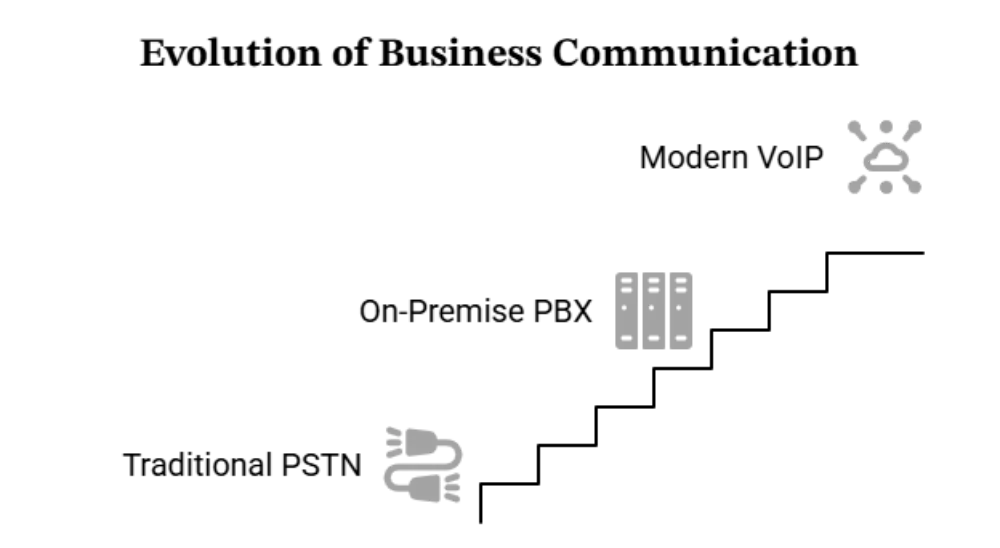
To understand why this technology has become standard across every major sector, it helps to examine how data transmission has transformed over the past few decades. Communication networks have transitioned from physical hardware dependencies to cloud environments.
This structural shift means your company no longer needs to invest in bulky physical switchboards or specialized telephone wiring. The entire communication infrastructure lives inside secure data networks, allowing you to deploy new lines globally within minutes.
Key Benefits of Implementing Business VoIP Services
Transitioning to modern digital communication brings immediate advantages that affect both daily operations and long term growth strategies.
- Enhanced Geographical Flexibility: Your employees can access their professional lines from anywhere in the world, using smartphones, laptops, or tablets. This eliminates the constraint of being anchored to a specific desk phone.
- Rapid Scale Adjustments: Adding a new user or opening a virtual branch office no longer requires a technician visit. You can provision new numbers instantly through a central software interface.
- Unified Communication Access: Beyond simple voice transmission, these platforms bring team text messaging, video conferencing, and document transmission into one clean dashboard.
- Excellent Audio Quality: Modern internet infrastructure supports high definition voice data, which drastically reduces static, background echo, and dropped calls.
Essential Features of Modern Business VoIP Services
Choosing a cloud communication platform requires looking closely at the core tools that enhance daily workflows. Modern systems offer far more than a simple dial tone.
Intelligent Automated Receptionists
An automated receptionist acts as a digital front desk for your incoming traffic. It systematically routes callers to the correct individual or department based on simple menu selections, ensuring customer inquiries are handled efficiently without manual intervention.
Seamless Software Integrations
Modern business VoIP services connect directly with your existing software stack. When a client calls, your Customer Relationship Management system can instantly display their history, notes, and previous interactions on your agent screen.
Advanced Voice Mail Transcription
Checking voice messages manually wastes valuable time. Digital systems transcribe audio notes into text instantly, delivering the written message directly to your email inbox or team messaging application for quick reading.
Detailed Operational Analytics
Data analysis plays a massive role in managing modern workforce performance. Digital communication systems track call volumes, peak activity hours, and average resolution times, giving management clear metrics to optimize staffing levels.
How Business VoIP Services Empower Remote Workforces
Managing a distributed workforce is incredibly difficult without the right tools. Traditional lines make it tough to maintain a unified corporate appearance when employees are working from home or traveling.
Digital communication platforms bridge this gap completely. By installing an application on a laptop or mobile phone, a remote worker can make and receive calls using their official corporate identity. This keeps personal cell phone numbers completely private while assuring customers that they are dealing with an established organization.
Centralized administration portals also make it easy to manage a distributed team. IT managers can reset security credentials, modify routing protocols, and monitor system performance from a single remote location.
Evaluating Security and Reliability Parameters
Protecting sensitive corporate conversations is a top priority for any modern operation. Moving your voice data onto the internet requires implementing strong protective measures.
- End to End Encryption: Look for platforms that protect your voice data packets during transmission, preventing unauthorized interception.
- Multi Factor Authentication: Require users to verify their identity through multiple verification steps before accessing the corporate network.
- Redundant Data Systems: High quality providers route data across multiple physical server locations, ensuring your lines stay up even during localized network issues.
Preparing Your Network for Deployment
Setting up business VoIP services requires making sure your local office network can handle the digital traffic. Because voice data moves in real time, minor network delays can cause noticeable audio drops.
First, check your total internet bandwidth. Each active voice call consumes a small, predictable amount of data, so your service must handle your maximum concurrent calls alongside normal web browsing. Second, configure your network routers to prioritize voice packets over standard internet traffic, keeping your audio crisp and uninterrupted during heavy data usage.
Choosing the Perfect Fit for Your Organization
Finding the right system depends entirely on your specific operational workflows. A local retail operation needs basic routing and clear desk lines, while an international support center requires deep analytical tracking and CRM software connections.
Map out your current volume, your projected growth over the next few years, and the specific software tools your staff uses daily. This checklist ensures you select a system that supports your current daily workflows while scaling easily as your business expands.
Future Innovations in Cloud Communication
The digital voice sector continues to evolve rapidly. The widespread rollout of ultra fast 5G mobile networks means mobile voice calls are becoming clearer and more reliable than ever before.
Artificial intelligence tools are also integrating deeply into business VoIP services. Modern platforms can analyze call sentiment in real time, automatically generate post call summaries, and suggest answers to customer support agents during active conversations. Investing in a cloud platform today ensures your business stays ready to adopt these advanced capabilities as they mature.
Frequently Asked Questions
What equipment do I need to use business VoIP services?
You only need a reliable internet connection and a device to make calls, such as a computer, smartphone, or tablet. If your team prefers physical hardware, you can buy specialized IP desk phones that plug directly into your internet router.
Can I keep my existing phone numbers when switching?
Yes, you can move your current numbers over through a process called number porting. Your new provider handles this transfer with your old carrier to prevent any communication downtime.
How does internet speed affect call quality?
Voice data uses very minimal bandwidth, but it requires a stable, consistent connection. Prioritizing voice traffic on your router ensures excellent clarity even during heavy internet use.
What happens to my calls if the power goes out?
Because the platform lives entirely in the cloud, a local power outage will not drop your calls. The system can automatically forward incoming traffic to mobile applications or external backup numbers.
Is it difficult to add new lines as my team grows?
Not at all. You can add new user profiles and assign telephone numbers instantly through an online administrator dashboard without any hardware changes.














Post Comment