
What Is VoIP? A Complete Guide to Voice over Internet Protocol
What Is VoIP? It is one of the most common questions people ask when they hear about modern phone systems that do not rely on traditional telephone lines. VoIP stands for Voice over Internet Protocol, and it is a technology that allows people to make voice calls using a broadband internet connection instead of a regular analog phone line. Instead of sending your voice as an electrical signal through copper wires, VoIP converts your voice into digital data packets and sends them over the internet to the person on the other end of the call.
In simple terms, VoIP turns your internet connection into a phone line. This means you can make calls using a computer, a smartphone, a VoIP enabled desk phone, or even certain smart devices, as long as you have a stable internet connection. Many people use VoIP every day without even realizing it, since several popular calling and video chat apps run on this same underlying technology.
Understanding VoIP and How It Works
To really understand VoIP, it helps to look at what happens behind the scenes during a call. When you speak into a VoIP enabled device, your voice is captured as analog sound. The VoIP system then converts that analog sound into digital data. This data is broken into small packets and sent across the internet using internet protocols, the same basic technology that allows websites, emails, and videos to travel online.
Once these packets reach the receiver, they are reassembled and converted back into sound, allowing the other person to hear your voice almost instantly. This entire process happens in a fraction of a second, which is why VoIP calls can sound just as clear as a traditional phone call, provided the internet connection is strong and stable.
VoIP relies on a stable internet connection rather than physical telephone lines, which is the biggest difference between VoIP and traditional landline systems. Because of this, VoIP calls can be made from almost anywhere in the world, as long as there is internet access available.
Why VoIP Has Become So Popular
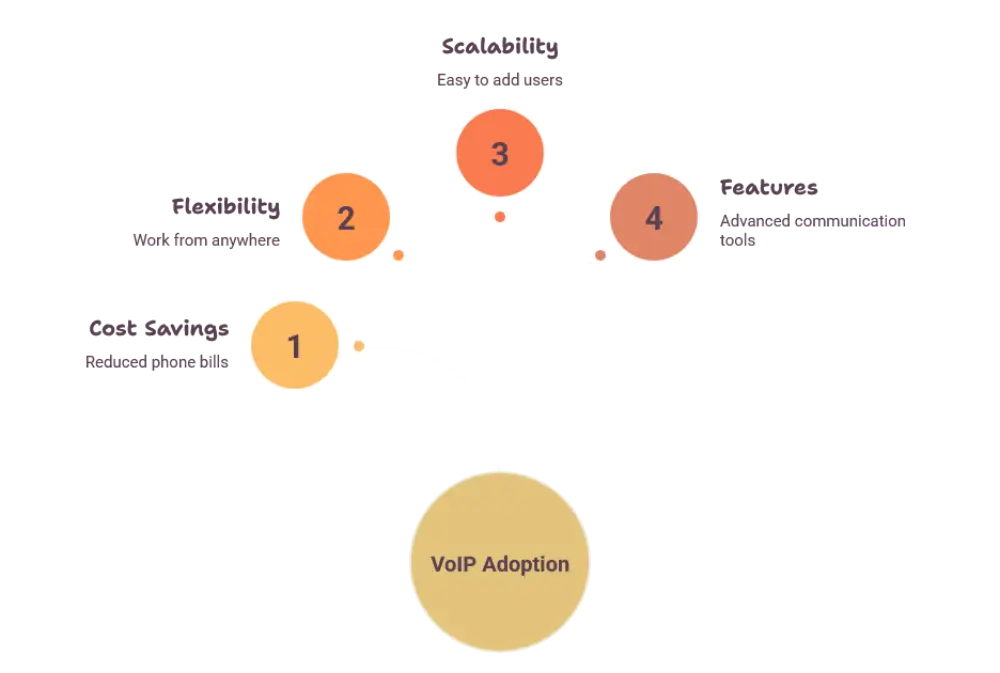
VoIP has grown in popularity because it removes many of the limitations that come with traditional phone systems. With VoIP, communication is not tied to a specific location or a single physical phone line. People can use VoIP on laptops, mobile phones, tablets, and dedicated VoIP phones, which makes it extremely flexible for both personal and professional use.
Another reason VoIP has become widely adopted is that it supports more than just voice calls. Many VoIP systems also include video calling, instant messaging, file sharing, and conferencing tools, all working through the same internet connection. This makes VoIP a more complete communication solution rather than just a way to make phone calls.
Key Features of VoIP
VoIP systems often come with a range of useful features that go beyond basic calling. While the exact features can vary depending on the system being used, some of the most common VoIP features include the following.
- Call forwarding, which allows calls to be redirected to another number or device automatically.
- Voicemail to email, which converts voicemail messages into audio files sent directly to an email inbox.
- Video calling, which allows face to face communication over the same internet connection used for voice calls.
- Call conferencing, which allows multiple people to join the same call at once.
- Mobility support, which allows the same VoIP number to be used across different devices and locations.
- Auto attendant features, which can greet callers and direct them to the right department or person automatically.
These features make VoIP especially useful for teams that work remotely or across multiple locations, since everyone can stay connected using the same system regardless of where they are physically located.
Benefits of Using VoIP
One of the main benefits of VoIP is flexibility. Since VoIP works over the internet, it is not limited by physical phone lines or a fixed location. People can make and receive calls from a laptop at home, a mobile phone while traveling, or an office desk phone, all using the same VoIP number.
VoIP also supports better integration with other digital tools. Many VoIP systems can connect with customer relationship management software, scheduling tools, and messaging platforms, which helps teams manage communication more efficiently from a single place.
Scalability is another advantage of VoIP. Adding new users or numbers to a VoIP system is usually simple, since it does not require installing new physical phone lines. This makes VoIP a practical option for growing teams and businesses that need to adjust their communication setup quickly.
VoIP can also improve call quality when used with a strong internet connection. Many modern VoIP systems are designed to deliver clear audio with minimal delay, making conversations feel natural and smooth.
Common Uses of VoIP
VoIP is used in many different settings, both personal and professional. In workplaces, VoIP is commonly used for internal communication between employees, customer support calls, and conference calls involving multiple participants in different locations. Remote and hybrid teams especially benefit from VoIP, since it allows employees to stay connected without needing to be in the same physical office.
On a personal level, VoIP is used for everyday communication with friends and family, especially across long distances. Many video calling and messaging apps that people use daily are built on VoIP technology, even if they do not openly use the term VoIP.
VoIP is also used by customer service teams to manage large volumes of incoming and outgoing calls, since many VoIP systems include tools for call routing, call queues, and call recording that help teams handle customer interactions more effectively.
Educational institutions and healthcare providers have also started adopting VoIP for similar reasons. Schools use VoIP to connect classrooms, administrative offices, and remote learning programs, while clinics and hospitals use it to manage appointment calls, patient follow ups, and communication between different departments. Since VoIP can be set up without major changes to existing infrastructure, it tends to fit smoothly into many different types of organizations.
Freelancers and small business owners also rely on VoIP to maintain a professional presence without needing a separate physical phone line. A single VoIP number can be used across a laptop, a mobile phone, and a tablet, which makes it easier to manage business calls while staying mobile throughout the day.
Things to Consider Before Switching to VoIP
While VoIP offers many advantages, there are a few important factors to keep in mind. Since VoIP depends entirely on an internet connection, the quality of your calls is closely tied to the quality and stability of your internet. A weak or unstable connection can lead to dropped calls, delayed audio, or poor sound quality.
Security is another important consideration with VoIP. Since calls travel as data over the internet, it is important to use VoIP systems that include proper security measures to protect conversations and personal information from unauthorized access.
It is also worth considering how much bandwidth your VoIP system will need, especially if multiple people in the same location are using VoIP at the same time. Having a sufficient and reliable internet connection helps ensure that VoIP calls remain clear and consistent.
Is VoIP Right for You
VoIP has become a practical and flexible communication option for individuals, remote teams, and growing organizations. By using an internet connection instead of traditional phone lines, VoIP makes it possible to stay connected from almost anywhere while also gaining access to useful features like video calling, conferencing, and call forwarding.
Understanding what VoIP is and how it works can help you decide whether it fits your communication needs, whether you are looking for a simple way to make calls online or a more complete system to support a team that works across different locations.
Frequently Asked Questions
What does VoIP stand for?
VoIP stands for Voice over Internet Protocol, which refers to technology that allows voice calls to be made using an internet connection instead of a traditional phone line.
Is VoIP the same as a regular phone call?
Not exactly. A regular phone call travels through analog signals on physical phone lines, while a VoIP call converts voice into digital data and sends it over the internet.
Do I need special equipment to use VoIP?
In many cases, VoIP can be used with just a computer, smartphone, or tablet that has internet access. Some setups may also use dedicated VoIP phones or adapters for added convenience.
Can VoIP be used for video calls as well?
Yes. Many VoIP systems support video calling in addition to voice calls, allowing users to communicate through both audio and video using the same internet connection.
Does VoIP work without internet access?
No. VoIP relies entirely on an internet connection to function, since it converts voice into digital data that travels over the internet rather than traditional phone lines.














Post Comment