
Best VoIP Providers: A Complete Guide to Choosing the Right Business Phone Solution
Finding the best VoIP providers can feel overwhelming when your business depends on clear, reliable communication every single day. Voice over Internet Protocol technology has transformed the way companies handle calls, replacing traditional phone lines with internet based systems that offer flexibility, scalability, and a range of modern features. Whether you run a small startup or manage a large customer support team, understanding what makes a VoIP provider stand out will help you make a confident decision for your business communication needs.
- What Is VoIP and Why It Matters for Businesses
- Key Benefits of Using VoIP Systems
- Seamless Integration with Business Tools
- What to Look for When Choosing a VoIP Provider
- Industries That Benefit Most from VoIP
- Common VoIP Features to Prioritize
- Tips for a Smooth VoIP Transition
- Conclusion
- Frequently Asked Questions
What Is VoIP and Why It Matters for Businesses
VoIP technology converts voice signals into digital data that travels over the internet instead of traditional copper phone lines. This shift allows businesses to make and receive calls from virtually anywhere, using desktops, laptops, mobile devices, or dedicated VoIP phones.
The appeal of VoIP goes beyond convenience. It supports remote teams, integrates with business software, and adapts easily as a company grows. As more organizations embrace hybrid and remote work models, VoIP has become a core part of daily operations rather than a nice to have feature.
Key Benefits of Using VoIP Systems
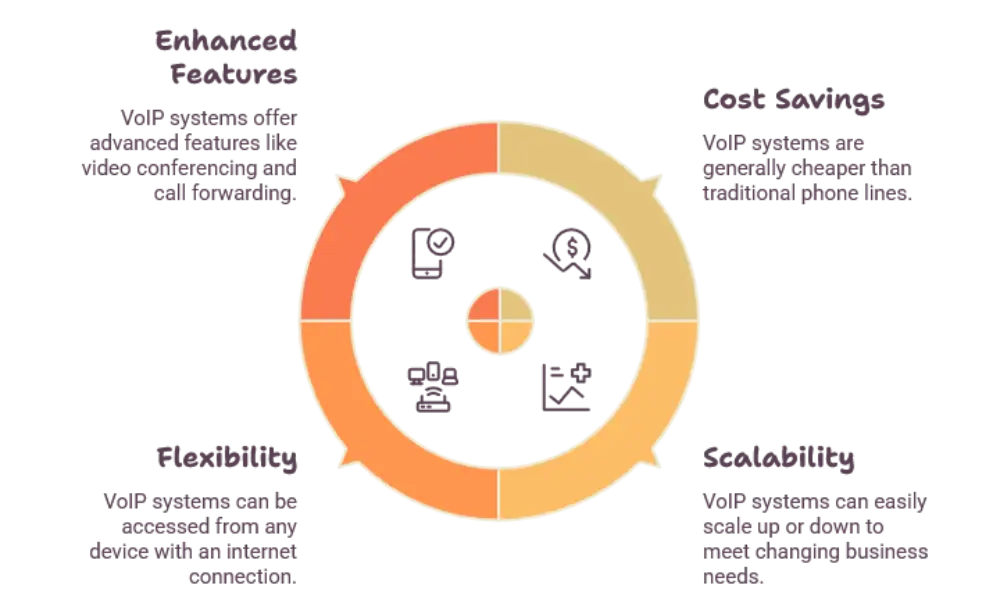
Flexibility and Mobility
VoIP allows employees to stay connected regardless of location. Calls can be routed to mobile phones, laptops, or softphone apps, making it easy for teams to work from home, travel, or operate across multiple offices without losing communication continuity.
Scalability for Growing Teams
Traditional phone systems often require physical installations and hardware upgrades as a company expands. VoIP systems, on the other hand, can scale up or down quickly, allowing businesses to add or remove lines with minimal effort.
Advanced Calling Features
Most VoIP platforms include features such as call forwarding, voicemail to email, auto attendants, call recording, and video conferencing. These tools help streamline communication and improve customer service quality.
Seamless Integration with Business Tools
Many VoIP providers integrate directly with customer relationship management platforms, helpdesk software, and productivity tools. This integration allows teams to manage calls and customer data from a single dashboard, improving efficiency across departments.
What to Look for When Choosing a VoIP Provider
Call Quality and Reliability
Clear audio and minimal call drops are essential for maintaining professionalism during client interactions. A reliable VoIP provider should offer strong uptime and consistent call quality, even during peak usage hours.
Security and Data Protection
Since VoIP calls travel over the internet, security should be a top priority. Look for providers that offer encryption, secure data centers, and compliance with industry standards to protect sensitive business communication.
Customer Support Availability
Responsive customer support can make a significant difference when technical issues arise. The best VoIP providers typically offer multiple support channels, including live chat, phone support, and detailed help documentation.
Ease of Setup and Use
A good VoIP system should be simple to configure, even for teams without a dedicated IT department. Intuitive dashboards and straightforward onboarding processes save time and reduce frustration during implementation.
Mobile and Desktop App Functionality
Since many employees work remotely or travel frequently, having a well designed mobile app is important. The best VoIP providers offer apps that mirror the functionality of their desktop platforms, ensuring a consistent experience across devices.
Industries That Benefit Most from VoIP
Customer Support Centers
Call centers rely heavily on VoIP for handling large call volumes efficiently. Features like call queuing, call routing, and real time analytics help support teams manage customer interactions smoothly.
Remote and Hybrid Teams
Companies with distributed teams benefit from VoIP because it eliminates the need for employees to be tied to a physical office phone. Calls can be answered from anywhere with an internet connection.
Healthcare and Professional Services
Clinics, law firms, and consulting agencies use VoIP to manage appointment reminders, client calls, and internal communication while maintaining a professional image.
E Commerce and Retail Businesses
Online retailers use VoIP systems to manage customer inquiries, order support, and follow up communication, ensuring a smoother shopping experience for their customers.
Common VoIP Features to Prioritize
Auto Attendant and Call Routing
An auto attendant greets callers and directs them to the right department or team member automatically, reducing wait times and improving the caller experience.
Voicemail to Email Transcription
This feature converts voicemail messages into text and sends them directly to email, allowing employees to quickly review messages without listening to lengthy recordings.
Video Conferencing Capabilities
Many VoIP platforms now include built in video conferencing tools, making it easier for teams to switch between voice calls and video meetings without using separate software.
Call Analytics and Reporting
Detailed reporting tools help managers track call volume, response times, and overall team performance, offering valuable insights for improving customer service.
Tips for a Smooth VoIP Transition
Switching to a VoIP system does not have to be complicated. Start by evaluating your current communication needs and identifying which features matter most to your team. Test internet bandwidth to ensure it can support voice traffic without interruptions. Train employees thoroughly on new tools before going live, and consider running a trial period to identify any adjustments needed before full implementation.
Conclusion
Choosing among the best VoIP providers comes down to understanding your business needs, prioritizing reliable call quality, and selecting a platform that integrates smoothly with your existing tools. VoIP technology continues to evolve, offering businesses greater flexibility, mobility, and efficiency in managing communication. By focusing on features, security, and ease of use, you can find a VoIP solution that supports your team today and grows alongside your business in the future.
Frequently Asked Questions
What is VoIP and how does it work?
VoIP stands for Voice over Internet Protocol. It converts voice calls into digital data and transmits them over the internet instead of traditional phone lines.
Is VoIP suitable for small businesses?
Yes, VoIP is highly suitable for small businesses because it is flexible, easy to scale, and supports remote work without requiring complex hardware setups.
Do I need special equipment to use VoIP?
Most VoIP systems work with existing computers, smartphones, or dedicated VoIP phones, so extensive new equipment is generally not required.
Can VoIP calls be made internationally?
Yes, VoIP allows businesses to make international calls easily, since calls are transmitted over the internet rather than traditional telecom networks.
How secure is VoIP communication?
VoIP security depends on the provider, but reputable platforms use encryption and secure servers to protect calls and business data from unauthorized access.














Post Comment