
CCaaS Explained: The Complete Guide to Contact Center as a Service
CCaaS Explained in simple terms means understanding how businesses now run their customer support operations through the cloud instead of relying on old, on premise call center hardware. CCaaS stands for Contact Center as a Service, and it has quickly become the standard way modern companies manage calls, chats, emails, and social media support from one unified platform. If you have ever wondered how businesses handle thousands of customer interactions smoothly without massive server rooms, this guide will walk you through everything you need to know.
What Is CCaaS?
CCaaS is a cloud based solution that allows companies to manage all their customer interaction channels through a single software platform. Instead of purchasing expensive physical infrastructure, businesses simply subscribe to a service and access everything online.
This model covers voice calls, live chat, email support, SMS, and even social media messaging. Everything lives in one dashboard, making it easier for agents and managers to track conversations and respond quickly.
Why Businesses Are Moving to CCaaS
Traditional contact centers required companies to buy servers, install software, and maintain IT teams just to keep phone lines running. This approach was slow, rigid, and difficult to scale.
CCaaS removes these barriers. Companies can launch a fully functional contact center within days, add new agents instantly, and adjust their setup as customer demand changes.
How CCaaS Works
At its core, CCaaS operates through cloud servers managed by a service provider. Businesses simply log in through a browser or app, and the entire communication system is ready to use.
Cloud Infrastructure
The service provider hosts all the technical infrastructure. This means businesses no longer need to worry about hardware failures, server maintenance, or manual software updates. Everything runs smoothly in the background.
Omnichannel Communication
A major part of CCaaS Explained involves understanding omnichannel support. Customers today reach out through phone calls, live chat, email, and social platforms. CCaaS brings all these channels into one unified interface so agents never have to switch between different tools.
Automatic Call Distribution
CCaaS platforms use smart routing systems to send incoming calls or messages to the most suitable agent. This reduces wait times and ensures customers are connected with someone who can actually help them.
Key Features of CCaaS Platforms
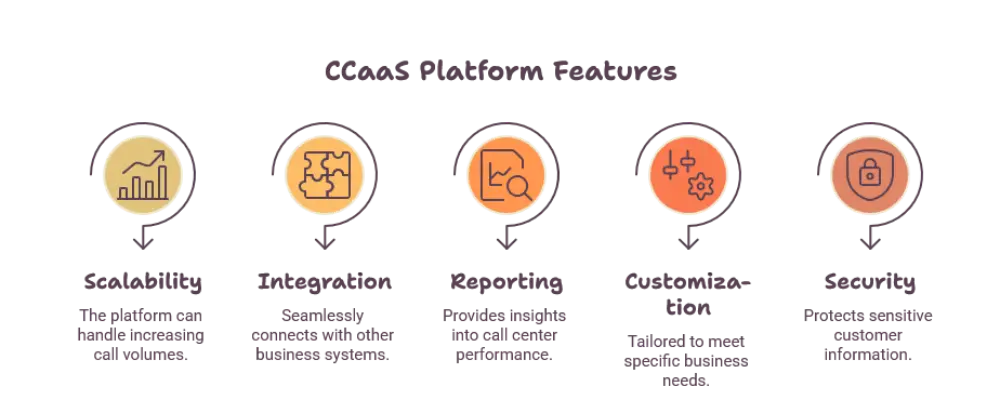
Understanding the features of CCaaS helps clarify why so many businesses are adopting this model.
Interactive Voice Response
Interactive Voice Response, commonly known as IVR, allows customers to navigate menus and select the department they need without waiting for an agent to answer manually.
Real Time Analytics
Managers can view live dashboards showing agent performance, call volume, and customer satisfaction scores. This helps teams make quick decisions and improve service quality.
Workforce Management Tools
CCaaS platforms often include scheduling tools that help supervisors manage shifts, monitor productivity, and ensure enough agents are available during peak hours.
CRM Integration
Most CCaaS solutions connect directly with customer relationship management software. This gives agents instant access to customer history, previous interactions, and personal details, which leads to faster and more personalized support.
AI Powered Support
Many modern CCaaS platforms now include AI chatbots and virtual assistants. These tools handle simple queries automatically, freeing up human agents to focus on more complex customer issues.
Benefits of Using CCaaS
Now that we have covered CCaaS Explained from a technical standpoint, let us look at why businesses actually benefit from adopting this model.
Flexibility and Scalability
Businesses can easily scale their contact center up or down based on seasonal demand. During busy periods like holiday sales, companies can add temporary agents without any complicated setup process.
Remote Work Support
Since everything operates through the cloud, agents can work from anywhere with a stable internet connection. This has become extremely valuable for companies that support remote or hybrid teams.
Improved Customer Experience
With omnichannel support and smart call routing, customers receive faster and more accurate responses. This leads to higher satisfaction and stronger customer loyalty.
Reliable Uptime
Cloud providers typically offer strong reliability and backup systems, meaning contact centers experience fewer outages compared to traditional on premise setups.
Easier Management
Supervisors can monitor everything from a single dashboard, including agent performance, customer sentiment, and call quality, without needing to be physically present in an office.
Industries That Use CCaaS
CCaaS is not limited to one type of business. It is widely used across many industries including healthcare, banking, retail, travel, insurance, and technology companies. Any business that interacts with customers regularly can benefit from a centralized cloud based communication system.
Common Misconceptions About CCaaS
Some people assume CCaaS is only for large enterprises, but that is not accurate. Small and medium businesses also use CCaaS because it eliminates the need for expensive hardware and technical staff.
Another misconception is that CCaaS is complicated to set up. In reality, most platforms are designed with simple interfaces, allowing teams to get started with minimal training.
The Future of CCaaS
As customer expectations continue to rise, CCaaS platforms are evolving with more automation, deeper AI integration, and smarter analytics. Businesses are increasingly relying on predictive tools that anticipate customer needs before they even reach out.
Voice recognition, sentiment analysis, and automated summaries are becoming standard features, making contact centers more efficient and customer friendly than ever before.
Conclusion
CCaaS Explained comes down to one core idea: businesses can now manage all their customer communication through a single, cloud based platform without the burden of physical infrastructure. From omnichannel support to AI powered tools, CCaaS has transformed how companies interact with their customers, offering flexibility, reliability, and improved service quality. As technology continues to advance, CCaaS will remain a critical part of how businesses build strong, lasting relationships with their customers.
Frequently Asked Questions
What does CCaaS stand for?
CCaaS stands for Contact Center as a Service, a cloud based platform used to manage customer communications across multiple channels.
Is CCaaS only for large businesses?
No, CCaaS is used by businesses of all sizes because it removes the need for expensive hardware and offers flexible scaling options.
What channels does CCaaS support?
CCaaS typically supports voice calls, live chat, email, SMS, and social media messaging within one unified platform.
Can agents work remotely with CCaaS?
Yes, since CCaaS operates through the cloud, agents can access the system from anywhere with a stable internet connection.
Does CCaaS include AI tools?
Many CCaaS platforms include AI chatbots, virtual assistants, and sentiment analysis to improve efficiency and customer experience.














Post Comment