
VoIP for Remote Teams: The Complete Guide to Better Communication
VoIP for Remote Teams has become one of the most searched topics among growing companies, and for good reason. As more businesses shift to distributed work models, traditional phone systems simply cannot keep up with the flexibility that modern teams need. Voice over Internet Protocol, or VoIP, allows employees to make and receive calls using an internet connection instead of a landline, giving remote teams the freedom to stay connected from anywhere in the world.
In this guide, we will explore what VoIP is, why it matters for remote teams, and how it can transform the way your business communicates.
- What Is VoIP and How Does It Work
- Why Remote Teams Need VoIP
- Key Features That Make VoIP Ideal for Remote Work
- Benefits of VoIP for Distributed Companies
- How to Choose the Right VoIP Solution for Your Remote Team
- Best Practices for Implementing VoIP in a Remote Team
- The Future of VoIP for Remote Teams
- Conclusion
- Frequently Asked Questions
What Is VoIP and How Does It Work
VoIP technology converts voice signals into digital data packets and transmits them over the internet. Instead of relying on copper wires or cellular networks, calls travel through broadband connections, making communication faster and more efficient.
The Basic Process
When someone speaks into a VoIP enabled device, their voice is captured and converted into digital data. That data is compressed, sent across the internet, and then decompressed on the receiving end so the listener hears clear audio in real time.
Devices That Support VoIP
VoIP is not limited to desk phones. It works seamlessly across laptops, smartphones, tablets, and dedicated VoIP handsets. This flexibility is exactly why remote teams find it so valuable.
Why Remote Teams Need VoIP
Remote work depends heavily on smooth communication. Without a reliable system in place, collaboration breaks down quickly. VoIP solves many of the challenges that scattered teams face every day.
Freedom From Physical Location
Employees can log into their VoIP account from anywhere with an internet connection. Whether someone is working from home, a coworking space, or traveling, they remain reachable through the same business number.
Unified Communication Channels
Most VoIP platforms combine voice calls, video conferencing, messaging, and file sharing into a single interface. This eliminates the need to juggle multiple apps and keeps conversations organized in one place.
Professional Business Presence
VoIP allows remote teams to maintain a consistent, professional phone presence even when employees are spread across different cities or countries. Clients dial one number and reach the right person every time.
Key Features That Make VoIP Ideal for Remote Work
Understanding the features behind VoIP helps clarify why it fits so naturally into remote work environments.
Call Forwarding and Routing
Calls can be automatically routed to the right department or employee based on rules set by the business. This ensures no call goes unanswered, regardless of where team members are located.
Video Conferencing Integration
Many VoIP systems include built in video calling, allowing remote teams to hold face to face meetings without needing a separate platform.
Voicemail to Email Transcription
Voicemails can be transcribed and sent directly to an employee’s email or messaging app, making it easy to catch up on missed calls without listening to lengthy recordings.
Mobile App Access
VoIP mobile apps turn any smartphone into a business phone, letting employees make calls using their company number while keeping their personal number private.
Call Analytics and Reporting
Managers can track call volume, duration, and performance metrics, offering valuable insight into how remote teams are communicating with clients and each other.
Benefits of VoIP for Distributed Companies
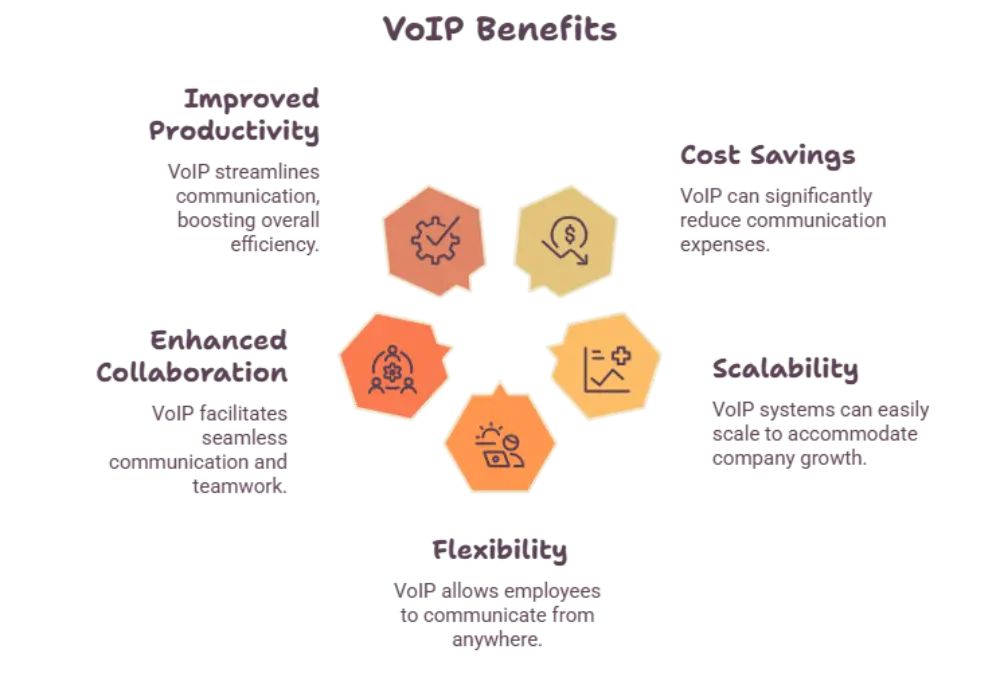
Beyond basic calling functionality, VoIP delivers several advantages that directly support remote team productivity.
Improved Collaboration
Because VoIP integrates with tools like project management software and customer relationship platforms, teams can collaborate more efficiently without switching between systems constantly.
Scalability for Growing Teams
Adding new team members to a VoIP system is simple. There is no need for physical installation or complicated wiring, making it easy to scale communication as a company grows.
Consistent Call Quality
Modern VoIP providers use advanced compression technology and network optimization to deliver clear, reliable call quality, even across long distances.
Enhanced Security Features
Reputable VoIP providers include encryption, secure login protocols, and fraud detection tools to protect sensitive business conversations.
How to Choose the Right VoIP Solution for Your Remote Team
Selecting a VoIP system requires thinking beyond just making calls. Consider how well the platform integrates with your existing workflow.
Ease of Setup and Use
A good VoIP system should be intuitive for both administrators and everyday users. Complicated interfaces slow down adoption across the team.
Integration With Existing Tools
Look for VoIP providers that connect smoothly with the software your team already uses, such as calendars, CRMs, and messaging apps.
Reliability and Uptime
Since remote teams depend entirely on internet based communication, choosing a provider known for strong uptime and dependable service is essential.
Customer Support Availability
Responsive customer support ensures that any technical issues are resolved quickly, minimizing disruption to daily operations.
Best Practices for Implementing VoIP in a Remote Team
Rolling out VoIP successfully requires a bit of planning to ensure a smooth transition.
Test Internet Bandwidth
Since VoIP relies on internet connectivity, it is important to confirm that each team member has sufficient bandwidth for clear call quality.
Provide Employee Training
Offering a short training session helps employees understand how to use features like call forwarding, voicemail transcription, and video conferencing effectively.
Set Clear Communication Guidelines
Establishing expectations around response times and preferred communication channels helps remote teams stay aligned and avoid confusion.
Monitor and Optimize Usage
Reviewing call analytics regularly allows businesses to identify areas for improvement and ensure the system is being used to its full potential.
The Future of VoIP for Remote Teams
As remote and hybrid work models continue to grow, VoIP technology is evolving alongside them. Artificial intelligence is increasingly being integrated into VoIP platforms, offering features like automated call summaries, smart routing, and real time language translation. These advancements are making remote communication even more seamless, allowing teams to collaborate effectively regardless of location.
Conclusion
VoIP for Remote Teams is no longer just a convenient option. It has become a foundational tool for businesses that want to stay connected, professional, and productive in a distributed work environment. From flexible calling options to powerful integrations and analytics, VoIP equips remote teams with everything they need to communicate effectively. As technology continues to advance, businesses that adopt VoIP early will find themselves better positioned to support their teams and serve their clients, no matter where everyone is working from.
Frequently Asked Questions
What is VoIP and why is it useful for remote teams?
VoIP stands for Voice over Internet Protocol. It allows employees to make and receive calls using an internet connection, giving remote teams the flexibility to stay connected from any location
Does VoIP require special equipment to use?
No special equipment is required. VoIP can be used on laptops, smartphones, and tablets, though dedicated VoIP phones are also available for businesses that prefer them.
Can VoIP handle video calls along with voice calls?
Yes, most modern VoIP platforms include built in video conferencing features, allowing remote teams to hold face to face meetings alongside regular phone calls.
Is VoIP reliable for teams working in different countries?
VoIP is designed to work across different regions as long as a stable internet connection is available, making it well suited for globally distributed teams.
How secure is VoIP for business communication?
Reputable VoIP providers offer encryption and secure login protocols to protect calls and data, making it a safe option for handling sensitive business conversations.














Post Comment