
VoIP Number Porting Guide: Everything You Need to Know
Switching phone systems can feel risky when your business depends on a familiar number that customers already trust. That’s exactly why this VoIP Number Porting Guide exists: to walk you through how the process works, what to prepare, and how to avoid the common mistakes that cause delays. Whether you’re moving from a traditional landline or switching between VoIP providers, porting your number doesn’t have to be complicated once you understand the steps involved.
What Is VoIP Number Porting
VoIP number porting is the process of transferring an existing phone number from one carrier to another VoIP service, without changing the number itself. This means your customers, vendors, and contacts can keep reaching you on the same number even after you’ve switched providers entirely.
Porting applies to both landline numbers and mobile numbers, and it works whether you’re moving from a traditional phone company to VoIP or from one VoIP provider to another.
Why Businesses Choose to Port Their Numbers
Keeping the same number during a system change matters for a few practical reasons.
Your brand identity stays intact since printed materials, business cards, and online listings don’t need updating.
Customer trust remains steady because people recognize your number and won’t assume a new one is spam.
Continuity of communication is preserved, so no calls or messages get lost during the transition.
How VoIP Number Porting Works
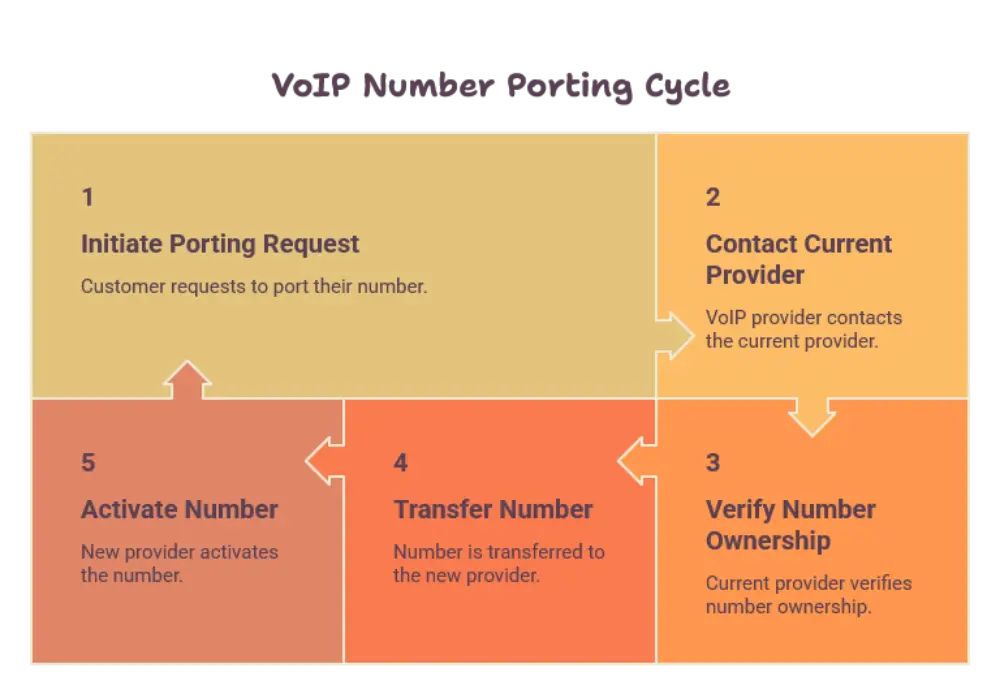
The porting process generally follows a predictable path, though timelines can vary depending on your current carrier and the type of number involved.
Step One: Choose Your New VoIP Provider
Before initiating a port, you’ll need an active account with the VoIP provider you’re switching to. Most providers require this account to be set up first so they have somewhere to route your number once the transfer completes.
Step Two: Gather the Required Information
Carriers typically ask for specific documentation to verify that you’re authorized to move the number. This usually includes your current phone bill, account number, the exact billing name and address on file, and a signed Letter of Authorization.
Having these details ready in advance is one of the easiest ways to prevent unnecessary back and forth with your new provider.
Step Three: Submit the Port Request
Once your documents are in order, your new VoIP provider submits the port request to your current carrier on your behalf. This request confirms that you want the number released and moved to the new service.
Step Four: Carrier Verification
Your losing carrier reviews the request to confirm the account details match what’s on file. Any mismatch, even something as small as an abbreviated address, can trigger a rejection and require resubmission.
Step Five: Number Activation
Once approved, the number is activated on your new VoIP system. Many providers schedule this to happen during off hours to minimize disruption to your call flow.
How Long Does VoIP Number Porting Take
Porting timelines depend on the type of number and the responsiveness of your current carrier. Landline business numbers often take longer to process than mobile numbers because of the additional verification steps involved.
Delays commonly happen when submitted information doesn’t exactly match carrier records, when there’s an active contract or early termination clause still in place, or when the losing carrier is simply slow to respond.
Staying in close contact with your new provider during this window helps you catch and correct issues quickly.
Common Challenges During Number Porting
Even a straightforward port can run into friction. Understanding these challenges ahead of time makes them easier to avoid.
Mismatched Account Information
Even minor differences between what you submit and what your carrier has on record can cause a rejection. Double check spelling, formatting, and punctuation before submitting your request.
Existing Contract Restrictions
Some carriers require you to fulfill contract terms before releasing a number. Reviewing your current agreement early prevents surprises later in the process.
Temporary Service Interruptions
While rare with careful planning, brief interruptions can occur during the actual cutover. Scheduling the switch during low call volume hours reduces the impact on your business.
Tips for a Smooth VoIP Number Porting Experience
A little preparation goes a long way toward a hassle free transition.
Confirm your account details match exactly what’s listed on your current bill.
Avoid canceling your existing service before the port is fully complete, since doing so can permanently release the number.
Keep both systems active during the transition window so you don’t miss any incoming calls.
Communicate with your team about the expected cutover date so everyone knows what to expect.
Porting Landline Numbers Versus Mobile Numbers
Landline numbers, especially those tied to business accounts, often require more documentation and take longer to process due to the way traditional carriers manage their networks. Mobile numbers tend to move faster since most carriers have streamlined their porting systems in response to regulatory requirements.
Regardless of the number type, the underlying goal is the same: transferring your number without any customers noticing a difference.
Is VoIP Number Porting Right for Your Business
If you’re planning to modernize your phone system or simply want the flexibility that VoIP offers, porting your existing number is almost always the better path compared to starting over with a new one. It protects the relationships you’ve already built and keeps your communication uninterrupted throughout the switch.
Conclusion
Porting a phone number to VoIP is a manageable process once you know what to expect. By preparing your documentation early, choosing a provider that communicates clearly, and keeping your old service active until the transfer completes, you can move your number over smoothly and keep your business running without interruption. With the right approach, number porting becomes just one small step in a much bigger upgrade to how your business communicates.
FAQs
What is VoIP number porting?
VoIP number porting is the process of moving an existing phone number from one carrier or provider to a VoIP service while keeping the same number active.
How long does it take to port a number to VoIP?
Porting timelines vary depending on the carrier and number type, with mobile numbers generally moving faster than business landline numbers.
Can I port a landline number to a VoIP service?
Yes, landline numbers can be ported to VoIP, though the process may involve additional documentation compared to mobile numbers.
Will I lose service during the porting process?
In most cases there is little to no interruption if both services remain active until the port is confirmed complete.
What documents are needed to port a VoIP number?
You typically need your current phone bill, account number, billing name and address, and a signed Letter of Authorization.














Post Comment