
VoIP for Large Enterprises: A Complete Guide to Modern Business Communication
VoIP for large enterprises has become the backbone of modern business communication, replacing traditional phone systems with flexible, internet based solutions. As organizations expand across multiple locations and time zones, enterprises need a communication system that scales effortlessly while keeping teams connected. VoIP technology delivers exactly that, offering enterprise grade reliability, advanced features, and seamless integration with existing business tools.
- What Is VoIP for Large Enterprises
- Why Large Enterprises Are Switching to VoIP
- Key Features Enterprises Need in a VoIP System
- Benefits of VoIP for Large Enterprises
- Challenges Enterprises Should Consider
- Best Practices for Implementing Enterprise VoIP
- The Future of VoIP in Enterprise Communication
- Conclusion
- FAQs
What Is VoIP for Large Enterprises
VoIP, or Voice over Internet Protocol, allows businesses to make and receive calls using the internet instead of traditional phone lines. For large enterprises, this means unifying communication across departments, branches, and countries through a single platform. Unlike small business VoIP setups, enterprise solutions are built to handle massive call volumes, complex routing rules, and strict security requirements.
How VoIP Differs From Traditional Phone Systems
Traditional phone systems rely on physical infrastructure like copper wires and PBX hardware, which can be difficult to maintain and expand. VoIP systems operate through cloud based or hybrid infrastructure, allowing enterprises to add new lines, locations, or features without extensive hardware installations. This shift reduces maintenance overhead and increases operational agility.
Why Large Enterprises Are Switching to VoIP
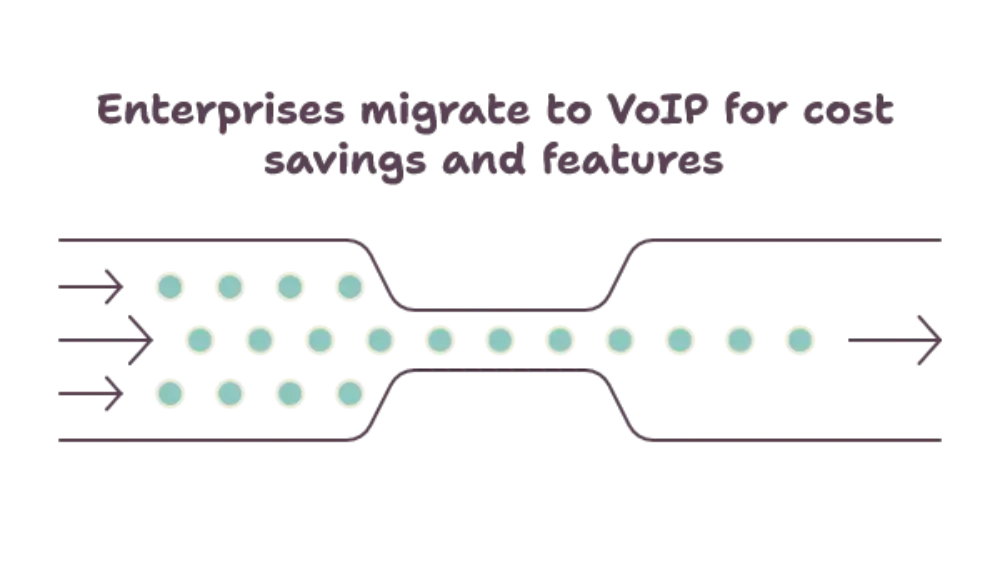
Enterprises handle enormous call volumes daily, from customer support to internal collaboration. VoIP systems are designed to manage this scale while maintaining call quality and uptime.
Scalability Across Locations
Large enterprises often operate across multiple offices, countries, or continents. VoIP makes it simple to add new users, extensions, or entire office locations without rebuilding infrastructure. Employees can connect from anywhere using the same enterprise phone number and features.
Unified Communication Across Departments
VoIP platforms often integrate voice, video conferencing, messaging, and file sharing into one unified system. This eliminates the need for multiple disconnected tools and helps departments collaborate more efficiently.
Improved Business Continuity
Since VoIP operates through the cloud, enterprises are less vulnerable to physical disruptions like hardware failures or office outages. Calls can be rerouted instantly to remote teams, ensuring business operations continue smoothly during unexpected events.
Key Features Enterprises Need in a VoIP System
Not all VoIP solutions are built for enterprise scale. Large organizations require specific features to support their complex communication needs.
Advanced Call Routing
Enterprise VoIP systems offer intelligent call routing based on department, location, or availability. This ensures customers and internal teams reach the right person quickly, improving response times and customer satisfaction.
Integration With Business Tools
Modern VoIP platforms integrate with CRM systems, helpdesk software, and productivity tools. This allows sales and support teams to access customer information instantly during calls, improving efficiency and personalization.
Security and Compliance
Large enterprises handle sensitive data, making security a top priority. Enterprise VoIP solutions include encryption, secure authentication, and compliance features that protect business communications from cyber threats.
Analytics and Reporting
VoIP systems provide detailed call analytics, including call volume, duration, and performance metrics. These insights help enterprises optimize staffing, identify bottlenecks, and improve overall communication strategy.
Benefits of VoIP for Large Enterprises
Switching to VoIP offers enterprises measurable improvements in communication efficiency and collaboration.
Enhanced Mobility for Remote and Hybrid Teams
VoIP allows employees to make and receive business calls from laptops, mobile devices, or softphones. This flexibility supports remote and hybrid work models without compromising communication quality.
Simplified IT Management
Centralized VoIP platforms reduce the complexity of managing multiple phone systems across locations. IT teams can manage users, permissions, and settings from a single dashboard, saving time and reducing errors.
Better Customer Experience
Features like call queuing, automated attendants, and CRM integration help enterprises deliver faster and more personalized customer service, strengthening client relationships.
Support for Global Expansion
As enterprises grow internationally, VoIP makes it easy to establish local phone numbers and maintain consistent communication standards across regions, without complex telecom setups.
Challenges Enterprises Should Consider
While VoIP offers significant advantages, enterprises should plan carefully to ensure a smooth transition.
Network Reliability
Since VoIP depends on internet connectivity, enterprises need robust and redundant network infrastructure to prevent call quality issues or downtime.
Change Management
Transitioning from traditional phone systems to VoIP requires employee training and clear communication to ensure smooth adoption across departments.
System Integration Planning
Enterprises should evaluate how VoIP will integrate with existing software systems to avoid workflow disruptions during implementation.
Best Practices for Implementing Enterprise VoIP
A successful VoIP rollout requires strategic planning and ongoing optimization.
Conduct a Network Assessment
Before implementation, enterprises should evaluate their network bandwidth and infrastructure to ensure it can support VoIP traffic without quality degradation.
Prioritize Security Configuration
Enterprises should implement strong encryption protocols, firewalls, and access controls to protect voice data from potential breaches.
Provide Employee Training
Comprehensive training ensures employees understand new features and workflows, minimizing disruption during the transition period.
Monitor Performance Continuously
Ongoing monitoring of call quality, uptime, and user feedback helps enterprises identify issues early and maintain a high performing communication system.
The Future of VoIP in Enterprise Communication
As artificial intelligence and cloud technology continue to evolve, VoIP systems are becoming smarter and more integrated. Features like AI powered call analytics, voice recognition, and automated customer interactions are shaping the next generation of enterprise communication. Large enterprises that adopt these advancements early will gain a significant edge in operational efficiency and customer engagement.
Conclusion
VoIP for large enterprises is no longer just an alternative to traditional phone systems, it is a strategic communication solution that supports scalability, mobility, and collaboration across global operations. By adopting enterprise grade VoIP, organizations can streamline internal communication, enhance customer experience, and build a resilient infrastructure ready for future growth. As business communication continues to evolve, VoIP stands out as a foundational technology for enterprises aiming to stay connected, agile, and competitive.
FAQs
What makes VoIP suitable for large enterprises compared to small businesses?
Enterprise VoIP systems are built to handle higher call volumes, complex routing, multiple locations, and advanced security requirements that small business systems typically do not support.
How does VoIP improve customer service for enterprises?
VoIP offers features like automated call routing, queuing, and CRM integration, which help enterprises respond faster and provide more personalized customer interactions.
Is VoIP secure enough for enterprise level communication?
Enterprise VoIP platforms include encryption, secure authentication, and compliance measures designed to protect sensitive business communications from cyber threats.
What should enterprises evaluate before implementing VoIP?
Enterprises should assess network reliability, integration with existing tools, employee training needs, and security configurations before rolling out VoIP company wide.














Post Comment