
VoIP vs UCaaS: Understanding the Difference and Choosing the Right Solution
When businesses evaluate modern communication tools, the comparison of VoIP vs UCaaS comes up almost immediately. Both technologies rely on the internet to handle calls and messages, yet they serve very different purposes. Understanding how they work, what they offer, and where they overlap can help you decide which system fits your business communication needs.
What Is VoIP
VoIP stands for Voice over Internet Protocol. It is a technology that allows voice calls to travel over the internet instead of traditional phone lines. Instead of using copper wires, VoIP converts your voice into digital data packets and sends them through your internet connection.
Businesses often adopt VoIP because it replaces old fashioned landline systems with a more flexible calling method. It focuses primarily on voice communication, although some VoIP providers include basic features like voicemail, call forwarding, and conferencing.
How VoIP Works
VoIP works by converting analog voice signals into digital data. That data is compressed and transmitted through the internet to the recipient, where it is converted back into audio. This process happens almost instantly, allowing for smooth, real time conversations.
What Is UCaaS
UCaaS stands for Unified Communications as a Service. It is a cloud based platform that combines multiple communication tools into a single unified system. This includes voice calling, video conferencing, team messaging, file sharing, and sometimes even customer engagement tools.
Rather than focusing only on voice, UCaaS aims to unify every communication channel your business uses. Employees can switch between chat, video calls, and voice calls within one platform, improving collaboration and reducing the need for multiple separate tools.
How UCaaS Works
UCaaS operates entirely through the cloud, meaning there is no need for on site hardware or complex infrastructure. A UCaaS provider manages the entire system, offering updates, security patches, and new features automatically. Businesses simply log into the platform to access all their communication tools in one place.
VoIP vs UCaaS: Key Differences
Although VoIP is often a core component of UCaaS, the two are not the same. Here is how they differ in practical terms.
Scope of Communication
VoIP is designed mainly for voice calls. It focuses on delivering clear, reliable phone conversations over the internet. UCaaS, on the other hand, goes far beyond voice. It brings together messaging, video meetings, file sharing, and collaboration tools under one unified system.
Features and Functionality
VoIP systems typically include essential calling features such as call routing, voicemail, and conferencing. UCaaS platforms include all of these voice features plus additional tools like team chat, video conferencing, presence indicators, and integration with productivity apps.
Scalability and Flexibility
VoIP can scale reasonably well, especially for businesses that only need reliable calling. UCaaS is built with scalability in mind from the start, allowing companies to add new communication channels and users without disrupting existing workflows.
Integration Capabilities
VoIP systems may offer limited integration with other business tools. UCaaS platforms are designed to integrate deeply with customer relationship management systems, project management tools, and productivity suites, creating a smoother workflow across departments.
Benefits of VoIP
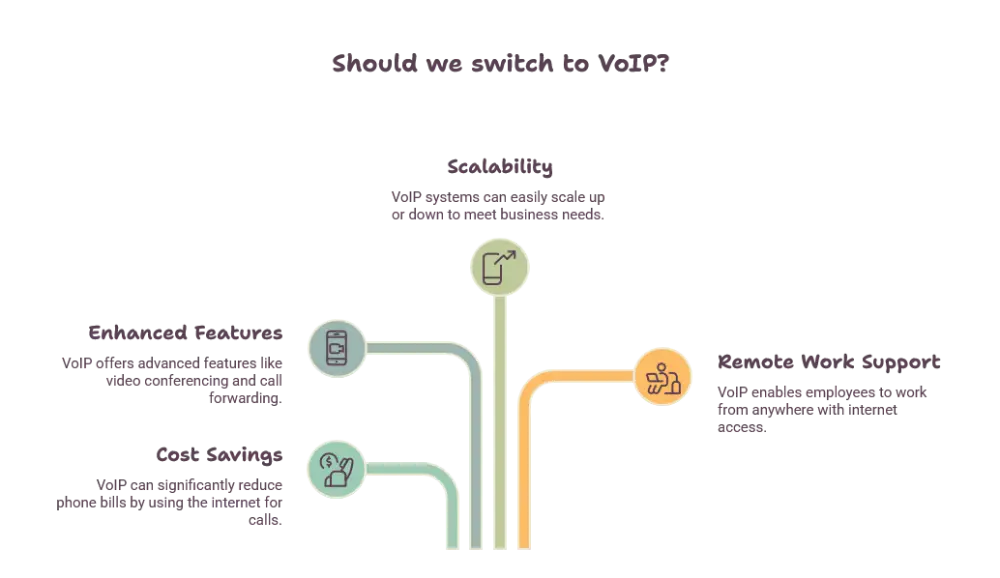
VoIP offers several advantages for companies that primarily need dependable phone communication.
Simple and Focused Communication
Because VoIP concentrates on voice calling, it tends to be straightforward to set up and use. Teams that only need reliable calling capabilities may find VoIP sufficient for their daily operations.
Improved Call Quality
Modern VoIP systems often deliver clear call quality, especially with a stable internet connection. Many providers also offer noise cancellation and call optimization features.
Remote Accessibility
VoIP allows employees to make and receive calls from anywhere with an internet connection, supporting remote and hybrid work arrangements.
Benefits of UCaaS
UCaaS provides a broader set of advantages for businesses that require more than just voice communication.
Centralized Communication Hub
UCaaS combines voice, video, messaging, and collaboration tools into a single dashboard. This reduces the need to switch between multiple applications throughout the day.
Enhanced Collaboration
With features like screen sharing, team chat, and video conferencing built into one system, UCaaS makes it easier for teams to collaborate on projects regardless of location.
Simplified Management
Because UCaaS is entirely cloud hosted, IT teams spend less time maintaining hardware and more time focusing on strategic priorities. Updates and security improvements are handled by the provider.
Better Customer Experience
Many UCaaS platforms include tools that support customer facing teams, such as unified messaging and integration with support software, helping businesses respond to customers more efficiently.
Which One Should You Choose
Choosing between VoIP vs UCaaS depends largely on how your business communicates internally and externally. If your primary need is dependable voice calling without additional collaboration tools, VoIP may be enough. However, if your business relies on multiple communication channels such as messaging, video meetings, and file sharing, UCaaS offers a more complete and unified solution.
Consider how your teams currently communicate. Do they rely heavily on video meetings or team chat platforms in addition to phone calls. If so, a unified system like UCaaS could streamline operations and improve productivity. If voice calling is your main requirement, a dedicated VoIP solution might be the simpler choice.
Conclusion
Both VoIP and UCaaS play important roles in modern business communication, but they are built for different purposes. VoIP focuses specifically on delivering reliable voice calls over the internet, while UCaaS unifies voice, video, messaging, and collaboration into a single cloud based platform. Understanding these differences allows you to choose a communication strategy that aligns with how your business actually operates, ensuring smoother collaboration and more efficient day to day communication.
FAQs
What is the main difference between VoIP and UCaaS
VoIP focuses primarily on voice calling over the internet, while UCaaS combines voice, video, messaging, and collaboration tools into one unified cloud based platform.
Is UCaaS built on top of VoIP technology
Yes, UCaaS typically includes VoIP as its voice calling component, then adds additional communication and collaboration features around it.
Which businesses benefit most from VoIP
Businesses that primarily need reliable phone communication without additional collaboration tools often find VoIP to be a simple and effective solution.
Which businesses benefit most from UCaaS
Businesses that rely on multiple communication channels, such as video conferencing, team messaging, and file sharing, tend to benefit most from a unified UCaaS platform.
Can a business switch from VoIP to UCaaS later
Yes, many businesses start with VoIP for basic calling needs and later upgrade to UCaaS as their communication and collaboration requirements grow.














Post Comment