SIP Trunking vs PRI: Which Business Phone Solution Wins in 2026
Choosing between SIP Trunking vs PRI is one of the most common decisions businesses face when upgrading their voice communication systems. Both technologies connect your phone system to the public telephone network, but they work in very different ways and offer very different levels of flexibility. Understanding how each one functions can help you decide which option fits your organization’s communication needs.
What Is PRI?
PRI stands for Primary Rate Interface. It is a traditional telecommunications standard that uses physical phone lines to carry voice calls. PRI has been the backbone of business phone systems for decades and is still used by many organizations that rely on legacy phone hardware.
How PRI Works
A PRI circuit typically bundles multiple channels into a single physical connection. Each channel can carry one call at a time, meaning the number of simultaneous calls your business can handle depends directly on how many channels you have installed.
PRI requires dedicated hardware such as a PBX system and physical cabling from your telecom provider. Because it relies on physical infrastructure, expanding capacity often means installing new lines and equipment.
What Is SIP Trunking?
SIP stands for Session Initiation Protocol. SIP Trunking is a modern method of delivering voice communication over the internet instead of physical phone lines. Instead of connecting through copper wires, calls travel as data packets through your existing internet connection.
How SIP Trunking Works
SIP Trunking connects your phone system to the internet using a broadband connection. Your business can scale the number of simultaneous calls up or down simply by adjusting your service plan, without needing new physical lines installed.
Since SIP Trunking is internet based, it integrates naturally with cloud communication tools, unified communication platforms, and remote work setups.
SIP Trunking vs PRI: Key Differences
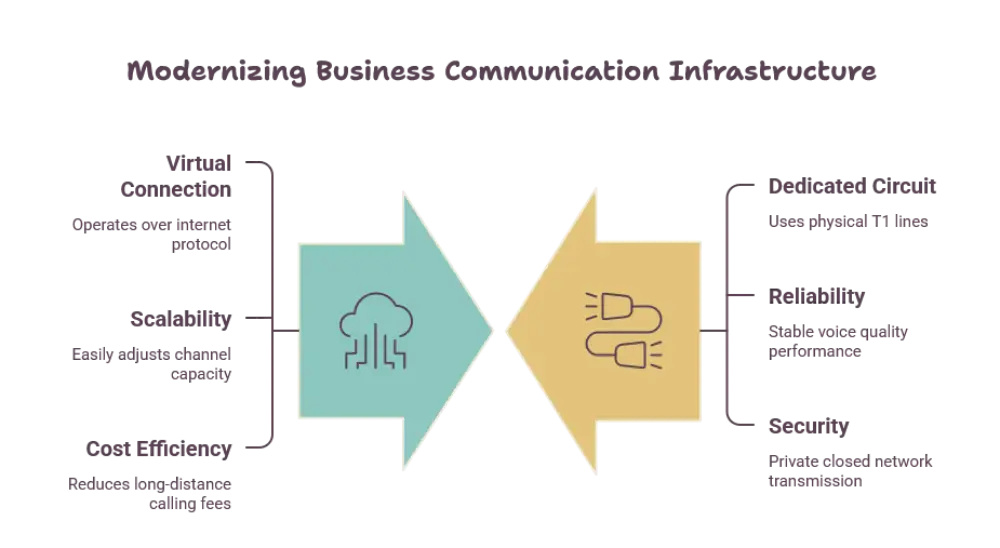
When comparing SIP Trunking vs PRI, the differences go far beyond how the technology transmits calls. Each system affects flexibility, reliability, scalability, and how your business adapts to future communication needs.
Infrastructure Requirements
PRI depends on physical lines and dedicated hardware installed at your location. SIP Trunking depends on internet bandwidth and can run through existing network infrastructure your business already has in place.
Scalability
Adding capacity with PRI usually means ordering new physical channels, which can involve installation timelines and hardware upgrades. SIP Trunking allows businesses to add or remove call capacity through simple configuration changes, making it far more adaptable to seasonal demand or growth.
Reliability and Redundancy
PRI lines are known for stability because they operate on a dedicated network separate from general internet traffic. However, PRI has limited failover options since it relies on physical infrastructure.
SIP Trunking can offer strong reliability too, especially when paired with redundant internet connections or failover routing to mobile numbers during outages. The flexibility of routing calls dynamically gives SIP Trunking an advantage in disaster recovery scenarios.
Geographic Flexibility
PRI is tied to a physical location because it depends on wired connections. This makes it less practical for businesses with multiple offices or remote teams.
SIP Trunking is location independent. As long as there is an internet connection, calls can be routed anywhere, making it a strong fit for distributed teams and multi office businesses.
Integration With Modern Tools
SIP Trunking works seamlessly with cloud based phone systems, video conferencing tools, and unified communication platforms. PRI generally requires additional gateways or adapters to connect with modern software, which can add complexity.
Advantages of PRI
PRI still offers some advantages that make it a viable choice for certain businesses.
- Stable and dedicated connection separate from general internet traffic
- Long standing reliability with established infrastructure
- Familiar technology for legacy phone systems
- Consistent call quality due to dedicated bandwidth
Advantages of SIP Trunking
SIP Trunking brings a different set of strengths that align with how modern businesses operate.
- Flexible scaling based on real time business needs
- Easier integration with cloud tools and remote work environments
- Simplified disaster recovery through call rerouting
- No dependency on physical phone lines or on site hardware
- Suitable for businesses with multiple locations
Which One Should Your Business Choose?
The right choice between SIP Trunking vs PRI depends on your business structure, growth plans, and existing infrastructure.
When PRI Might Make Sense
Businesses with a single location, stable call volume, and existing PRI compatible hardware may find that sticking with PRI avoids unnecessary disruption. Organizations in industries with strict regulatory requirements around dedicated lines may also prefer PRI’s dedicated infrastructure.
When SIP Trunking Might Make Sense
Businesses looking for scalability, remote work support, or integration with cloud communication tools will likely benefit more from SIP Trunking. Companies with multiple offices or a growing number of employees working from different locations often find SIP Trunking to be a more adaptable long term solution.
Making the Transition From PRI to SIP Trunking
Many businesses that currently use PRI eventually transition to SIP Trunking as they modernize their communication systems. This shift is often driven by the need for flexibility, remote work capability, and easier integration with software tools.
Steps Businesses Typically Consider
Transitioning usually involves evaluating current call volume, checking internet bandwidth capacity, and confirming compatibility with existing phone systems. Many providers offer hybrid solutions that allow businesses to run SIP Trunking alongside PRI during the transition period, reducing disruption to daily operations.
Conclusion
The debate of SIP Trunking vs PRI ultimately comes down to how your business operates today and where it is heading in the future. PRI offers dependable, dedicated connectivity that has served businesses for years, while SIP Trunking offers flexibility, scalability, and compatibility with modern communication tools. Businesses that value adaptability and remote connectivity tend to lean toward SIP Trunking, while those with stable, single location operations may continue to rely on PRI. Evaluating your communication needs, growth plans, and technology environment will help determine which solution aligns best with your business goals.
Frequently Asked Questions
What is the main difference between SIP Trunking and PRI?
SIP Trunking delivers calls over the internet using data packets, while PRI delivers calls through physical phone lines. This fundamental difference affects scalability, flexibility, and how each system integrates with modern communication tools.
Is SIP Trunking more reliable than PRI?
Reliability depends on setup. PRI offers dedicated line stability, while SIP Trunking can achieve strong reliability through redundant internet connections and failover routing. Neither option is universally more reliable without considering the specific infrastructure in place.
Can a business use both SIP Trunking and PRI at the same time?
Yes. Many businesses run a hybrid setup during a transition period, allowing them to gradually shift from PRI to SIP Trunking without disrupting daily communication.
Does SIP Trunking work for businesses with multiple office locations?
Yes. SIP Trunking is location independent, which makes it especially useful for businesses with multiple offices or remote teams needing centralized call management.
Do I need special hardware to switch from PRI to SIP Trunking?
In many cases, existing phone systems can be adapted using compatible gateways, though some businesses may need to update equipment to fully support internet based calling.














Post Comment