
How to Prevent VoIP Fraud: A Complete Guide for Businesses
VoIP fraud is one of the fastest growing threats facing modern businesses today. As more companies switch to internet based phone systems, criminals are finding new ways to exploit weak configurations, stolen credentials, and unmonitored call activity. Understanding how to prevent VoIP fraud is no longer optional. It is a critical part of protecting your communication systems, your data, and your bottom line.
In this guide, you will learn what VoIP fraud looks like, the most common attack methods, and practical steps you can take to keep your business safe.
What Is VoIP Fraud
VoIP fraud happens when someone gains unauthorized access to a Voice over Internet Protocol system and uses it for illegal or malicious purposes. This can include making unauthorized calls, stealing sensitive information, or hijacking an entire phone system for criminal activity.
Because VoIP runs over the internet rather than traditional phone lines, it is often more vulnerable to hacking attempts, especially when security settings are weak or outdated.
Common Signs of VoIP Fraud
Businesses experiencing VoIP fraud often notice unusual call volumes, unexpected international calls, strange spikes in phone bills, or unfamiliar numbers dialing out during odd hours. Spotting these red flags early can prevent major financial and reputational damage.
Common Types of VoIP Fraud
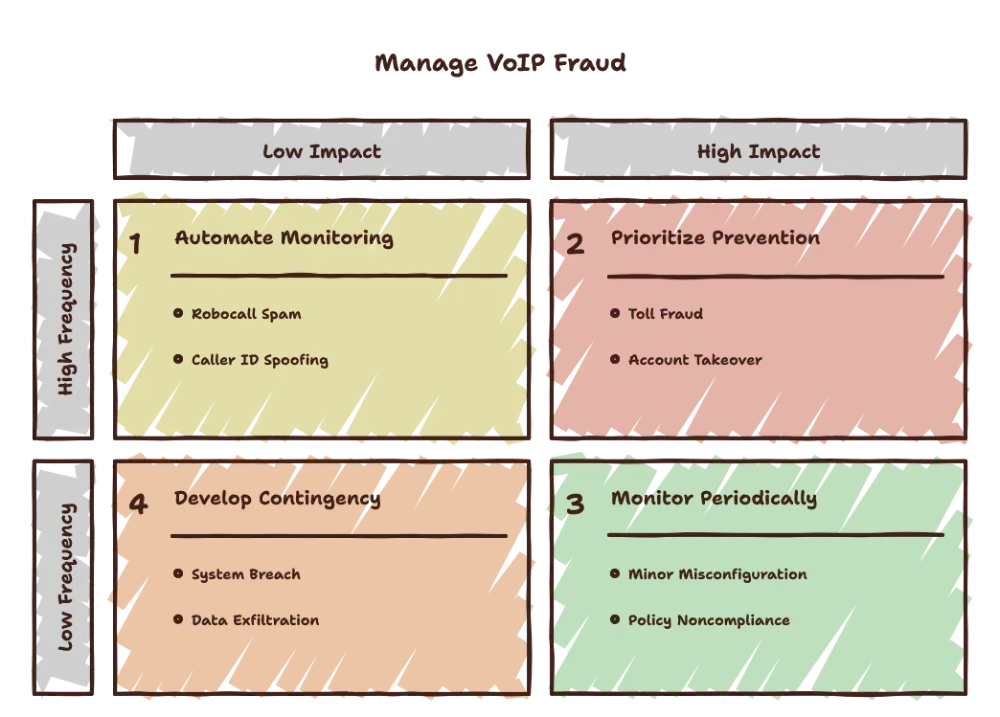
Understanding the different forms of VoIP fraud helps businesses build stronger defenses against each specific threat.
Toll Fraud
Toll fraud occurs when hackers gain access to a phone system and use it to make expensive international or premium rate calls. The business is left responsible for the charges, which can add up quickly.
Caller ID Spoofing
In this scheme, fraudsters disguise their real phone number to appear as a trusted source. This tactic is often used to trick employees or customers into sharing sensitive information.
Account Takeover
Attackers gain access to VoIP accounts through weak passwords or phishing attacks. Once inside, they can make calls, access voicemail, or steal confidential data.
Wangiri Fraud
Also known as the one ring scam, this method involves fraudsters calling a number once and hanging up, hoping the recipient calls back a premium rate number, resulting in high charges.
How to Prevent VoIP Fraud
Now that you understand the threats, let us look at practical strategies to protect your VoIP system.
Secure Your Network
Start by securing your network infrastructure. Use firewalls specifically designed for VoIP traffic, encrypt your calls using SRTP and TLS protocols, and regularly update your VoIP software to patch known vulnerabilities.
Use Strong Authentication
Weak passwords are one of the easiest ways for fraudsters to gain access. Require strong, unique passwords for all VoIP accounts and enable multi factor authentication wherever possible.
Monitor Call Patterns
Set up real time monitoring tools that track call volume, destination, and duration. Unusual patterns, such as a sudden spike in international calls, should trigger immediate alerts.
Restrict International Calling
If your business does not regularly make international calls, consider blocking or restricting this feature. This simple step can significantly reduce the risk of toll fraud.
Train Your Team
Human error remains one of the biggest vulnerabilities in any security system. Educate employees about phishing attempts, suspicious calls, and safe password practices.
Partner With a Trusted Provider
Work with a VoIP provider that prioritizes security. Look for providers offering built in fraud detection, encryption, and proactive monitoring as part of their service.
Set Usage Limits and Alerts
Configure spending limits and automated alerts so you are notified immediately if call activity exceeds normal patterns. This allows you to respond quickly before damage escalates.
Regularly Audit Your System
Conduct routine security audits to identify outdated software, unused accounts, or misconfigured settings that could leave your system exposed.
What to Do If You Suspect VoIP Fraud
If you notice signs of fraud, act quickly. Disable compromised accounts immediately, change all passwords, and contact your VoIP provider to report the issue. Review call logs thoroughly to understand the scope of the breach and strengthen your security settings to prevent future incidents.
Conclusion
VoIP fraud can cause serious financial and operational damage if left unchecked. By understanding common fraud tactics and implementing strong security measures such as network protection, authentication protocols, call monitoring, and employee training, businesses can significantly reduce their risk. Staying proactive and working with a security focused VoIP provider is the best way to protect your communication systems for the long term.
Frequently Asked Questions
What is VoIP fraud?
VoIP fraud refers to unauthorized access or misuse of a Voice over Internet Protocol phone system, often resulting in financial loss or data theft.
How can I tell if my VoIP system has been hacked?
Warning signs include unexpected international calls, unusual spikes in call volume, unfamiliar numbers in call logs, and sudden increases in phone charges.
Is VoIP fraud common for small businesses?
Yes, small businesses are often targeted because they may have fewer security resources compared to larger organizations, making them easier targets.
Can VoIP fraud be completely prevented?
While no system is completely immune to fraud, strong security practices such as encryption, authentication, and monitoring can drastically reduce the risk.
What should I do immediately after detecting VoIP fraud?
Disable affected accounts, change all passwords, notify your VoIP provider, and review call logs to assess the extent of the breach.














Post Comment