
SIP vs VoIP: What Is the Real Difference?
If you are exploring business communication tools, you have probably come across the comparison of SIP vs VoIP and wondered if they are the same thing or two different technologies. Many people use these terms interchangeably, but understanding how they relate to each other can help you make smarter decisions for your business phone system. In this post, we will break down what SIP and VoIP actually mean, how they work together, and which one might fit your communication needs.
What Is VoIP?
VoIP stands for Voice over Internet Protocol. It is a broad technology that allows voice calls to be made over the internet instead of traditional phone lines.
In simple terms, VoIP takes your voice, converts it into digital data, and sends it through an internet connection to the person on the other end. This is the technology that powers most modern calling apps and business phone systems today.
How VoIP Works
VoIP works by breaking down audio into small data packets. These packets travel over the internet and are reassembled on the receiving end so the conversation sounds natural and clear. Since it relies on internet connectivity rather than physical phone lines, VoIP offers more flexibility for remote teams and multi location businesses.
What Is SIP?
SIP stands for Session Initiation Protocol. It is not a separate calling technology like VoIP. Instead, SIP is a signaling protocol used to set up, manage, and end communication sessions such as voice calls, video calls, and messaging.
Think of SIP as the traffic controller that manages how a call connects, stays active, and disconnects. Without SIP or a similar protocol, VoIP calls would have no structured way to begin or end properly.
How SIP Works
When you make a VoIP call, SIP works in the background to establish the connection between two devices. It handles tasks such as locating the user, initiating the session, negotiating the type of media being used, and closing the session once the call ends.
SIP is widely used in business communication because it supports multiple types of media, including voice, video, and instant messaging, all within a single protocol.
SIP vs VoIP: The Core Difference
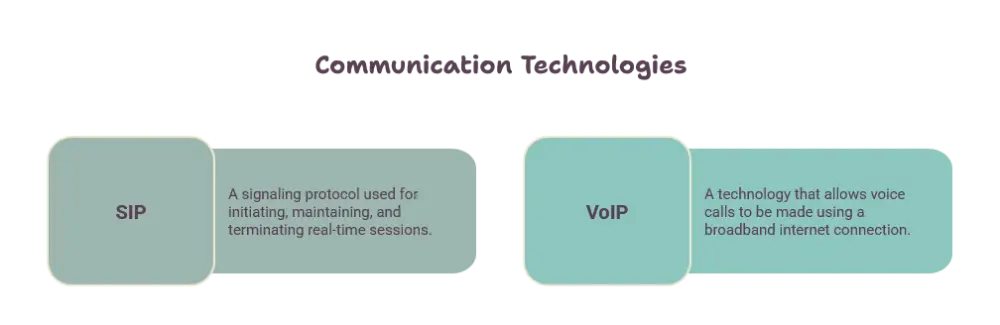
The easiest way to understand SIP vs VoIP is this. VoIP is the overall technology of making calls over the internet. SIP is the protocol that helps VoIP calls get connected and managed properly.
In other words, SIP is a component within the larger VoIP ecosystem. You cannot really compare them as competitors because they are not built to do the same job. One is the method of communication, and the other is the technical standard that makes structured communication possible.
A Simple Analogy
Imagine VoIP as the entire postal system that delivers letters. SIP would be the specific set of rules that tells the postal worker how to pick up a letter, deliver it correctly, and confirm it reached its destination.
Without VoIP, there is no internet based calling. Without SIP, VoIP calls would lack the structure needed to connect reliably.
Why Businesses Use SIP Trunking
One of the most common ways companies use SIP is through SIP trunking. SIP trunking allows a business to replace traditional phone lines with a virtual connection that carries voice traffic over the internet using SIP as the signaling method.
This setup connects a company’s phone system to the public telephone network through the internet, allowing calls to flow in and out smoothly.
Benefits of SIP Trunking for Businesses
SIP trunking allows companies to scale their communication systems easily as they grow. It also supports integration with existing phone systems, making it a practical choice for businesses that already have infrastructure in place.
Since SIP trunking uses the internet for call routing, it also allows for greater flexibility in managing multiple office locations or remote teams under one unified communication system.
Why Businesses Use VoIP
VoIP as a whole gives businesses the ability to move away from physical phone lines entirely. Many companies use VoIP powered platforms that include calling, video conferencing, and messaging in a single interface.
VoIP is especially useful for businesses with remote employees since calls can be made from any location with an internet connection, whether through a desk phone, mobile app, or computer software.
Common VoIP Use Cases
Businesses often use VoIP for customer support call centers, internal team communication, virtual meetings, and softphone applications that let employees make calls directly from their laptops.
SIP and VoIP Working Together
Rather than thinking of SIP vs VoIP as a competition, it is more accurate to see them as partners. VoIP is the technology that enables internet calling, while SIP is the protocol that keeps those calls organized, connected, and reliable.
Most modern business phone systems rely on both. VoIP delivers the actual audio and video data, and SIP manages the session so the communication happens smoothly from start to finish.
When You Might Hear the Terms Used Interchangeably
Because SIP is so deeply integrated into most VoIP systems, many people simply refer to their entire phone system as VoIP without mentioning SIP specifically. This is one reason the two terms often get confused in everyday conversation.
Which One Should You Focus On?
If you are setting up a business phone system, you do not need to choose between SIP and VoIP. Instead, you should focus on selecting a communication provider that uses SIP as the underlying protocol for a strong and dependable VoIP service.
Understanding both terms simply helps you have more informed conversations with your provider or IT team when setting up or troubleshooting your communication systems.
Conclusion
The debate around SIP vs VoIP is really more about understanding how these two technologies work together rather than choosing one over the other. VoIP is the technology that allows calls to travel over the internet, while SIP is the protocol responsible for setting up and managing those calls. Together, they form the foundation of most modern business communication systems, offering flexibility, scalability, and reliable connectivity for companies of all sizes.
Frequently Asked Questions
Is SIP the same as VoIP?
No. VoIP is the overall technology used to make calls over the internet, while SIP is the protocol that helps set up, manage, and end those calls.
Can I use VoIP without SIP?
VoIP systems typically rely on a signaling protocol like SIP to function properly. While other protocols exist, SIP is the most widely used standard in modern VoIP systems.
What is SIP trunking used for?
SIP trunking allows businesses to connect their phone systems to the public telephone network through the internet, replacing the need for traditional physical phone lines.
Do I need special equipment to use SIP or VoIP?
Most VoIP systems work with existing computers, mobile devices, or IP phones. Some setups may require compatible hardware, but many providers offer software based solutions as well.
Is SIP only used for voice calls?
No. SIP supports multiple types of communication sessions, including voice calls, video calls, and instant messaging, making it a versatile protocol for unified communication systems.














Post Comment