
VoIP Encryption Explained
VoIP encryption explained simply, it is the process of scrambling voice data so that only the sender and the intended receiver can understand it. As more businesses and individuals rely on internet based calling instead of traditional phone lines, understanding how this protection works has become essential. Without it, voice traffic traveling across the internet could be intercepted, recorded, or manipulated by anyone with access to the network path.
This guide breaks down what VoIP encryption is, how it works, why it matters, and what you should look for when choosing a secure calling solution.
What Is VoIP Encryption
VoIP stands for Voice over Internet Protocol. It allows phone calls to be made using an internet connection rather than traditional copper telephone lines. Because these calls travel as data packets across public and private networks, they are exposed to many of the same risks as any other online traffic.
Encryption converts your voice data into unreadable code before it leaves your device. It then gets decoded back into audio only once it reaches the authorized recipient. This means that even if someone manages to intercept the data mid transmission, all they would see is scrambled information with no real meaning.
Why Voice Calls Need Protection
People often assume that phone calls are automatically private simply because they sound like a normal conversation. In reality, unencrypted VoIP traffic can be captured using widely available network tools. This exposes sensitive details such as business negotiations, financial information, personal conversations, and confidential client data.
How VoIP Encryption Works
VoIP encryption typically works in two main layers. The first layer protects the signaling data, which includes information like who is calling whom and how the call is set up. The second layer protects the actual voice content once the call is connected.
Signaling Encryption
Signaling encryption secures the setup phase of a call. This includes caller identity, call routing information, and connection details. Protocols such as SIP over TLS are commonly used here, wrapping the signaling information in a secure encrypted tunnel so outsiders cannot see who is calling or being called.
Media Encryption
Media encryption protects the actual audio stream once the call begins. This is where protocols like SRTP come into play. SRTP encrypts the voice packets themselves, ensuring that even if the data is intercepted while traveling across the network, it remains unreadable without the correct decryption key.
Common VoIP Encryption Protocols
Several protocols work together to keep VoIP calls secure. Understanding them helps clarify how modern voice systems achieve strong protection.
TLS for Signaling Security
Transport Layer Security wraps the signaling messages in an encrypted layer. It prevents attackers from learning details about the call setup process, including who is involved and when the call takes place.
SRTP for Media Security
Secure Real Time Transport Protocol is the standard used to encrypt actual voice data. It ensures the audio content of a call cannot be captured and understood by unauthorized parties.
ZRTP for Key Exchange
ZRTP is a protocol used to establish encryption keys directly between the two communicating devices without relying on a central server to manage them. This adds an extra layer of trust since the encryption keys are generated and verified by the endpoints themselves.
Types of Encryption Used in VoIP
VoIP systems generally rely on a mix of encryption methods depending on their purpose.
Symmetric Encryption
Symmetric encryption uses a single shared key for both encrypting and decrypting the data. It is fast and efficient, which makes it well suited for encrypting the continuous stream of audio during a live call.
Asymmetric Encryption
Asymmetric encryption uses a pair of keys, one public and one private. It is often used during the initial connection process to securely exchange the symmetric keys that will then be used for the actual voice encryption.
End to End Encryption in VoIP
End to end encryption means that voice data is encrypted on the sender’s device and only decrypted on the receiver’s device. No intermediate server, including the service provider’s own infrastructure, has access to the readable content of the conversation.
This is considered the strongest form of protection because it removes the possibility of the service provider, network operators, or any third party viewing or storing the actual call content.
Why It Matters for Privacy
End to end encryption ensures that even if a provider’s servers are compromised, attackers cannot access the actual conversations that took place. This is particularly important for organizations handling sensitive discussions such as legal matters, healthcare information, or confidential business strategy.
Benefits of VoIP Encryption
Encrypted VoIP communication offers several important advantages beyond simple privacy.
It protects sensitive conversations from eavesdropping by unauthorized parties. It helps organizations meet regulatory and compliance requirements related to data protection. It reduces the risk of call interception during transmission across public networks. It builds trust with clients and partners who expect their communications to remain confidential. It strengthens the overall security posture of a business’s communication infrastructure.
Common Challenges With VoIP Encryption
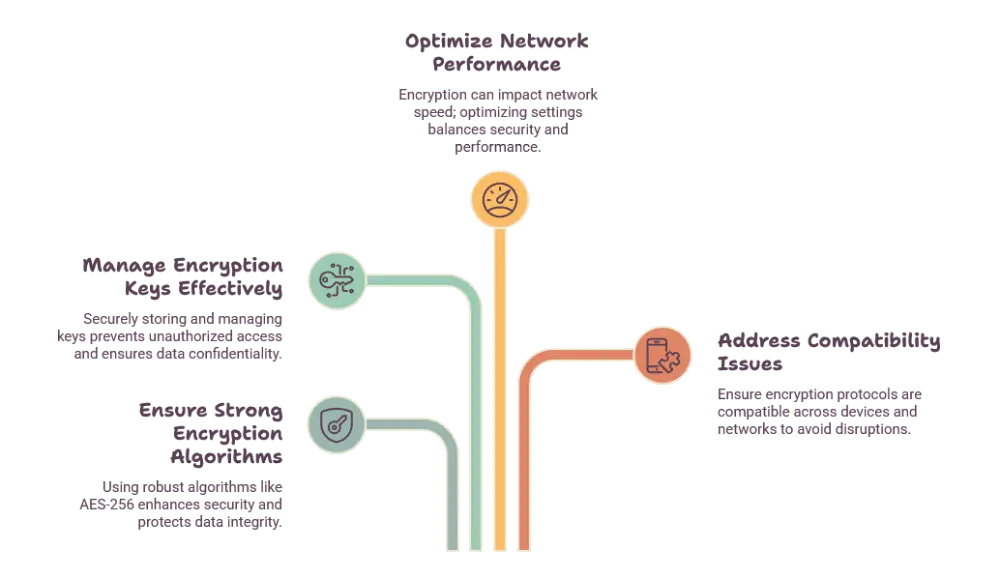
While encryption is essential, it does come with a few technical considerations worth understanding.
Call Quality Impact
Encryption adds a small amount of processing overhead, which can occasionally affect call quality if the underlying network or hardware is not optimized properly. Modern systems are generally designed to minimize this impact.
Compatibility Between Systems
Not all VoIP providers or devices support the same encryption protocols. This can create compatibility issues when different systems attempt to establish a secure encrypted connection with one another.
Key Management Complexity
Properly generating, distributing, and rotating encryption keys requires careful system design. Poor key management can weaken the overall security of an otherwise well encrypted system.
How to Choose a Secure VoIP Provider
When evaluating a VoIP solution, it helps to look beyond marketing claims and focus on the actual technical safeguards in place.
Look for support of TLS and SRTP as a baseline requirement. Ask whether end to end encryption is available for sensitive calls. Check if the provider offers clear documentation about their security architecture. Confirm that encryption is applied consistently across all devices and endpoints used within the organization.
Conclusion
VoIP encryption plays a critical role in keeping voice communication private and secure in a world where calls travel across shared digital networks. By understanding how signaling and media encryption work together, along with protocols like TLS, SRTP, and ZRTP, you can make more informed decisions about the calling systems you rely on. Whether for personal privacy or business confidentiality, prioritizing strong encryption ensures that conversations remain exactly what they should be, private between the people having them.
FAQs
What is VoIP encryption?
VoIP encryption is the process of scrambling voice data during a call so that only the sender and receiver can understand the content, preventing outside parties from intercepting or listening in.
Is VoIP encryption necessary for personal use?
Yes, even personal conversations can contain sensitive information, and encryption ensures that private discussions remain protected from potential interception on shared networks.
What is the difference between TLS and SRTP in VoIP?
TLS protects the signaling information used to set up a call, while SRTP protects the actual voice data exchanged once the call is connected.
Does encryption slow down VoIP calls?
Encryption adds minimal processing overhead, and most modern systems are optimized to maintain call quality while still applying strong security measures.
What is end to end encryption in VoIP?
End to end encryption means voice data is encrypted on the caller’s device and only decrypted on the receiver’s device, so no intermediate server can access the actual conversation content.













Post Comment