
International VoIP Calling: The Smarter Way to Stay Connected Across Borders
International VoIP calling has changed the way people and businesses talk to each other across countries. Instead of relying on traditional phone lines, VoIP uses the internet to carry voice calls, making it possible to reach family, clients, or teams anywhere in the world with just a stable connection. As remote work and global business expand, more people are turning to VoIP as their primary way of communicating internationally.
What Is International VoIP Calling
VoIP stands for Voice over Internet Protocol. It converts your voice into digital data and sends it over the internet instead of through copper wires or cellular towers. When applied to international communication, this means you can call someone in another country using an app, a VoIP phone, or even your computer, as long as both ends have internet access.
This technology eliminates the need for separate international calling plans from traditional carriers. It also allows businesses to set up virtual phone numbers in different countries, giving them a local presence without opening a physical office there.
How VoIP Calls Work
When you make a VoIP call, your device captures your voice and converts it into digital packets. These packets travel through the internet to the recipient’s device, where they are converted back into audio. This entire process happens in milliseconds, allowing for real time conversation similar to a regular phone call.
Because the call travels over data networks rather than traditional telecom infrastructure, it can bypass many of the limitations that come with international calling through standard phone providers.
Why Businesses and Individuals Choose International VoIP Calling
Global communication is no longer optional for most companies. Teams work across time zones, customers expect quick support, and families are often spread across different countries. VoIP fits naturally into this reality because it removes many of the technical barriers that once made international communication complicated.
Flexibility Across Devices
VoIP calling works on smartphones, laptops, tablets, and dedicated VoIP phones. This flexibility means employees can take calls from home, the office, or while traveling, all using the same business number. Customers or clients calling in never notice a difference in where the call is actually answered.
Scalability for Growing Teams
As a company grows, adding new phone lines through traditional systems can be a slow and technical process. VoIP systems are far easier to scale because new users can often be added through a simple dashboard rather than physical wiring or hardware installation.
Better Call Quality Options
Modern VoIP providers use advanced codecs and network optimization to deliver clear audio quality. When internet connections are strong and stable, VoIP calls can sound as clear as or clearer than traditional phone lines, especially for long distance and international routes.
Key Features to Look for in International VoIP Calling
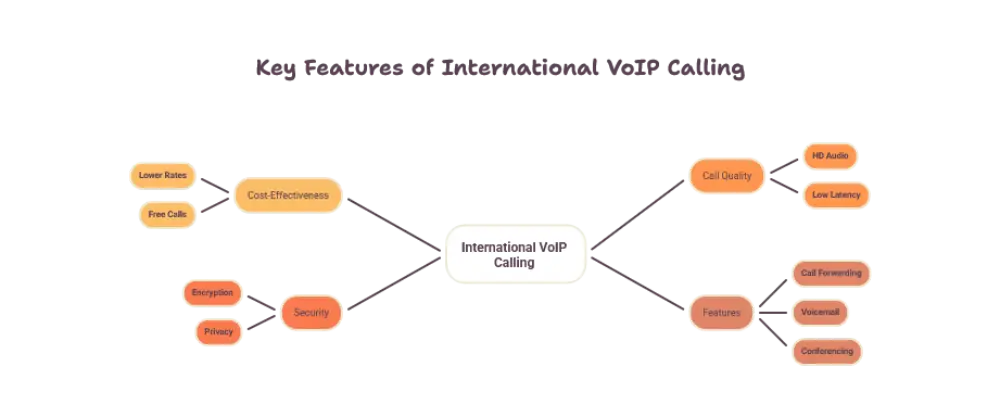
Not all VoIP services are built the same way. When evaluating a provider for international calling, certain features make a noticeable difference in day to day usability.
Global Virtual Numbers
Virtual numbers let you establish a local presence in another country without being physically located there. This is especially useful for businesses trying to build trust with international customers, since a local number often feels more approachable than a foreign one.
Call Routing and Forwarding
Smart call routing ensures that incoming calls reach the right person or department, no matter where that person is located. Forwarding rules can send calls to a mobile phone, a desktop app, or another team member automatically if the first line is unavailable.
Voicemail to Email and Transcription
Many VoIP platforms convert voicemail messages into text and send them directly to email. This feature helps international teams keep track of missed calls without needing to physically listen to every voicemail, which is especially helpful across different time zones.
Video and Messaging Integration
Modern VoIP platforms often bundle voice calling with video conferencing and instant messaging. This creates a unified communication hub, allowing international teams to switch between call types depending on what the conversation requires.
Common Use Cases for International VoIP Calling
International VoIP calling serves a wide range of purposes beyond simple phone conversations.
Remote and Distributed Teams
Companies with employees spread across multiple countries rely on VoIP to keep communication consistent. A shared VoIP system ensures every team member, regardless of location, can be reached through the same business number and platform.
Customer Support Across Borders
Businesses offering support to international customers use VoIP to provide local numbers in different regions. This reduces friction for customers who might otherwise avoid calling a foreign number.
Personal International Communication
VoIP is not limited to businesses. Individuals living abroad or with family overseas use VoIP apps to stay connected without depending on traditional international calling plans from mobile carriers.
Tips for Getting the Best International VoIP Calling Experience
A few practical habits can significantly improve call quality and reliability when using VoIP internationally.
Prioritize a Stable Internet Connection
Since VoIP depends entirely on internet connectivity, a stable and sufficiently fast connection is essential. Wired connections tend to offer more consistency than public or shared wireless networks.
Use Quality Headsets or Microphones
Audio hardware plays a bigger role in call clarity than many people expect. A decent headset with noise cancellation can dramatically improve how clear your voice sounds on the other end.
Keep Software Updated
VoIP apps and systems receive regular updates that often include performance and security improvements. Keeping your software current helps avoid unnecessary call quality issues or dropped connections.
Test Call Quality Before Important Conversations
For important business calls, it helps to do a quick test call beforehand to check audio quality and connection stability, especially when calling internationally where network conditions can vary.
Conclusion
International VoIP calling has become an essential tool for anyone who needs to communicate across borders, whether for business or personal reasons. It offers flexibility, scalability, and a range of features that traditional phone systems simply cannot match. As internet infrastructure continues to improve worldwide, VoIP is likely to remain the preferred method for staying connected internationally, offering a practical and modern alternative to conventional calling.
Frequently Asked Questions
What is international VoIP calling used for?
It is used to make voice calls across countries over the internet, allowing businesses and individuals to communicate globally without relying on traditional phone networks.
Do I need special equipment for international VoIP calling?
No special equipment is required in most cases. A smartphone, computer, or tablet with internet access and a VoIP app is usually enough to get started.
Can businesses get local phone numbers in other countries with VoIP?
Yes, most VoIP providers offer virtual numbers that give businesses a local presence in different countries without needing a physical office there.
Is international VoIP calling reliable for business use?
Yes, when paired with a stable internet connection, VoIP calling offers reliable and clear communication, and many providers include features like call routing and voicemail transcription to support business needs.
Can VoIP calling be combined with video conferencing?
Yes, many VoIP platforms integrate voice calling with video conferencing and messaging, creating a single communication system for international teams.














Post Comment