
Call Analytics Explained
Call Analytics Explained is a topic every business owner should understand if phone calls play any role in generating leads or supporting customers. Call analytics refers to the process of tracking, recording, and analyzing phone conversations to understand customer behavior, measure marketing performance, and improve overall communication quality. As more companies rely on phone calls to convert leads, understanding this technology has become essential for growth.
What Is Call Analytics
Call analytics is a technology driven approach that captures data from every phone call a business receives or makes. This includes details such as call duration, caller location, call outcome, and even the tone of conversation using AI powered speech recognition.
The goal is simple. Businesses want to know which marketing campaigns are generating calls, how those calls are handled, and whether they result in successful conversions.
Why Businesses Track Phone Calls
Phone calls often carry more value than clicks or form submissions. A customer calling a business usually shows strong intent to buy or seek support. Tracking these calls helps companies understand what happens after a customer decides to reach out directly.
How Call Analytics Works
Call analytics systems use unique tracking numbers assigned to different marketing channels. When a customer calls a specific number, the system records data about the source of that call, whether it came from a website, social media ad, or search engine.
This data is then processed using speech analytics tools that can identify keywords, customer sentiment, and call outcomes automatically.
Key Components of Call Analytics
Call recording captures the entire conversation for quality checks and training purposes. Call tracking numbers identify which marketing source triggered the phone call. Speech analytics uses AI to detect emotions, keywords, and intent within a conversation. Call scoring evaluates how well an agent handled the interaction based on predefined criteria.
Benefits of Using Call Analytics
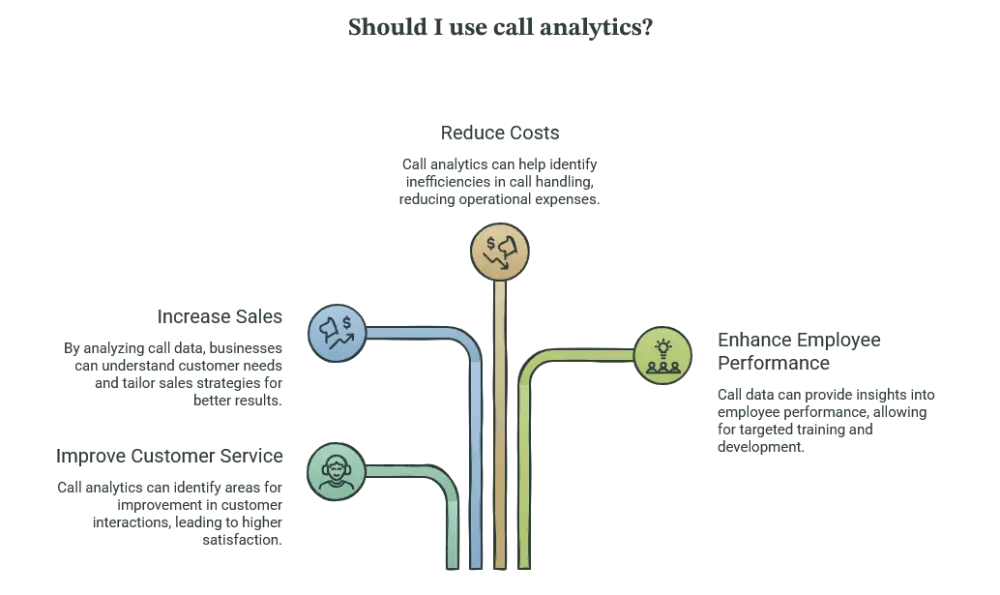
Call analytics offers several advantages for businesses trying to improve both marketing and customer service performance.
Better Marketing Insights
Businesses can identify which advertising channels are driving the most valuable phone calls. This insight allows marketing teams to focus efforts on campaigns that generate real conversations instead of just clicks.
Improved Customer Experience
By reviewing call recordings and analytics, companies can identify common customer pain points. This helps improve scripts, training, and response times, leading to a smoother customer journey.
Stronger Sales Performance
Sales teams can use call analytics to understand what messaging resonates with potential customers. Listening to successful calls helps replicate winning strategies across the entire team.
Data Driven Decision Making
Instead of relying on guesswork, businesses can make informed decisions using real conversation data. This includes identifying missed calls, peak call times, and common customer objections.
Types of Call Analytics Metrics
Understanding key metrics is essential for making the most of call analytics tools.
Call Volume
This metric shows how many calls a business receives within a specific time period. It helps identify trends and staffing needs.
Call Duration
Call duration indicates how long conversations typically last. Short calls may suggest quick resolutions, while longer calls may suggest missed opportunities, depending on context.
Call Source
This shows where the call originated, whether from paid ads, organic search, or referral sources. It helps marketing teams allocate their efforts more effectively toward channels that perform well.
Call Outcome
This metric reveals whether a call resulted in a sale, inquiry, complaint, or missed opportunity. It is one of the most valuable data points for improving conversion rates.
Call Analytics and Artificial Intelligence
Modern call analytics platforms increasingly use artificial intelligence to enhance accuracy and efficiency. AI can automatically transcribe calls, detect sentiment, and flag conversations that require special attention.
Sentiment Analysis
AI powered sentiment analysis determines whether a caller sounds satisfied, frustrated, or neutral. This helps businesses respond proactively to unhappy customers before issues escalate.
Keyword Spotting
AI tools can detect specific keywords mentioned during a call, such as complaints, product names, or competitor mentions. This helps businesses understand customer needs more precisely.
Industries That Benefit from Call Analytics
Call analytics is useful across nearly every industry that relies on phone communication.
Healthcare
Medical practices use call analytics to track appointment bookings and improve patient communication.
Real Estate
Real estate agents rely on call tracking to identify which listings or campaigns generate the most inquiries.
Automotive
Car dealerships use call analytics to understand which advertisements drive showroom visits and test drive requests.
Home Services
Plumbers, electricians, and contractors use call tracking to measure lead quality and improve response times.
Best Practices for Implementing Call Analytics
To get the most value from call analytics, businesses should follow a few important practices.
Set Clear Goals
Before implementing call tracking, businesses should define what they want to measure, such as lead quality or campaign performance.
Train Staff on Call Handling
Employees should understand how calls are analyzed and use insights to improve their communication skills.
Regularly Review Call Data
Consistent review of call recordings and reports ensures that businesses stay updated on customer needs and market trends.
Integrate with Other Marketing Tools
Connecting call analytics with CRM and marketing platforms allows for a complete view of the customer journey.
Conclusion
Call Analytics Explained shows how modern businesses can transform simple phone conversations into powerful insights. From tracking marketing performance to improving customer service, call analytics plays a crucial role in helping companies make smarter, data driven decisions. As AI continues to advance, call analytics tools will only become more accurate and valuable for businesses aiming to grow through better communication.
FAQs
What is call analytics used for?
Call analytics is used to track, record, and analyze phone conversations to understand marketing performance, customer behavior, and overall communication quality.
How does call tracking help marketing teams?
Call tracking helps marketing teams identify which campaigns or channels generate the most valuable phone calls, allowing better focus on effective strategies.
Can call analytics improve customer service?
Yes, call analytics helps businesses review conversations, identify common issues, and train staff to handle customer interactions more effectively.
Does call analytics use artificial intelligence?
Many modern call analytics platforms use AI for sentiment analysis, keyword detection, and automatic transcription to improve accuracy.
Which industries benefit most from call analytics?
Industries such as healthcare, real estate, automotive, and home services benefit significantly from call analytics due to their reliance on phone communication.














Post Comment