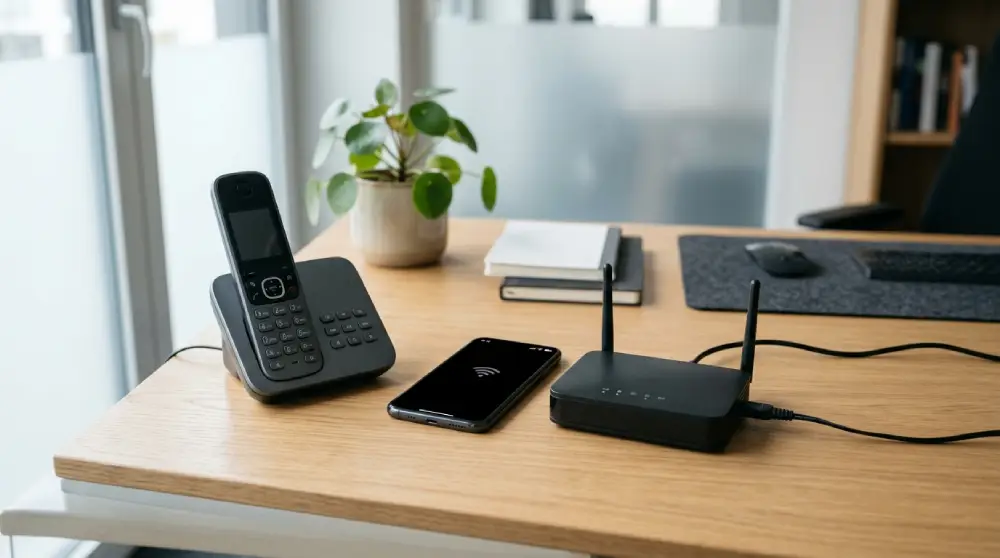
DECT Phones vs WiFi Phones: Which One Should You Choose
Choosing between DECT Phones vs WiFi Phones is one of the most common decisions businesses and homeowners face when setting up a reliable phone system. Both technologies offer wireless communication, but they work in very different ways. Understanding these differences helps you pick the right system for your space, your budget goals, and your daily communication needs.
In this guide, we will break down how each technology works, where each one shines, and how to decide which fits your situation best.
What Are DECT Phones
DECT stands for Digital Enhanced Cordless Telecommunications. It is a wireless standard built specifically for voice communication. DECT phones have been used in homes and offices for many years because of their consistent call quality.
How DECT Technology Works
DECT phones operate on a dedicated frequency band that is separate from WiFi and Bluetooth signals. This means they rarely experience interference from other wireless devices in your home or office. The base station communicates directly with the handset using this reserved frequency, which keeps the connection stable.
Because DECT does not rely on your internet connection, calls generally sound clear even if your internet speed slows down.
Common Uses of DECT Phones
DECT phones are popular in environments where clear voice calls matter more than internet dependent features. You will often find them in
Small offices that need simple internal communication
Reception desks and front office setups
Homes that want a reliable landline alternative
Warehouses or retail spaces with multiple handsets on one base station
What Are WiFi Phones
WiFi phones, sometimes called WiFi VoIP phones, use your internet connection to make and receive calls. Instead of a dedicated frequency, they rely on your wireless network to transmit voice data.
How WiFi Phones Work
These phones convert your voice into data packets and send them over your WiFi network using Voice over Internet Protocol technology. Because they use the internet, WiFi phones can support more advanced features like video calling, instant messaging, and integration with software tools.
The quality of your call depends heavily on your internet speed and network stability.
Common Uses of WiFi Phones
WiFi phones are ideal for businesses that already depend on cloud based tools and want everything connected in one ecosystem. Typical use cases include
Remote teams that need flexible communication tools
Offices already using cloud based software
Businesses that want video calling built into their phone system
Companies expanding across multiple locations
Key Differences Between DECT Phones and WiFi Phones
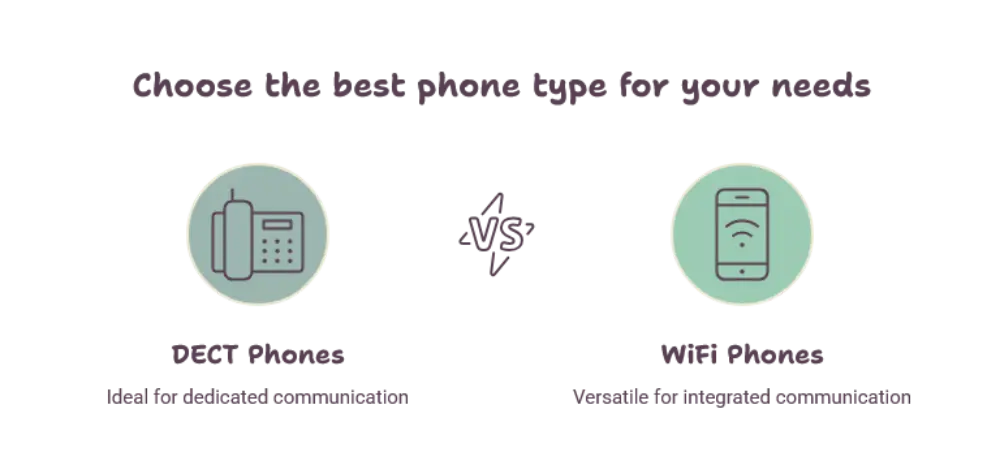
Now that we understand the basics, let’s compare these two technologies directly.
Call Quality and Reliability
DECT phones tend to offer more consistent call quality because they operate on their own dedicated frequency. WiFi phones can experience quality drops if the network is congested or if too many devices are connected at once.
Range and Coverage
DECT phones generally provide strong indoor range, often covering large homes or office floors without dead zones. WiFi phones depend on your router placement and network strength, so coverage can vary from room to room.
Network Dependency
This is one of the biggest differences. DECT phones do not need an internet connection to function. WiFi phones rely completely on a stable internet connection, meaning outages can directly affect your ability to make calls.
Security
DECT communication uses encrypted signals designed specifically for voice transmission, making it fairly secure by default. WiFi phones require additional network security measures, since they share the same network as your other connected devices.
Scalability
WiFi phones tend to scale more easily for growing businesses since they can integrate with cloud systems and be managed remotely. DECT systems can also scale, but expansion often depends on the number of handsets a base station can support.
Which Option Is Right for Your Space
Choosing between these two systems comes down to your specific communication needs.
When DECT Phones Make Sense
DECT phones are a strong choice if you want
Reliable call quality without internet dependency
Simple setup for home or small office use
A phone system that works even during internet outages
Clear audio for everyday voice communication
When WiFi Phones Make Sense
WiFi phones may be the better fit if you want
Advanced features like video calling and messaging
Integration with cloud based business tools
Flexibility for remote or hybrid teams
A system that grows easily with your business
Conclusion
Both DECT phones and WiFi phones offer reliable ways to stay connected, but they serve different needs. DECT phones are ideal for consistent voice quality and simple setups, especially in spaces where internet reliability may fluctuate. WiFi phones shine when you need advanced features and seamless integration with digital tools.
Understanding how each system works allows you to choose the option that fits your communication style, whether that means prioritizing simplicity and clarity or flexibility and advanced functionality.
Frequently Asked Questions
Are DECT phones better than WiFi phones for call quality?
DECT phones often provide more stable call quality because they use a dedicated frequency that avoids network congestion, unlike WiFi phones which depend on internet strength.
Do DECT phones work without internet?
Yes, DECT phones function independently of your internet connection, which makes them reliable even during outages.
Can WiFi phones support video calls?
Yes, WiFi phones use internet based technology, allowing them to support video calling, messaging, and other digital features that DECT phones typically do not offer.
Which option is easier to set up?
DECT phones are generally simpler to set up since they only require a base station and handset, while WiFi phones may require additional network configuration.
Can I use both DECT and WiFi phones together?
Yes, many businesses use a combination of both systems to balance reliable voice calls with advanced communication features.










Post Comment