
VoIP for Small Businesses: A Smarter Way to Stay Connected
VoIP for small businesses has become one of the most talked about communication upgrades for growing companies. Instead of relying on traditional phone lines, VoIP (Voice over Internet Protocol) allows businesses to make and receive calls using the internet. This shift is helping small business owners simplify their communication systems while giving their teams more flexibility to work from anywhere. As remote work and hybrid teams become the norm, VoIP is quickly becoming a standard tool rather than a luxury.
- What Is VoIP and How Does It Work
- Why Small Businesses Are Switching to VoIP
- Key Features That Benefit Small Businesses
- How VoIP Improves Customer Experience
- VoIP and Business Mobility
- Security Considerations for VoIP Systems
- Common Challenges Small Businesses Should Know About
- Tips for a Smooth VoIP Transition
- The Future of VoIP for Small Businesses
- Conclusion
- Frequently Asked Questions
What Is VoIP and How Does It Work
VoIP technology converts voice signals into digital data and transmits them over the internet instead of traditional copper phone lines. This means calls can be made through a computer, smartphone, or a dedicated VoIP phone, as long as there is a stable internet connection.
For small businesses, this technology removes the need for bulky phone hardware and complicated wiring. Everything runs through software, making setup faster and communication more streamlined.
The Basic Process Behind VoIP Calls
When someone makes a call using VoIP, their voice is converted into digital packets. These packets travel through the internet and are converted back into audio on the receiving end. The entire process happens almost instantly, allowing for smooth, real time conversations.
Why Small Businesses Are Switching to VoIP
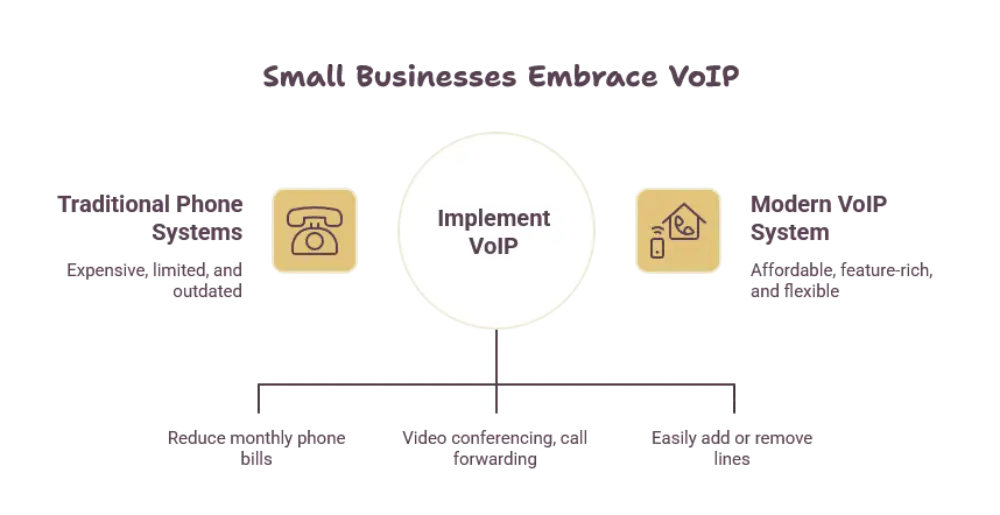
Small businesses often juggle limited resources while trying to maintain professional communication standards. VoIP helps bridge that gap by offering tools that were once only available to larger companies.
Improved Flexibility for Remote Teams
VoIP allows employees to make and receive business calls from anywhere with an internet connection. Whether someone is working from home, traveling, or in a coworking space, they can stay connected using the same business number.
Simplified Communication Systems
Instead of managing multiple communication tools separately, VoIP often combines calling, messaging, and video conferencing into one unified system. This simplifies daily operations and reduces the mental load of switching between different platforms.
Scalability for Growing Teams
As a small business grows, its communication needs change. VoIP systems are generally easier to scale because adding new users or extensions does not require major infrastructure changes.
Key Features That Benefit Small Businesses
VoIP platforms come packed with features designed to improve business communication and customer experience.
Call Forwarding and Routing
Calls can be automatically routed to the right department or employee, ensuring customers reach the right person without unnecessary delays.
Voicemail to Email Transcription
Many VoIP systems convert voicemails into text and send them directly to email. This allows business owners to quickly scan messages without listening to every recording.
Auto Attendant Menus
An auto attendant acts like a virtual receptionist, guiding callers through menu options and directing them to the appropriate team member or department.
Video Conferencing Integration
Many VoIP providers include built in video conferencing tools, allowing small businesses to host meetings without needing separate software.
How VoIP Improves Customer Experience
Customer communication plays a major role in how a small business is perceived. VoIP helps create a more professional and reliable experience for callers.
Consistent Availability
With features like call forwarding and mobile apps, businesses can ensure customers are never met with a missed call, even outside traditional office hours.
Professional Call Handling
Auto attendants, hold music, and call queues give small businesses a polished, professional feel that builds trust with customers.
Better Call Quality
Modern VoIP systems are built to prioritize voice data, resulting in clear, reliable call quality when a strong internet connection is available.
VoIP and Business Mobility
One of the biggest advantages of VoIP for small businesses is mobility. Employees are no longer tied to a physical desk phone to handle business calls.
Mobile App Integration
Most VoIP providers offer mobile apps that allow employees to make and receive calls using their business number directly from their smartphone.
Supporting Hybrid and Remote Work
As more small businesses adopt hybrid work models, VoIP ensures communication remains consistent regardless of where employees are physically located.
Security Considerations for VoIP Systems
While VoIP offers many advantages, small businesses should also be mindful of maintaining secure communication practices.
Encrypted Communication Channels
Reputable VoIP providers use encryption to protect calls and data from unauthorized access, helping maintain privacy during business conversations.
Regular System Updates
Keeping VoIP software updated ensures that security patches and improvements are applied, reducing vulnerabilities over time.
Common Challenges Small Businesses Should Know About
Every technology comes with its own set of considerations, and VoIP is no exception.
Dependence on Internet Connectivity
Since VoIP relies on the internet, a weak or unstable connection can affect call quality. Businesses should ensure they have reliable internet service to support their communication needs.
Employee Training and Adjustment
Switching to a new communication system may require a short learning curve for employees who are used to traditional phone systems.
Tips for a Smooth VoIP Transition
Transitioning to VoIP does not have to be complicated. A few simple steps can help make the process easier.
Assess Internet Bandwidth
Before switching, it helps to evaluate whether the current internet connection can comfortably support VoIP calls alongside other business operations.
Train Employees Early
Introducing employees to the new system ahead of time helps reduce confusion and ensures a smoother transition once VoIP is fully implemented.
Test the System Before Full Rollout
Running a trial period allows businesses to identify any issues and make adjustments before relying on VoIP for daily operations.
The Future of VoIP for Small Businesses
As technology continues to evolve, VoIP systems are expected to become even more integrated with other business tools such as customer relationship management software and productivity platforms. This continued innovation will likely make VoIP an even more essential part of small business communication strategies.
Conclusion
VoIP for small businesses offers a modern, flexible, and efficient way to manage communication. From improved mobility to advanced calling features, VoIP helps small businesses stay connected with both employees and customers in a way that traditional phone systems often cannot match. As more businesses embrace remote work and digital tools, VoIP is likely to remain a key part of building a reliable and professional communication system.
Frequently Asked Questions
What is VoIP for small businesses?
VoIP for small businesses is a communication system that allows companies to make and receive calls over the internet instead of traditional phone lines.
Is VoIP reliable for daily business communication?
Yes, VoIP is generally reliable as long as the business has a stable internet connection to support consistent call quality.
Can employees use VoIP while working remotely?
Yes, VoIP allows employees to make and receive business calls from anywhere using mobile apps or computers connected to the internet.
Does VoIP require special equipment?
VoIP can work with existing devices such as computers and smartphones, although some businesses may also use dedicated VoIP phones for convenience.
How does VoIP improve customer communication?
VoIP improves customer communication through features like call forwarding, auto attendants, and voicemail transcription, helping ensure customers are never missed.














Post Comment