VoIP for Schools: A Smarter Way to Manage Campus Communication
VoIP for schools is quickly becoming the preferred communication solution for educational institutions that want reliable, flexible, and simple calling systems. Traditional phone lines are aging, expensive to maintain, and often unable to keep up with the communication needs of a modern campus. Schools today need a system that connects classrooms, administrative offices, front desks, and even parents in real time. This is exactly where VoIP steps in as a practical and future ready solution.
In this blog, we will explore what VoIP means for schools, why it matters, and how it improves daily operations across campuses of every size.
What Is VoIP and How Does It Work in Schools
VoIP stands for Voice over Internet Protocol. Instead of using traditional copper phone lines, VoIP transmits voice calls through the internet. For schools, this means every classroom, office, and department can be connected using existing internet infrastructure rather than relying on outdated telephone wiring.
Simple Setup Across Campus
Because VoIP works over the internet, schools can equip classrooms and offices with phones or softphone apps without extensive rewiring. This makes it easier to expand communication systems as a school grows or adds new buildings.
Centralized Communication System
VoIP allows schools to manage their entire communication network from a single platform. Administrators can monitor call activity, manage extensions, and update settings without needing a technician for every small change.
Why Schools Are Switching to VoIP
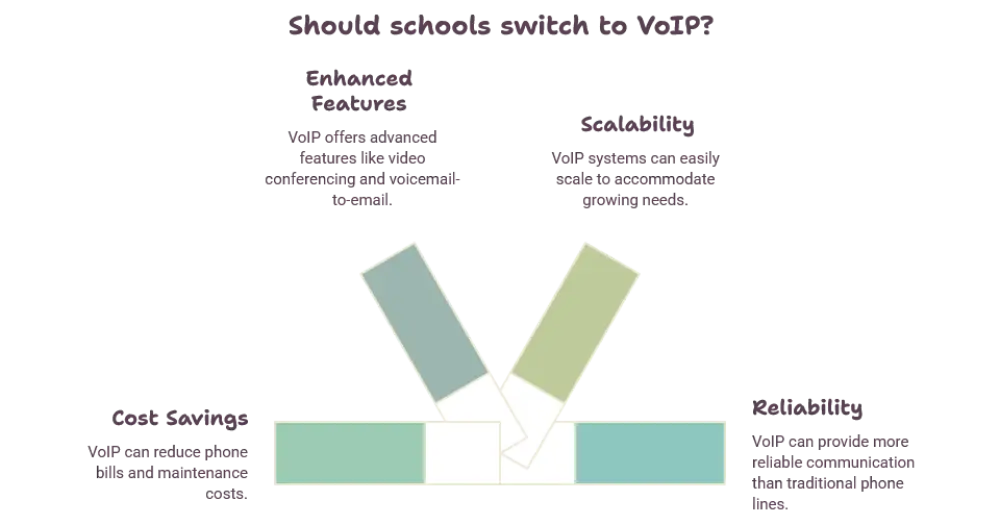
Educational institutions face unique communication challenges. Teachers need quick contact with the front office, parents want timely updates, and administrators must be reachable during emergencies. VoIP addresses these needs effectively.
Reliable Communication During Emergencies
Fast and dependable communication can make a major difference during a lockdown, medical emergency, or severe weather event. VoIP systems often include instant paging, intercom integration, and emergency alert broadcasting across every connected device on campus.
Better Connection Between Teachers and Parents
Parents expect quick and clear communication from schools. VoIP systems make it simple for teachers to reach parents directly from their classroom extension, improving trust and engagement between home and school.
Simplified Multi Campus Communication
For school districts managing multiple locations, VoIP creates a unified communication network. Staff can call between campuses using short internal extensions instead of dialing full external numbers, saving time and reducing confusion.
Key Features That Benefit Educational Institutions
VoIP platforms come with several features designed to support the specific needs of schools, teachers, and administrative staff.
Auto Attendant for Front Office Efficiency
An auto attendant can greet callers, guide them through options, and direct calls to the right department automatically. This reduces the workload on front office staff, especially during busy hours like morning drop off or dismissal.
Voicemail to Email Transcription
Teachers and staff can receive voicemail messages directly in their email inbox as text. This ensures no message is missed, even when a staff member is teaching or unavailable to answer the phone.
Call Recording for Documentation
Some schools use call recording to maintain records of important conversations, particularly those involving safety concerns, disciplinary matters, or official communication with parents and guardians.
Mobile App Integration
VoIP systems often include mobile applications, allowing staff to stay connected while off campus. This is especially useful for administrators, counselors, or coaches who need to remain reachable during off site events.
How VoIP Improves Daily School Operations
Communication challenges can slow down daily school activities. VoIP helps streamline several everyday processes.
Faster Response Between Departments
Whether it is the nurse’s office contacting a classroom or the front desk reaching maintenance staff, VoIP shortens response times through simple internal dialing and intercom features.
Reduced Administrative Burden
With automated call routing and centralized management tools, administrative staff spend less time manually transferring calls or managing traditional phone hardware.
Support for Remote and Hybrid Learning
As hybrid and remote learning models become more common, VoIP allows teachers to stay connected with students and parents even outside the physical classroom, using softphone apps on laptops or tablets.
VoIP and Campus Safety
Safety remains a top priority for every educational institution. VoIP systems support safety initiatives through features that enhance visibility and response coordination.
Instant Paging and Intercom Alerts
VoIP enables administrators to broadcast announcements or safety alerts to every phone and speaker connected to the network simultaneously, ensuring the message reaches the entire campus at once.
Location Based Emergency Calling
Certain VoIP systems can identify the location of a call within a building, helping emergency responders reach the correct classroom or office faster during a crisis.
Choosing the Right VoIP System for Your School
Every school has different communication requirements based on size, campus layout, and staff structure. When evaluating a VoIP system, schools should consider ease of use, scalability, and how well the platform integrates with existing tools such as student information systems or email platforms.
A well designed VoIP system should feel intuitive for teachers, administrators, and front office staff alike, without requiring extensive technical training.
Conclusion
VoIP for schools offers a modern, reliable, and efficient way to manage communication across classrooms, offices, and entire districts. From improving parent engagement to strengthening emergency response, VoIP systems support the daily needs of educational institutions while preparing them for future growth. As schools continue to evolve, adopting a strong communication foundation becomes an essential part of running a safe and connected campus.
Frequently Asked Questions
What is VoIP for schools?
VoIP for schools is a phone system that uses internet connectivity instead of traditional phone lines to handle calls, messaging, and communication across a campus.
How does VoIP improve communication between teachers and parents?
VoIP allows teachers to call parents directly from their classroom extension, making communication faster, more direct, and easier to manage throughout the school day.
Can VoIP support communication across multiple school campuses?
Yes, VoIP allows different campuses within a district to connect through internal extensions, simplifying communication between multiple locations.
Does VoIP help during school emergencies?
Yes, VoIP systems often include instant paging, intercom alerts, and emergency broadcasting features that help staff respond quickly during urgent situations.
Is VoIP suitable for hybrid or remote learning environments?
Yes, VoIP supports mobile apps and softphone tools that allow teachers to remain connected with students and parents even outside the traditional classroom setting.














Post Comment