Boosting Business Efficiency with Mobile Solutions
You are operating in an environment where speed and adaptability are paramount. Your ability to integrate mobile solutions into your operations is no longer a luxury but a fundamental requirement for sustaining and enhancing your business efficiency. This involves a strategic approach to leveraging mobile technology across various facets of your organization, from internal processes to external customer interactions.
Your journey towards greater efficiency begins with understanding how mobile solutions inherently streamline your operations. These tools are designed to remove friction points, accelerate processes, and provide access to critical information regardless of location. The overarching goal is to create a more agile and responsive business infrastructure.
Streamlining Workflow and Task Management
Consider how much time your team currently spends on manual data entry, physical document transfers, or waiting for approvals. Mobile solutions can drastically reduce these inefficiencies. With dedicated applications, your employees can update project statuses, access shared documents, and collaborate in real-time, even when away from their desks. This immediate access to information and workflow tools translates directly into faster task completion and reduced project delivery times. The integration of end-to-end mobility solutions, particularly for field teams, is proving to be a significant driver of higher productivity and resilience in 2026. This means that whether your team is managing a construction site or servicing clients off-site, they have the necessary tools at their fingertips to execute tasks and report progress without delay, preventing bottlenecks that often arise from traditional, stationary workstations.
Enhancing Internal Communication and Collaboration
Effective communication is the backbone of any efficient organization. Mobile solutions provide the mechanisms necessary for your teams to communicate instantaneously and contextually. Instead of relying solely on email chains or scheduled meetings, your employees can use secure messaging platforms, video conferencing tools, and shared digital workspaces directly from their mobile devices. This fosters a more dynamic and responsive communication environment. Cloud-based phone systems, for instance, are not only cutting costs by a significant margin—up to 50% in some cases—but also profoundly support your remote and hybrid workforce. Features like mobile apps, flexible routing, and softphones mean your team members can be reached and connected regardless of their physical location. This ensures that expert knowledge can be tapped into immediately, decisions can be made more swiftly, and collaborative projects can proceed without geographical limitations.
Empowering Your Workforce with Advanced Mobile Tools
Beyond basic communication, you need to equip your employees with sophisticated mobile tools that elevate their productivity and ensure secure, seamless operation. This involves selecting the right hardware and integrating intelligent software into their daily routines.
Leveraging High-Performance Mobile Devices
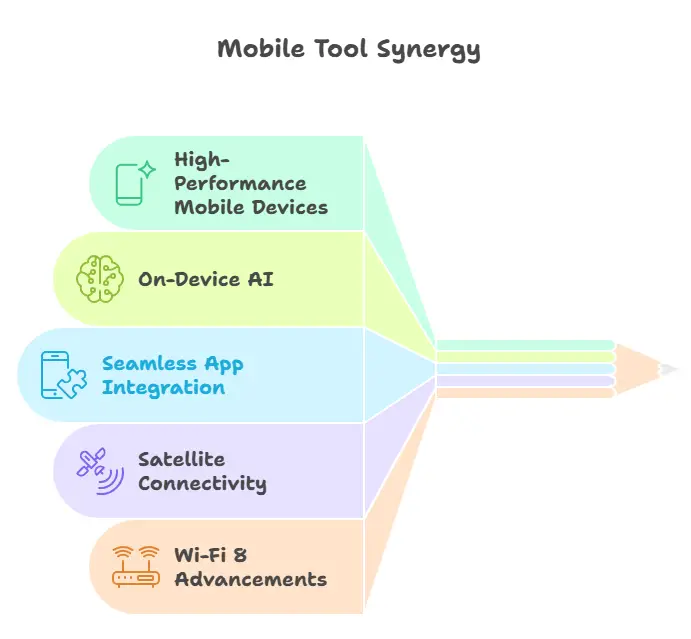
The hardware your team uses plays a crucial role in their productivity. Modern business phones are sophisticated instruments, not just communication devices. You should be looking for devices such as the OnePlus 13, which offers advanced AI capabilities that can personalize user experiences and automate routine tasks. Features like desktop interfaces, exemplified by Samsung DeX, allow your employees to transform their mobile device into a near-full desktop experience when connected to a monitor, keyboard, and mouse. This flexibility means that complex tasks, usually reserved for a traditional workstation, can be performed in any suitable location, providing an unprecedented level of agility. Seamless app integration across these devices ensures that your essential business applications function cohesively, minimizing the time spent transitioning between different platforms and ultimately driving peak productivity and security.
Integrating On-Device AI and Smart Assistants
The advent of on-device AI is a transformative trend for mobile solutions. This technology allows your employees to perform complex data analysis, automate repetitive tasks, and receive personalized insights directly on their mobile devices without relying on a constant cloud connection. Imagine an AI agent assisting your sales team with real-time customer data analysis on-the-spot or helping your service technicians diagnose equipment issues based on historical data. These capabilities, combined with essential mobile innovations like satellite connectivity and advancements in Wi-Fi 8, are critical for IT leaders to master. They represent the next frontier in mobile excellence, offering enhanced operational performance and supporting your business operations in even the most remote or challenging environments.
Optimizing Customer Engagement and Experience
Your customers expect seamless, accessible, and personalized interactions. Mobile solutions are central to meeting these expectations, allowing you to provide superior service and foster stronger customer relationships.
Enhancing Real-time Customer Service
The immediacy of mobile communication allows you to provide real-time customer support. Whether through dedicated customer service apps, live chat functions, or integrated communication platforms, your customers can reach out and receive assistance instantly. This reduces wait times, improves customer satisfaction, and builds loyalty. Mobile business apps are especially essential for real-time engagement. They facilitate immediate communication, allowing you to address queries, provide updates, and solicit feedback without delay. This proactive and responsive approach to customer service distinguishes your business in a competitive market.
Personalizing Customer Journeys with Mobile Data
Mobile solutions provide a wealth of data about customer behavior, preferences, and interactions. By analyzing this data, you can personalize customer experiences, offering tailored products, services, and communications. AI personalization, a key trend in mobile solutions, allows you to dynamically adjust content and offers based on individual customer profiles, leading to higher conversion rates and increased engagement. This level of personalization, driven by insights gathered from mobile interactions, elevates the customer experience beyond generic marketing efforts, making each interaction feel unique and relevant to the individual.
Driving Business Growth Through Strategic Mobile Adaption
Beyond internal efficiency and customer satisfaction, mobile solutions offer tangible avenues for business growth. They open new revenue streams, provide a competitive edge, and enable agile adaptation to market changes.
Cultivating New Revenue Streams
Mobile commerce platforms, in-app purchases, and subscription services delivered via mobile applications are examples of how you can generate new revenue. By making it easier for customers to discover, purchase, and engage with your offerings on their mobile devices, you expand your market reach and create convenient purchasing channels. The ability to present your catalog, process payments, and manage orders all through a mobile interface simplifies the transaction process for your customers and opens up new sales opportunities that might otherwise be inaccessible. This means your business can tap into the increasing prevalence of mobile-first purchasing habits and ensure that your products and services are readily available to a broad, mobile-savvy customer base.
Gaining a Competitive Edge
In a rapidly evolving market, your ability to integrate and effectively utilize mobile solutions can be a significant differentiator. Businesses that are slow to adopt can find themselves at a disadvantage. By embracing mobile-first strategies, you demonstrate innovation and a commitment to modern efficiency, attracting both customers and top talent. For example, offering a robust mobile ERP system, which redefines business operations with real-time data access for inventory and order management, and KPI monitoring, places your business at the forefront. This not only supports hybrid work models but also facilitates faster decision-making and overall efficiency, giving you a distinct advantage over competitors who rely on more traditional, less agile systems.
Ensuring Robust Security and Data Integrity
| Mobile Solutions for Business | Benefits |
|---|---|
| Increased Productivity | Access to business tools and information on the go |
| Improved Communication | Enhanced collaboration and real-time communication |
| Cost Savings | Reduced need for physical infrastructure and travel expenses |
| Flexibility | Ability to work from anywhere at any time |
| Competitive Advantage | Ability to adapt quickly to market changes and customer needs |
As you expand your reliance on mobile solutions, the importance of robust security and data integrity cannot be overstated. Safeguarding sensitive information and maintaining compliance are paramount.
Implementing Enhanced Mobile Security Protocols
Mobile devices are potential entry points for cyber threats. Therefore, implementing stringent security protocols is non-negotiable. This includes multi-factor authentication, data encryption, secure containerization for business applications, and regular security audits. The trend towards enhanced mobile security is a critical factor for successful mobile deployment. You must ensure that every mobile device your employees use, and every application they access, adheres to the highest security standards. This proactive approach to security protects not only your sensitive business data but also your customers’ private information, safeguarding your reputation and avoiding potential regulatory penalties.
Ensuring Data Compliance and Privacy
Operating across different regions and industries means navigating a complex landscape of data privacy regulations. You need to ensure that your mobile solutions are designed and implemented in a way that fully complies with relevant industry standards and legal requirements, such as GDPR or CCPA. This involves careful consideration of how data is collected, stored, processed, and transmitted via mobile devices. By integrating compliance checks into your mobile solution development and deployment, you mitigate legal risks and build trust with your customers and partners. Regular reviews of your mobile data handling practices are essential to adapt to evolving regulations and maintain consistent compliance.
The Future of Business Mobility: Staying Ahead
The mobile landscape is dynamic. To maintain your competitive edge, you must anticipate and adapt to emerging technologies and methodologies. This requires a forward-thinking approach to your mobile strategy.
Adopting Emerging Mobile Technologies
Look beyond what is currently available and consider the potential impact of new mobile technologies. This includes advancements in augmented reality (AR) for training and remote assistance, virtual reality (VR) for immersive experiences, and even further developments in wearable technology that can integrate seamlessly with your existing mobile infrastructure. Your ability to experiment with and strategically adopt these technologies can unlock new levels of efficiency and innovation for your business. For instance, using AR for guided maintenance tasks on complex machinery can significantly reduce service times and improve accuracy, demonstrating a tangible return on investment from adopting cutting-edge mobile solutions.
Cultivating a Culture of Mobile Innovation
Ultimately, your success with mobile solutions depends not just on the technology itself, but on your organizational culture. Encourage your employees to embrace mobile tools, provide adequate training, and foster an environment where new ideas for mobile applications and functionalities are welcomed. This continuous feedback loop from the users on the ground can drive incremental improvements and uncover untapped potential within your existing mobile ecosystem. By actively promoting a culture that values and champions mobile innovation, you ensure that your business remains agile, responsive, and ready to leverage the full power of mobile technology for sustained efficiency and growth.
FAQs
What are mobile solutions for business?
Mobile solutions for business refer to the use of mobile technology, such as smartphones and tablets, to improve and streamline business operations. This can include mobile apps, mobile-optimized websites, and mobile device management systems.
What are the benefits of using mobile solutions for business?
Some benefits of using mobile solutions for business include increased productivity, improved communication and collaboration, better customer service, and the ability to work remotely. Mobile solutions can also provide real-time access to data and analytics, as well as the ability to automate certain processes.
What are some examples of mobile solutions for business?
Examples of mobile solutions for business include mobile payment systems, mobile CRM (customer relationship management) apps, mobile inventory management systems, mobile workforce management tools, and mobile marketing and advertising platforms. Additionally, mobile solutions can also include mobile security and data protection measures.
How can businesses implement mobile solutions?
Businesses can implement mobile solutions by first identifying their specific needs and goals, then researching and selecting the right mobile technologies and tools to meet those needs. This may involve developing custom mobile apps, integrating existing systems with mobile capabilities, and providing training and support for employees.
What are some considerations for using mobile solutions in business?
Some considerations for using mobile solutions in business include ensuring data security and privacy, addressing compatibility and integration issues with existing systems, managing the costs and resources required for implementation, and staying updated on the latest mobile technologies and trends. It’s also important to consider the user experience and accessibility for both employees and customers.













Post Comment