
Maximizing Efficiency with Cloud Telephony
Your organization operates in an increasingly competitive and dynamic environment. Legacy communication systems frequently struggle to keep pace with evolving operational demands and customer expectations. Cloud telephony, conversely, offers a robust and adaptable framework designed to address these challenges directly. This article will provide a practical overview of how migrating to, and optimally utilizing, cloud telephony can demonstrably improve operational efficiency across various facets of your business. You will understand the inherent advantages and the practical applications of this technology, moving beyond theoretical benefits to tangible outcomes.
Harnessing the Power of Cloud-First Infrastructure
The foundational shift to cloud-based telephony represents a strategic pivot away from traditional, capital-intensive communication structures. This transition is not merely an upgrade; it is a re-architecture of your communication backbone, offering immediate and long-term dividends in terms of operational agility and fiscal prudence.
Eliminating Hardware Overhead and Maintenance Burdens
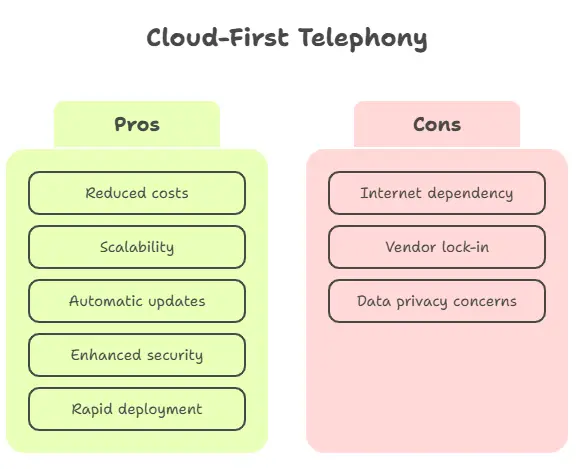
Traditionally, maintaining an on-premise Private Branch Exchange (PBX) system involved substantial capital expenditure for hardware acquisition, ongoing maintenance contracts, and dedicated IT personnel. These systems required physical space, power, and cooling infrastructure. When you transition to a cloud-first telephony solution, these burdens are largely eradicated. The service provider assumes responsibility for hardware procurement, maintenance, and infrastructure management. This significantly reduces your operational expenditure (OpEx) while minimizing capital expenditure (CapEx) associated with communication systems. You no longer need to manage server rooms or worry about hardware depreciation and replacement cycles.
Facilitating Rapid Deployment and Scalability
Implementing a traditional PBX system often entailed lengthy procurement processes, complex installations, and significant downtime. Cloud telephony fundamentally alters this paradigm. Deployment can be executed swiftly, often within days or weeks, depending on the complexity of your requirements. Furthermore, the inherent elasticity of cloud platforms means you can scale your communication infrastructure up or down precisely as your business demands. Whether you are experiencing rapid growth, seasonal fluctuations, or temporary project expansion, you can add or remove lines, features, and users with minimal effort and without incurring substantial additional hardware costs. This agility ensures that your communication system remains aligned with your organizational trajectory, rather than acting as a constraint.
Ensuring Automatic Updates and Enhanced Security
Managing software updates and security patches for on-premise systems is a continuous and often resource-intensive task. Neglecting these can leave your organization vulnerable to security breaches and operational inefficiencies due to outdated features. With cloud telephony, the service provider handles all software updates, patches, and security protocols automatically. This guarantees that your system is consistently operating with the latest features, performance enhancements, and security measures, without any direct intervention required from your IT team. This proactive approach to maintenance and security minimizes your exposure to threats and ensures continuous system optimal performance.
Integrating AI for Enhanced Operational Performance
Artificial intelligence (AI) is no longer a nascent technology; it is increasingly embedded within cloud telephony platforms to deliver tangible efficiency gains. These AI-powered tools are designed to optimize various aspects of your communication workflow, from routing calls to assisting agents in real-time.
Streamlining Call Routing and Distribution
Efficient call routing is paramount for customer satisfaction and operational effectiveness. AI algorithms can analyze a multitude of data points – including caller history, expressed intent during IVR interaction, agent availability, skill sets, and even real-time queues – to intelligently direct incoming calls to the most appropriate agent or department. This “smart routing” minimizes misdirected calls, reduces transfer rates, and ensures that customers are connected with individuals best equipped to address their inquiries on the first attempt. Predictive dialers, another AI application, can anticipate when agents will become available and initiate outbound calls accordingly, thereby maximizing agent talk time and reducing idle periods in outbound operations like sales or collections.
Providing Real-time Agent Assistance and Analytics
During a live customer interaction, access to pertinent information is critical for effective problem resolution. AI-powered “agent assist” features can provide real-time information to agents, such as contextual customer data, relevant knowledge base articles, or even suggested responses, based on the ongoing conversation. This significantly reduces average handling time (AHT) and improves first call resolution (FCR) rates. Furthermore, AI platforms can analyze call transcripts and audio in real-time to identify customer sentiment, popular topics, and agent performance trends. This immediate feedback loop allows supervisors to intervene proactively if necessary and provides valuable insights for ongoing agent coaching and training initiatives. Comprehensive real-time analytics dashboards provide a panoramic view of call center performance, enabling data-driven decision-making.
Personalizing Customer Interactions
The ability to personalize customer service differentiates your organization in a competitive landscape. AI contributes to this personalization through context-based call direction and dynamic self-service options. By leveraging caller ID and CRM data, AI can route high-value customers to dedicated agents or provide tailored IVR options based on their past interactions or specific needs. This proactive acknowledgement of customer history and preferences creates a more positive and efficient service experience, moving beyond generic interactions.
Unified Communications as a Service (UCaaS) for Streamlined Workflows
The proliferation of communication channels can lead to fragmented workflows and diminished productivity. UCaaS addresses this by consolidating various communication tools into a single, integrated platform. This holistic approach is critical for fostering collaboration, particularly in hybrid or remote work environments.
Consolidating Communication Channels
A contemporary workforce utilizes numerous communication modalities: voice calls, video conferencing, instant messaging, email, and internal collaboration tools. Managing these disparate channels often involves switching between applications, leading to inefficiencies and potential information silos. UCaaS platforms integrate these diverse communication methods into a cohesive interface. This means you can initiate a call, start a video conference, send an instant message, or share documents from a single application, eliminating the friction associated with context switching. This consolidation reduces user frustration and enhances overall productivity.
Integrating with Business Applications
The true power of UCaaS extends beyond mere communication consolidation. Its ability to integrate seamlessly with critical business applications, such as Customer Relationship Management (CRM) systems (e.g., Zoho, Bitrix24), Enterprise Resource Planning (ERP) systems, and helpdesk software, creates a truly unified operational environment. For example, when an inbound call arrives, the UCaaS platform can automatically pull up the caller’s CRM record, providing the agent with immediate access to their complete interaction history, current service tickets, or purchasing patterns. This eliminates the need for manual data retrieval, significantly reducing call handling times and improving the quality of customer interactions. Outbound calls can be initiated directly from CRM entries, and call logs automatically updated, ensuring data consistency and accuracy across platforms. This integration provides a 360-degree view of your customer interactions, enabling more informed decision-making and personalized service.
Supporting Omnichannel Customer Experience
Today’s customers expect to interact with your organization via their preferred channel, whether it’s a phone call, SMS, email, web chat, or social media. A UCaaS platform with omnichannel capabilities allows you to manage all these interactions from a single interface. Agents can seamlessly switch between channels while maintaining context, ensuring a consistent and coherent customer experience regardless of how the customer chooses to communicate. This approach reduces customer effort and enhances satisfaction by providing a flexible and responsive service environment. Automated self-service IVR systems within UCaaS can also deflect simple inquiries, allowing agents to focus on more complex issues and further optimize resource allocation.
Leveraging 5G Integration for Superior Performance
The ongoing global deployment and expansion of 5G networks represent a significant technological advancement that directly benefits cloud telephony. The inherent characteristics of 5G improve various aspects of real-time communication, making cloud telephony an even more robust and reliable solution.
Enhancing Voice Quality and Connection Speed
One of the primary advantages of 5G is its significantly higher bandwidth and lower latency compared to previous generations of cellular technology. For cloud telephony, this translates directly into superior voice quality. Callers will experience clearer, more natural-sounding conversations, free from the distortions or delays sometimes associated with less robust connections. Furthermore, 5G enables faster call connection times. The reduced latency means that the time taken from dialing a number to the call being audibly connected is minimized, contributing to a smoother and more responsive communication experience for both your agents and your customers.
Reducing Latency for Real-time Applications
Latency, often perceived as a slight delay in conversation, can significantly degrade the quality of real-time interactions. In a cloud telephony context, lower latency ensures that voice data travels more quickly between the caller, the cloud infrastructure, and the agent. This is particularly crucial for applications that involve simultaneous data transfer, such as screen sharing during a video call, or for agents who rely on quick database lookups during a live conversation. Reduced latency minimizes awkward pauses, ensures smoother conversational flow, and enables more fluid and efficient real-time collaboration within your organization and with your customers. The improved responsiveness directly impacts the perceived professionalism and efficiency of your communication channels.
Realizing Sustainability and Flexibility Benefits
Beyond immediate operational and technical advantages, cloud telephony also offers broader benefits related to environmental responsibility and operational flexibility, aligning with modern business directives and employee expectations.
Reducing Environmental Impact
Traditional on-premise telephony systems consume significant energy for operation and cooling, contribute to electronic waste through hardware obsolescence, and occupy physical data center space. Cloud telephony inherently reduces this environmental footprint. By centralizing infrastructure in purpose-built, often highly efficient data centers, and leveraging virtualization, cloud platforms consume less overall energy per user. The reduced reliance on dedicated physical hardware at each business location translates into less e-waste and fewer local server room requirements. This aligns your operations with corporate social responsibility initiatives and can contribute to your sustainability reporting.
Offering Asynchronous Communication Options for Enhanced Flexibility
Modern communication increasingly embraces asynchronous methods, allowing individuals to interact at their own convenience without requiring immediate, simultaneous presence. Cloud telephony platforms are incorporating these options to cater to evolving customer preferences and improve internal workflow flexibility. Built-in SMS/MMS capabilities allow for quick, non-intrusive communication, which can be highly effective for notifications, confirmations, or simple queries. Voicemail transcription services provide agents with text versions of messages, allowing for quicker review and prioritization without needing to listen to every message sequentially. Scheduled callbacks are another significant feature, enabling customers to request a specific time for an agent to contact them, thereby eliminating frustrating hold times for the customer and allowing for more efficient agent scheduling for your organization. These asynchronous options demonstrate a commitment to customer convenience and contribute to a more efficient allocation of your communication resources.
In conclusion, cloud telephony is not merely an incremental improvement over legacy systems; it represents a fundamental paradigm shift that offers comprehensive benefits. By strategically adopting and fully leveraging its capabilities, you can significantly enhance efficiency, reduce operational costs, improve customer satisfaction, and ensure your organization remains agile and competitive in a constantly evolving business landscape. The integration of 5G, AI, and UCaaS within a cloud-first framework provides a powerful toolkit for optimizing virtually every aspect of your communication strategy.
FAQs
What is cloud telephony?
Cloud telephony is a technology that allows businesses to make and receive calls over the internet, rather than using traditional phone lines. It uses cloud-based servers to manage and route calls, providing flexibility and cost savings for businesses.
How does cloud telephony work?
Cloud telephony works by using a cloud-based system to handle incoming and outgoing calls. When a call is made, it is routed through the internet to the cloud server, which then directs the call to the intended recipient. This allows for features such as call forwarding, voicemail, and interactive voice response (IVR) to be easily implemented.
What are the benefits of using cloud telephony?
Some of the benefits of using cloud telephony include cost savings, scalability, flexibility, and improved productivity. Businesses can save money on hardware and maintenance costs, easily scale their phone systems as their business grows, and take advantage of features such as virtual phone numbers and call analytics.
What are some common features of cloud telephony systems?
Common features of cloud telephony systems include call forwarding, voicemail, IVR, call recording, virtual phone numbers, and integration with other business applications such as CRM software. These features help businesses to better manage their communications and provide a better experience for their customers.
Is cloud telephony secure?
Cloud telephony systems can be secure if proper measures are taken, such as using encryption for calls and data, implementing access controls, and regularly updating security protocols. It is important for businesses to work with reputable cloud telephony providers and follow best practices for securing their communications.














Post Comment