
Hosted PBX vs On-Premise PBX: Which Phone System Is Right for Your Business?
Choosing between Hosted PBX vs On-Premise PBX is one of the most important decisions a business will make about its communication infrastructure. Both systems allow companies to manage calls, extensions, and voicemail, but they work in very different ways and suit different types of organizations. Understanding how each system functions can help you decide which one aligns best with your operational needs, growth plans, and daily workflow.
- What Is a PBX System?
- The Two Main Types of PBX
- How Hosted PBX Works
- How On Premise PBX Works
- Key Differences Between Hosted PBX and On Premise PBX
- Advantages of Hosted PBX
- Advantages of On Premise PBX
- Which Businesses Benefit Most from Each Option
- Security Considerations
- Integration with Other Business Tools
- Making the Right Choice for Your Business
- Conclusion
- Frequently Asked Questions
What Is a PBX System?
A Private Branch Exchange, commonly known as PBX, is a telephone system used within a business to manage internal and external calls. It allows employees to communicate with each other using short internal extensions while also connecting to outside phone lines. Traditionally, PBX systems were physical units installed inside an office, but technology has evolved to offer cloud based alternatives as well.
The Two Main Types of PBX
There are two primary categories of PBX systems that businesses typically choose from.
Hosted PBX
Hosted PBX, also called cloud PBX, is a phone system where the hardware and software are maintained by a third party provider offsite. Businesses access the system through the internet, and calls are routed using Voice over Internet Protocol technology.
On Premise PBX
On Premise PBX refers to a traditional phone system where all the equipment, including servers and switching hardware, is physically located within the business premises. The company is responsible for installing, maintaining, and managing the entire infrastructure.
How Hosted PBX Works
Hosted PBX systems operate entirely through the cloud. The service provider hosts all the necessary equipment in their own data centers, and businesses simply connect their phones, computers, or mobile devices to the system through an internet connection. Employees can log into the system from anywhere, making it a flexible option for remote teams and businesses with multiple office locations.
Because the provider manages the servers and software, updates and maintenance happen automatically in the background. This means businesses do not need an in house IT team dedicated solely to managing their phone system.
How On Premise PBX Works
On Premise PBX requires businesses to purchase and install physical hardware within their office space. This includes servers, cabling, and other telephony equipment. The business’s own IT staff or a hired technician is responsible for setup, configuration, ongoing maintenance, and troubleshooting.
Calls made through an on premise system may use traditional phone lines or a combination of internet based technology, depending on how the system is configured. Since everything is managed internally, businesses have full control over their system’s configuration and security protocols.
Key Differences Between Hosted PBX and On Premise PBX
Infrastructure and Maintenance
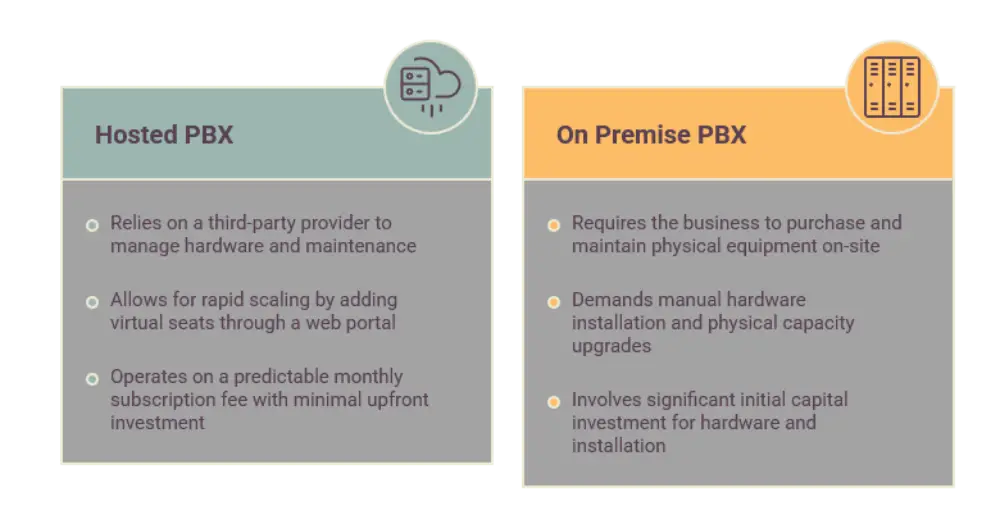
Hosted PBX eliminates the need for physical equipment on site since everything is managed remotely by the provider. On Premise PBX requires dedicated space for hardware and ongoing internal maintenance to keep the system running smoothly.
Flexibility and Mobility
Hosted PBX allows employees to make and receive calls from anywhere with an internet connection, which is ideal for remote or hybrid work environments. On Premise PBX is typically tied to a physical location, making it less flexible for businesses with distributed teams.
Scalability
Adding new users or extensions to a Hosted PBX system is generally simple and can often be done through an online portal. Scaling an On Premise PBX system usually requires additional hardware and configuration work.
Control and Customization
On Premise PBX gives businesses complete control over their system, including security settings, call routing rules, and integrations. Hosted PBX providers manage much of the backend, which means businesses rely on the provider’s platform capabilities and update schedules.
Reliability and Uptime
Hosted PBX providers often operate redundant data centers, which can improve uptime and reliability during local outages. On Premise PBX systems depend on the business’s own power and internet reliability at a single location, which can be a vulnerability during outages.
Setup Time
Hosted PBX systems can typically be deployed quickly since there is no physical hardware installation required. On Premise PBX setup takes longer due to the need for equipment installation and internal network configuration.
Advantages of Hosted PBX
Hosted PBX offers several operational benefits for modern businesses.
Remote Accessibility
Employees can access the phone system from laptops, mobile devices, or desk phones regardless of their physical location, supporting remote and hybrid work models.
Simplified IT Requirements
Since the provider handles maintenance, updates, and technical support, internal IT teams face less burden managing the phone system.
Business Continuity
Cloud based redundancy means that if one location experiences an outage, calls can often be rerouted, helping maintain communication continuity.
Advantages of On Premise PBX
On Premise PBX also offers distinct benefits, particularly for businesses with specific operational needs.
Full System Control
Businesses have direct oversight of hardware, software configurations, and security measures without depending on a third party provider’s infrastructure.
Independence from Internet Connectivity
Since some on premise systems can function without relying entirely on internet connectivity, they may continue operating during internet outages, depending on configuration.
Customization for Complex Environments
Larger organizations with unique telephony requirements may find it easier to build highly customized configurations with an on premise setup.
Which Businesses Benefit Most from Each Option
Businesses Suited for Hosted PBX
Companies with remote employees, multiple office branches, or a preference for minimal hardware management often find Hosted PBX to be a practical fit. Startups and growing businesses that need to scale their communication systems quickly also benefit from the flexibility of cloud based solutions.
Businesses Suited for On Premise PBX
Organizations that require complete control over their infrastructure, have strict internal security policies, or operate in locations with unreliable internet access may prefer the independence offered by On Premise PBX.
Security Considerations
Security is a major factor when evaluating any phone system. Hosted PBX providers typically implement encryption, monitoring, and regular security updates as part of their service. On Premise PBX places the responsibility of securing the system entirely on the business, which requires internal expertise and vigilance to prevent vulnerabilities.
Integration with Other Business Tools
Hosted PBX systems often integrate smoothly with cloud based software such as customer relationship management platforms and collaboration tools, since both operate through the internet. On Premise PBX integration depends heavily on the existing infrastructure and may require additional configuration to connect with newer cloud based applications.
Making the Right Choice for Your Business
Deciding between Hosted PBX vs On-Premise PBX ultimately depends on your organization’s operational structure, workforce distribution, internal technical capabilities, and long term communication goals. Businesses prioritizing flexibility, remote access, and simplified management often lean toward hosted solutions, while those needing full infrastructure control may prefer an on premise setup.
Evaluating your current and future business needs carefully will help ensure the phone system you choose supports smooth, reliable, and efficient communication for years to come.
Conclusion
Both Hosted PBX and On Premise PBX offer valuable communication solutions, but they cater to different business requirements. Hosted PBX provides flexibility, remote accessibility, and reduced internal maintenance, making it a strong choice for modern, distributed teams. On Premise PBX offers complete control and customization, appealing to organizations with specific infrastructure and security needs. By understanding how each system operates, businesses can make an informed decision that aligns with their communication goals and operational style.
Frequently Asked Questions
What is the main difference between Hosted PBX and On Premise PBX?
Hosted PBX is managed remotely by a provider through the cloud, while On Premise PBX involves physical hardware installed and maintained within the business location.
Is Hosted PBX suitable for remote teams?
Yes, Hosted PBX allows employees to connect from anywhere with an internet connection, making it ideal for remote and hybrid work environments.
Does On Premise PBX require internal IT support?
Yes, On Premise PBX typically requires dedicated internal staff or technicians to manage installation, maintenance, and troubleshooting.
Can Hosted PBX integrate with other business software?
Yes, Hosted PBX often integrates easily with cloud based tools such as customer relationship management platforms and collaboration software.
Which system offers more control over security settings?
On Premise PBX offers more direct control over security configurations since the business manages the entire infrastructure internally.














Post Comment