
Best Business Phone Systems: A Complete Guide for Modern Companies
Choosing the best business phone systems is one of the most important decisions a company can make when it comes to building strong communication with customers, partners, and employees. A reliable phone system does more than connect calls. It shapes how professional a business looks, how quickly teams respond to customers, and how smoothly daily operations run. In this guide, we will explore what business phone systems are, why they matter, the features to look for, and how to choose the right one for your organization.
What Is a Business Phone System
A business phone system is a communication setup designed specifically for organizations rather than individual households. Unlike a personal phone line, it supports multiple users, departments, and locations at once. These systems often include features such as call transferring, voicemail management, conferencing, and automated greetings that help businesses handle high call volumes efficiently.
Modern business phone systems have moved far beyond traditional desk phones. Many now operate through the internet, allowing employees to make and receive calls from computers, mobile devices, or softphone applications.
Why Every Growing Company Needs One
As companies expand, communication needs become more complex. A dependable phone system helps maintain consistency and professionalism across every interaction.
Improved Customer Communication
Customers expect quick and clear communication. A strong phone system ensures calls are routed to the right department without unnecessary delays, improving customer satisfaction and trust.
Better Team Collaboration
Employees often need to coordinate across departments or even across countries. Business phone systems make it easier to connect through conferencing tools, internal extensions, and shared call queues.
Professional Brand Image
A well structured phone system with custom greetings, hold music, and call routing gives a business a polished and professional appearance, even for smaller teams.
Key Features to Look For in the Best Business Phone Systems
When evaluating the best business phone systems, certain features consistently stand out for improving efficiency and communication quality.
Call Routing and Auto Attendants
Automated call routing directs incoming calls to the correct department or employee, reducing wait times and improving the overall caller experience.
Mobile and Remote Access
With hybrid and remote work becoming common, the ability to make and receive business calls from a mobile device or laptop is essential for staying connected from anywhere.
Integration With Business Tools
Many phone systems now integrate with customer relationship management platforms, email, and scheduling tools, allowing teams to manage communication and data in one place.
Voicemail to Email and Transcription
This feature converts voicemail messages into text or sends them directly to an email inbox, helping employees respond faster without needing to listen to every message.
Scalability for Growing Teams
A great phone system should grow alongside the business. Adding new lines, extensions, or users should be simple and should not disrupt daily operations.
Types of Business Phone Systems
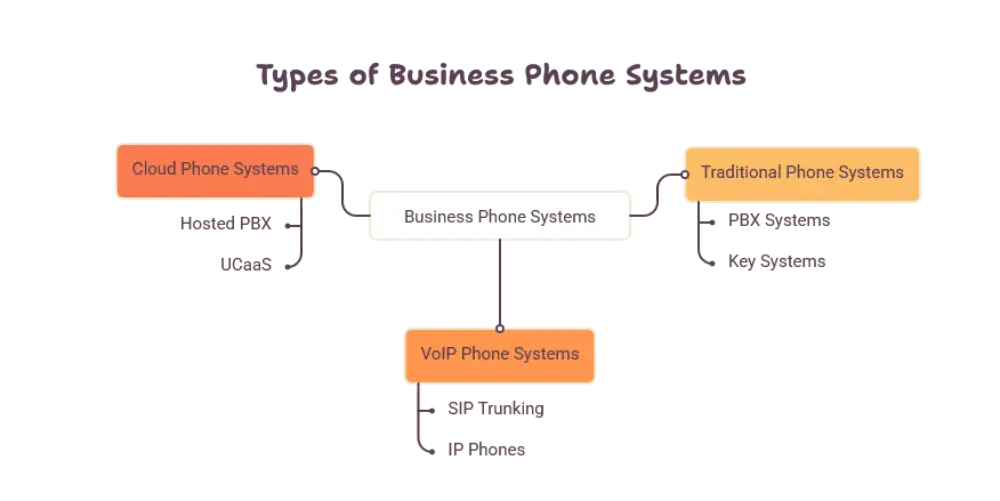
Understanding the different types of systems available can help businesses identify which option suits their communication style and structure.
Traditional Landline Systems
These systems use physical phone lines and are often seen as a reliable, straightforward option, though they can be less flexible for remote teams.
VoIP Phone Systems
Voice over Internet Protocol systems use the internet instead of traditional phone lines. They offer flexibility, mobility, and a wide range of collaboration features.
Cloud Based Phone Systems
Cloud based systems store data and manage calls through online servers rather than on site equipment. This allows businesses to scale easily and access their phone system from virtually any location.
How to Choose the Right System for Your Business
Selecting the best business phone systems for your organization depends on several factors, including the size of your team, how employees work, and what tools your business already uses. Consider how many employees will need access, whether remote work is common, and what integrations matter most to your daily workflow. It also helps to think about long term growth so the system you choose can expand without requiring a complete overhaul later.
Tips for a Smooth Transition
Switching to a new phone system can feel overwhelming, but a few simple steps can make the process easier.
Plan Ahead With Your Team
Involve employees early so they understand new features and how the system will affect their daily tasks.
Test Before Full Rollout
Running a trial period with a small group of users helps identify issues before the system goes live company wide.
Provide Clear Training
Simple, well organized training materials help employees adapt quickly and reduce confusion during the switch.
Conclusion
The best business phone systems help companies communicate more clearly, work more efficiently, and present a professional image to customers and partners. Whether a business chooses a traditional setup, a VoIP solution, or a cloud based system, the right choice depends on the company’s size, work style, and long term goals. By focusing on essential features like call routing, mobile access, and scalability, businesses can build a communication system that supports growth for years to come.
Frequently Asked Questions
What is the best business phone system for a small company?
The best option depends on team size and work style, but cloud based and VoIP systems are popular for their flexibility and ease of use.
Can business phone systems support remote employees?
Yes, most modern systems allow employees to make and receive calls from mobile devices or computers, making remote work easier to manage.
Do business phone systems integrate with other software?
Many systems integrate with customer relationship management tools, email platforms, and scheduling software to streamline daily operations.
Is it difficult to switch to a new business phone system?
With proper planning, testing, and employee training, most businesses can transition smoothly without major disruptions.
Are cloud based phone systems reliable for growing businesses?
Cloud based systems are designed to scale easily, making them a strong choice for companies expecting future growth.














Post Comment