
AI Voice Assistants: The Smart Technology Changing How We Live and Work
AI voice assistants have quietly become one of the most used pieces of technology in modern homes and offices. From asking a smart speaker about the weather to controlling lights with a simple voice command, AI voice assistants are transforming the way people interact with machines. What once felt like science fiction is now a daily convenience for millions of users across the world.
In this post, we will explore what AI voice assistants are, how they work, their benefits, real world applications, and what the future holds for this rapidly evolving technology.
What Are AI Voice Assistants
AI voice assistants are software programs powered by artificial intelligence that understand spoken language and respond with helpful actions or information. They rely on natural language processing, machine learning, and speech recognition to interpret human speech and carry out tasks.
Popular examples include virtual assistants built into smartphones, smart speakers, and even home appliances. These systems listen for a wake word, process the request, and respond almost instantly through voice or action.
Core Technologies Behind Voice Assistants
AI voice assistants depend on a combination of advanced technologies working together seamlessly.
Natural language processing allows the assistant to understand human speech patterns, accents, and context. Machine learning helps the system improve over time by learning from user interactions. Speech recognition converts spoken words into text so the system can process the request accurately.
Together, these technologies allow voice assistants to sound more natural and respond more intelligently with every update.
How AI Voice Assistants Work
When a user speaks a command, the assistant first detects the wake word to activate itself. The spoken audio is then converted into text using speech recognition software.
Once the text is processed, natural language understanding identifies the intent behind the request. The assistant then searches for the appropriate response or action, whether that means answering a question, setting a reminder, or controlling a smart device.
Finally, the response is converted back into natural sounding speech through text to speech technology, completing the interaction in just a few seconds.
Benefits of Using AI Voice Assistants
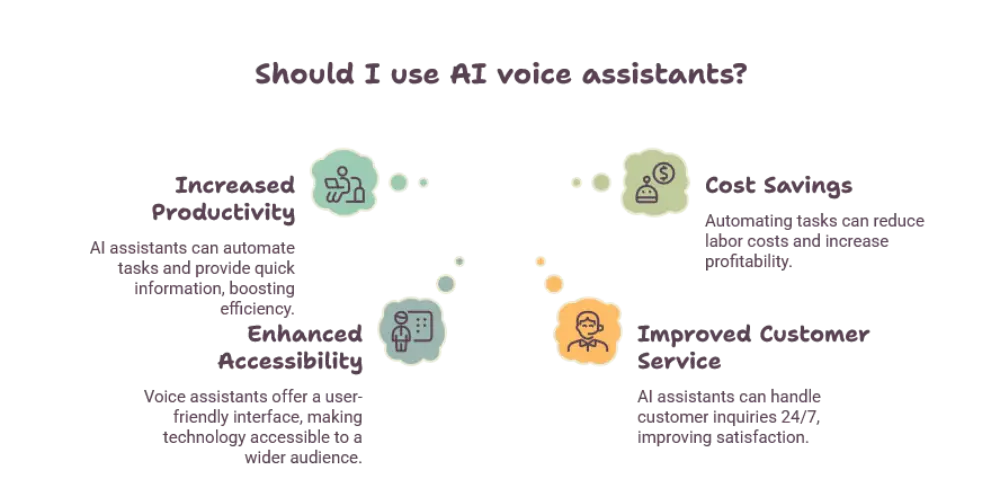
AI voice assistants offer a wide range of benefits for both personal and professional use.
Hands Free Convenience
Voice assistants allow users to complete tasks without touching a screen. This is especially useful while cooking, driving, or multitasking at home or work.
Improved Accessibility
For individuals with visual impairments or mobility challenges, voice assistants provide an easier way to access information and control devices independently.
Time Saving Automation
Simple voice commands can quickly set alarms, send messages, check calendars, or control smart home devices, saving valuable time throughout the day.
Personalized Experience
Modern voice assistants learn user preferences over time, offering more relevant suggestions, reminders, and responses based on individual habits.
Popular Uses of AI Voice Assistants
AI voice assistants are being used across many industries and everyday situations.
Smart Home Automation
Voice assistants can control lights, thermostats, locks, and appliances, making homes more convenient and energy efficient.
Customer Support
Many businesses use voice assistants to handle customer inquiries, provide instant answers, and reduce wait times for support requests.
Healthcare Assistance
Voice assistants help patients set medication reminders, schedule appointments, and access health related information quickly.
Education and Learning
Students use voice assistants to look up information, practice language skills, and get instant explanations for complex topics.
Automotive Integration
Many vehicles now include voice assistants that allow drivers to make calls, get directions, and control in car features safely without distraction.
Challenges Facing AI Voice Assistants
Despite their growing popularity, AI voice assistants still face several challenges.
Privacy Concerns
Since voice assistants are always listening for a wake word, users often worry about data privacy and how their voice data is stored or used.
Understanding Accents and Dialects
Voice assistants sometimes struggle to accurately understand different accents, dialects, or background noise, which can affect user experience.
Limited Contextual Understanding
While AI has improved significantly, voice assistants can still misunderstand complex or multi step requests that require deeper contextual reasoning.
The Future of AI Voice Assistants
The future of AI voice assistants looks incredibly promising as technology continues to advance. Assistants are becoming more conversational, capable of understanding context across multiple sentences rather than single commands.
Integration with smart homes, wearable devices, and business tools is expanding rapidly. Voice assistants are also becoming more proactive, offering suggestions before users even ask.
As natural language processing and machine learning continue to improve, AI voice assistants will likely become even more intuitive, accurate, and deeply integrated into everyday life.
Conclusion
AI voice assistants have transformed the way people interact with technology, offering convenience, accessibility, and efficiency across homes, businesses, and daily routines. As artificial intelligence continues to evolve, these voice powered tools will only become smarter and more essential in our digital lives. Whether used for simple tasks or complex automation, AI voice assistants are shaping the future of human computer interaction.
Frequently Asked Questions
What is an AI voice assistant?
An AI voice assistant is a software program that uses artificial intelligence to understand spoken commands and respond with helpful actions or information.
How do AI voice assistants understand speech?
They use natural language processing and speech recognition technology to convert spoken words into text and identify the intended meaning behind the request.
Are AI voice assistants safe to use?
Most AI voice assistants include privacy controls and security features, though users should review permissions and settings to manage how their voice data is used.
Can AI voice assistants control smart home devices?
Yes, AI voice assistants can control lights, thermostats, locks, and other smart devices, making home automation easier and more convenient.
Will AI voice assistants replace human interaction in customer service?
AI voice assistants can handle many routine tasks and inquiries, but human support is still valuable for complex or emotional situations that require personal understanding.














Post Comment