
Business Text Messaging: A Practical Guide to Reaching Customers Faster
Business text messaging is one of the simplest ways to connect with your customers today. Most people keep their phones within arm’s reach all day, which makes a text one of the fastest ways to get noticed.
Whether you run a small local shop or a growing company, texting lets you share updates, answer questions, and build relationships in a personal way.
In this guide, you will learn what business text messaging is, why it works, how companies use it, and how to do it the right way.
What Is Business Text Messaging?
Business text messaging means using SMS or MMS to communicate with customers, leads, and even your own team. It covers everything from a quick appointment reminder to a full conversation about an order.
Unlike personal texting, it is done with clear goals and proper permission. Businesses often use a dedicated number or a messaging platform so that every message is organized and trackable.
Messages can be sent one at a time or to many people at once. They can also be automated, so the right message goes out at the right moment without extra effort.
Why Business Text Messaging Works So Well
Texting has stayed popular because it fits naturally into daily life. Here is why it delivers strong results for businesses.
Fast Delivery and Quick Attention
Text messages arrive instantly, and most people read them within minutes. Emails can sit unopened for days, but a text usually gets a quick glance.
This makes texting ideal for time sensitive information such as delivery windows, schedule changes, or limited offers.
Personal and Conversational
A text feels closer than a formal email. Customers tend to respond more openly when the conversation feels friendly and direct.
That personal touch helps build trust. It also encourages customers to ask questions they might otherwise skip.
Simple for Customers
Nobody needs to download an app, create an account, or remember a password. Customers simply open their messages and reply.
The fewer steps involved, the more likely people are to take action.
Common Ways Businesses Use Text Messaging
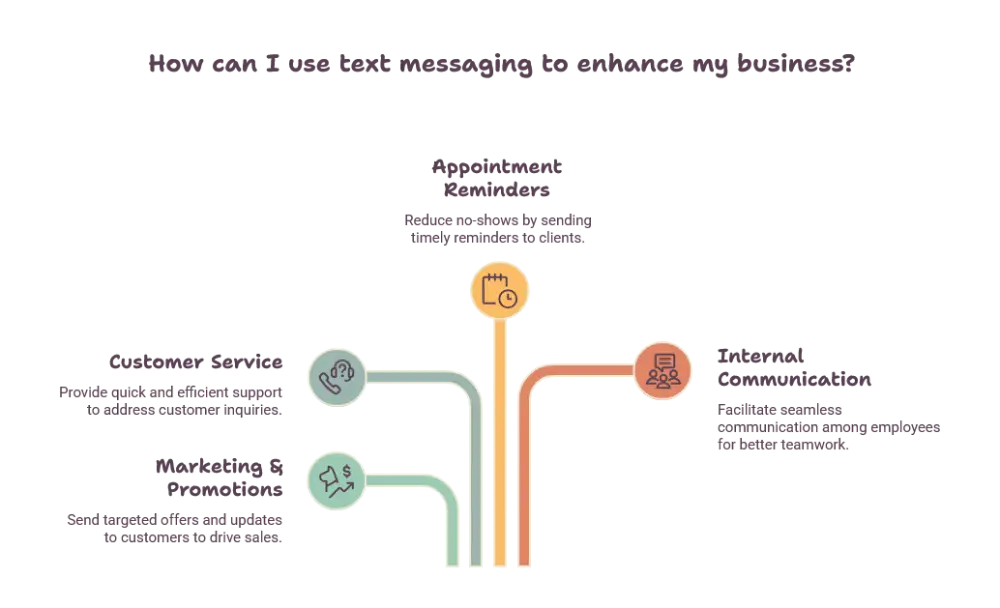
Business text messaging can support almost every stage of the customer journey. Here are the most popular uses.
Appointment Reminders
Missed appointments waste time and leave gaps in your schedule. A short reminder the day before helps customers remember and gives them an easy way to confirm or reschedule.
Clinics, salons, repair services, and consultants all benefit from this simple habit.
Order and Delivery Updates
Customers like to know where their purchase stands. Texts can confirm an order, share shipping progress, and announce when a package is arriving.
Clear updates reduce worry and cut down on support questions.
Customer Support
Many customers would rather send a quick text than wait on a phone call. Texting lets your team answer questions in a relaxed, flexible way.
Conversations can continue over hours or even days, so nobody has to repeat themselves.
Promotions and Announcements
Texting is a strong channel for sharing news about new products, special events, or seasonal offers. Because messages are short, the main point is clear right away.
The key is to send announcements that are genuinely useful, not just frequent.
Feedback and Reviews
After a purchase or visit, a friendly text can invite customers to share their thoughts. Short surveys and review requests often get better response rates when they arrive by text.
This feedback helps you improve and builds social proof for your brand.
Business Text Messaging Best Practices
Great results come from thoughtful habits. Follow these practices to keep your messages welcome and effective.
Get Permission First
Always ask customers before you send marketing or promotional texts. Clear opt in permission protects your reputation and keeps your audience engaged.
You can collect consent through a website form, a checkout page, a keyword text, or a simple in person request.
Keep Messages Short and Clear
A text is not the place for long explanations. Get to the point quickly and make the next step obvious.
A good message usually includes:
- Who you are
- Why you are texting
- What the customer should do next
Send at the Right Time
Timing matters. Avoid early mornings, late evenings, and holidays unless the message is urgent.
Think about when your customers are most likely to read and respond, and schedule your messages around that window.
Personalize Every Message
Use the customer’s name and reference their recent activity when it makes sense. Personalized texts feel thoughtful, while generic blasts feel like noise.
Even a small touch can make a message stand out.
Make Opting Out Easy
Every customer should be able to stop receiving messages with a simple reply. Respecting that choice builds long term trust.
A clean, easy exit also keeps your list full of people who actually want to hear from you.
Compliance and Trust
Texting comes with rules that protect consumers, and following them is essential. Regulations vary by country and region, but they usually cover consent, message content, and opt out requirements.
Keep clear records of when and how each customer agreed to receive messages. Be honest about who you are and what you are sending.
Trust is the foundation of every good customer relationship. When people feel respected, they are far more likely to stay loyal and respond.
How to Get Started With Business Text Messaging
Starting is easier than many businesses expect. A simple plan will keep your efforts focused.
Define Your Goals
Decide what you want texting to achieve. You might want fewer missed appointments, faster support, or stronger customer loyalty.
Clear goals help you choose the right message types and measure your progress.
Build Your Contact List the Right Way
Collect phone numbers with permission through forms, sign up pages, or in store prompts. Explain what kind of messages people will receive and how often.
A smaller list of willing subscribers beats a large list of uninterested contacts.
Choose a Reliable Messaging Platform
Look for a platform that supports scheduling, automation, two way conversations, and easy list management. A shared inbox helps your whole team respond consistently.
Reliable delivery and simple reporting are also worth checking before you commit.
Create Templates and Automations
Prepare ready to use messages for common situations such as confirmations, reminders, and thank you notes. Automation saves time while keeping communication consistent.
Just remember to review your templates regularly so they stay fresh and accurate.
Measuring the Success of Your Texting Efforts
Tracking results shows you what is working and what needs a change. Pay attention to a few key signals.
- Delivery rates, which show how many messages reached customers
- Reply rates, which show how engaged your audience is
- Click rates, if you include links in your messages
- Opt out rates, which reveal whether your messages feel welcome
Review these numbers often and test small changes, such as different wording or send times. Over time, you will learn what your audience prefers.
Conclusion
Business text messaging gives companies a direct, fast, and personal way to stay connected with customers. From reminders and updates to support and feedback, it fits naturally into the way people already communicate.
The most successful businesses treat texting as a conversation, not a broadcast. They ask for permission, keep messages helpful and brief, and respect every customer’s choices.
Start small, follow the best practices, and refine your approach as you learn. With a thoughtful strategy, business text messaging can strengthen relationships and help your business grow.
FAQs
What is business text messaging?
Business text messaging is the use of SMS or MMS by companies to communicate with customers, leads, or team members. It is commonly used for reminders, updates, support, and announcements.
Do I need customer permission before sending business texts?
Yes. You should get clear consent before sending marketing or promotional messages. Keeping a record of that consent helps protect your business and builds trust with your audience.
What types of messages work best for business texting?
Short, useful messages perform best. Appointment reminders, order updates, support replies, and timely announcements are all strong examples.
How often should a business send text messages?
Send only as often as your customers expect and find helpful. Tell subscribers what to expect when they sign up, and avoid overwhelming them with frequent messages.
Can small businesses use business text messaging effectively?
Absolutely. Small businesses can use texting to stay in touch with local customers, reduce missed appointments, and offer quick, friendly support without needing a large team.














Post Comment